
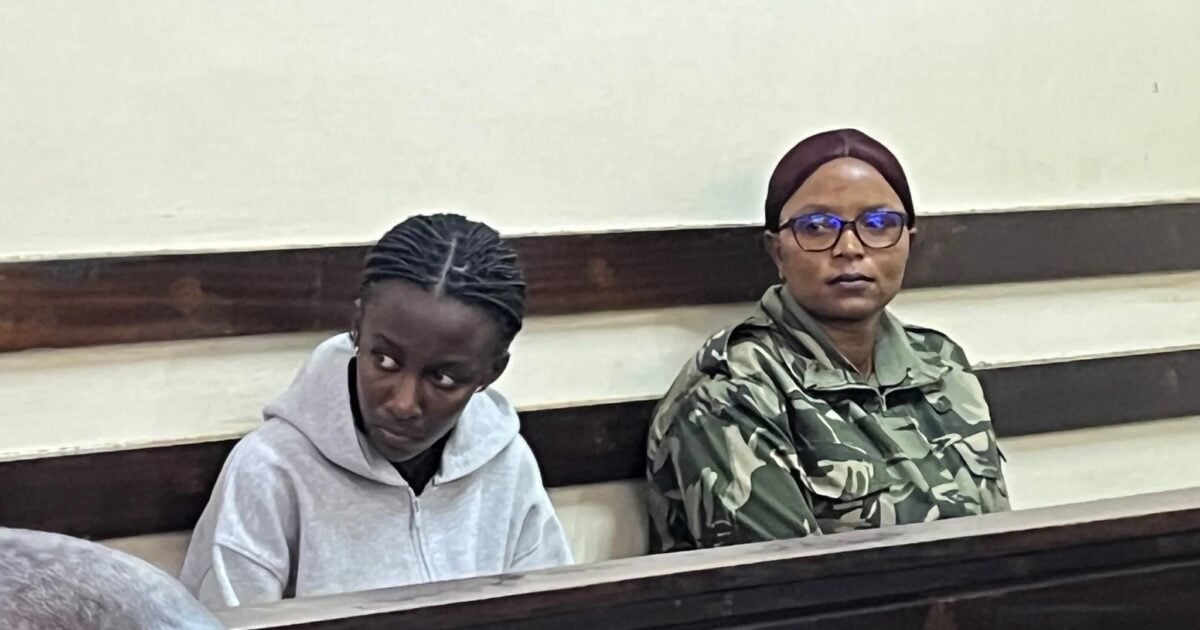
Kenyan Court: Thandie Gitau Denied Burial Release Amid Witness Concerns
Summary
- Thandie Malaika Gitau, charged with her grandmother's murder, was denied temporary release to attend the burial.
- The court ruled that Gitau would follow the funeral via a recording provided by her father.
- The Director of Public Prosecutions opposed the release due to security concerns and potential witness interference at the Murang’a County burial.
- Concerns were also raised about the safety of Gitau, her family, and the public amid heightened case attention.
- Gitau has denied murdering her grandmother, Dorita Macharia, in an incident alleged on October 30 in Loresho, Nairobi.
Court Denies Burial Release
A Kenyan court has denied Thandie Malaika Gitau, daughter of former television presenter Regina Re, temporary release from custody to attend her grandmother's burial, citing significant concerns raised by the Director of Public Prosecutions.
A Kenyan court has denied Thandie Malaika Gitau, daughter of former television presenter Regina Re, temporary release from custody to attend her grandmother's burial, citing significant concerns raised by the Director of Public Prosecutions. Gitau, who faces a murder charge in connection with the death of her grandmother, Dorita Macharia, had sought permission to temporarily leave detention for the funeral proceedings. The court's decision means she will not be physically present at the burial.
Instead, the court has directed Gitau's father to attend the funeral, record the entire event, and subsequently share the footage with his daughter. This arrangement allows Gitau to witness the burial of her grandmother, Dorita Macharia, albeit remotely, following the court's refusal of her direct attendance.
Prosecution's Opposition and Safety Concerns
The Director of Public Prosecutions (DPP) vehemently opposed the application for temporary release, outlining several critical reasons for their stance. Foremost among these were security concerns and the potential for witness interference, particularly given that key witnesses were expected to be present at the burial in Murang’a County. The DPP argued that allowing Gitau to attend could jeopardize the integrity of the ongoing investigation.
Furthermore, the prosecution expressed serious apprehensions regarding the safety of Thandie Malaika Gitau herself, her family members, and the general public. These concerns were amplified by the heightened public attention surrounding the high-profile murder case. The DPP communicated these detailed objections through an official social media post, underscoring the gravity of the situation and the perceived risks associated with granting temporary release from Kenya temporary release custody.
Background of the Murder Allegations
Thandie Malaika Gitau stands accused of murdering her grandmother, Dorita Macharia, in an incident that allegedly took place on October 30 in Loresho, a residential area in Nairobi. Despite the serious nature of the Regina Re daughter murder charge, Gitau has formally denied any involvement in her grandmother's death, maintaining her innocence.
The murder case involving Thandie Malaika Gitau continues to draw public interest, with the Office of the Director of Public Prosecutions having approved murder charges against her. She is expected to be arraigned for plea-taking on November 18, 2026.
Why This Ruling Matters
The Thandie Malaika Gitau court ruling underscores the stringent conditions under which Kenyan courts consider applications for temporary release, especially in cases involving serious charges like murder. The court's decision to prioritize the integrity of the judicial process and public safety over compassionate grounds for attendance at a family funeral sets a significant precedent.
This outcome highlights the judiciary's commitment to preventing potential witness tampering and ensuring the security of all parties involved, even when faced with emotionally charged circumstances. The DPP witness interference concerns, coupled with broader safety considerations, proved decisive in the court's judgment, reinforcing the principle that the administration of justice takes precedence in such critical matters.
Practical Implications
This ruling highlights the stringent conditions and factors, such as witness interference and public safety, that Kenyan courts consider when evaluating temporary release applications for murder suspects, even for compassionate grounds like attending a funeral. Lawyers should note the DPP's successful opposition based on these specific risks, which can serve as a precedent or guide for future bail applications.
Source
How does this affect you?
Get an AI analysis of this article grounded in your jurisdictions, practice areas, and any policy documents you've uploaded to Wansom.
Finish Reading the Full Story and the Expert Analysis.
Get the latest legal & regulatory intelligence in Kenya
Wansom is AI and can make mistakes.