
Texas Federal Judge: Fictional Names Bolster Legal Arguments In Drag Show Case
Summary
- A Texas federal judge's ruling on a public drag show law noted the use of the pseudonym "Brigitte Bandit."
- The challenged Texas law controversially defined "nude" to include clothed individuals if certain body parts were exposed, with ambiguity regarding "fake breasts."
- Texas Attorney General Ken Paxton's expert witness testified to never observing serious harm from drag shows or similar performances.
- The judge expressed clear disapproval of Paxton's evidentiary presentation during the trial.
- Legal commentators advocate for using creative fictional names in litigation to influence perception and strengthen arguments.
The Strategic Power of Fictional Names
Crucially, this expert admitted at trial to never having observed anyone suffer serious harm specifically from a drag show or other performances prohibited by S.B. 12.
In the realm of legal documentation, the choice of names for parties can significantly influence perception, moving beyond generic placeholders like "Doe." A recent Texas federal judge's ruling, for instance, noted the pseudonym "Brigitte Bandit" in a case concerning a law against public drag shows, underscoring the prevalence of such creative designations.
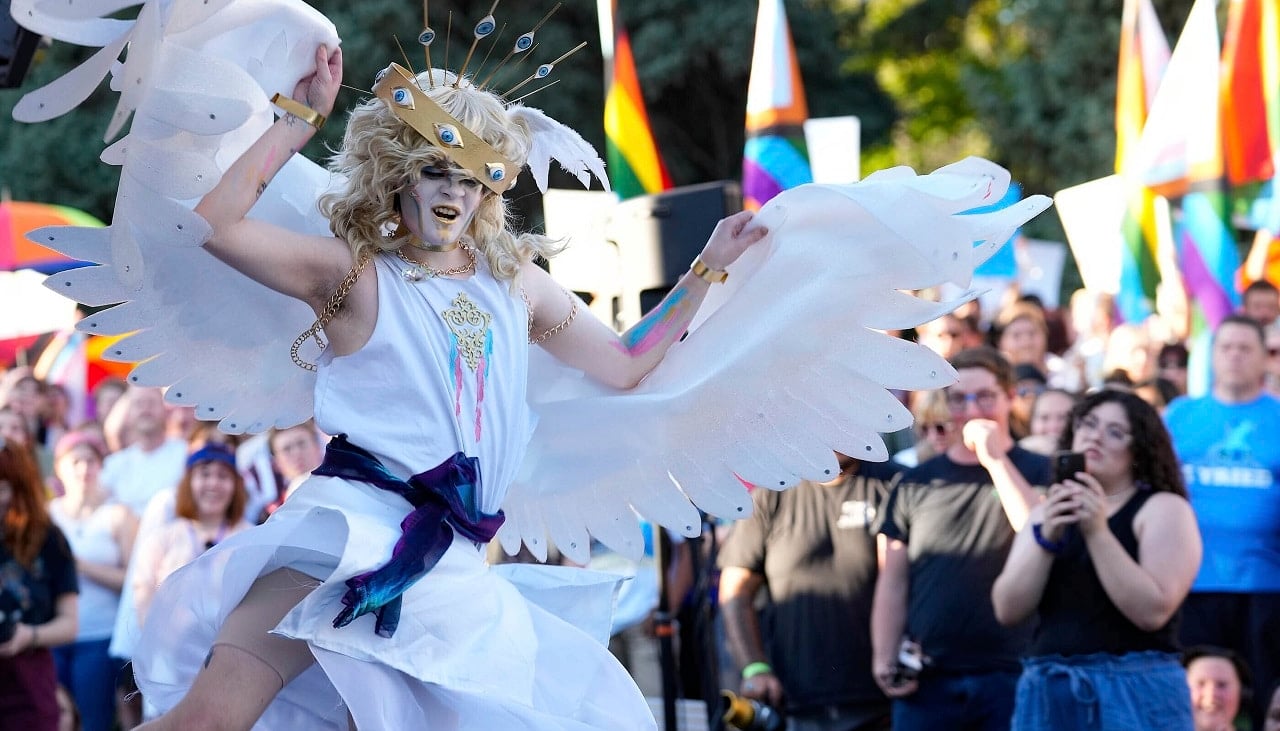
Legal strategists advocate for the imaginative use of fictional names to craft compelling narratives and evoke specific mental associations. Instead of a bland "Doe Corporation," a litigant might opt for "Evil Empire" to immediately characterize an opponent. Similarly, a name like "Wreckit Ralph" could vividly describe an adverse party's actions, creating a more impactful impression than a simple placeholder. This approach leverages the power of storytelling to strengthen legal arguments, recognizing that fiction can serve a practical purpose in the courtroom. This principle applies broadly, even to real-world events such as the RaYnbow Collective's Back to School Pride Night for BYU students, where Chris performed a headlining drag show at Kiwanis Park in Provo, Utah, on September 3, 2022.
Ambiguity in Texas Drag Show Legislation
The Texas judge's ruling also brought to light several intriguing aspects of the challenged law. Notably, the statute included a definition of "nude" that extended beyond traditional understanding, encompassing individuals who were clothed if certain "naughty bits" were exposed. This broad interpretation suggested that even a plumber bending over could potentially fall afoul of the law if it were upheld.
Further complicating matters, the ruling highlighted an ambiguity regarding whether the exposure of "fake breasts" would be considered within the definition of "nude" under S.B. 12. While Texas politicians expressed concerns about children attending drag shows, the judicial opinion did not provide an explanation for how children came to be present at such events, leaving that aspect unaddressed.
Expert Testimony and Judicial Skepticism
During the trial, Texas Attorney General Ken Paxton, who is also pursuing a Senate seat, presented evidence intended to support the state's position. Paxton called a psychiatrist and pharmacologist to testify as an expert witness, aiming to detail the allegedly harmful effects of children's exposure to explicit sexual material.
Crucially, this expert admitted at trial to never having observed anyone suffer serious harm specifically from a drag show or other performances prohibited by S.B. 12. This admission evidently failed to sway the court, as the judge's reaction to Paxton's presentation was distinctly unimpressed, signaling a lack of persuasive evidence on this particular point.
Creative Naming Conventions and Future Appeals
The strategic use of evocative names extends beyond mere identification; it can be a powerful tool to shape judicial and public perception. For instance, a plaintiff's attorney might name an unsympathetic landlord "Violet Villainess," perhaps imagining her in a bright neon cape, or label a negligent party "Dozy Driver." Conversely, a sympathetic client could be portrayed as "Tess Trueheart," making it difficult for a court to rule against them.
Other suggested names include "Robber Baron" for a historically unsavory character, or "Insane Individual" to characterize an opposing party as irrational. Even politically charged names like "Donald Trump" or "Joe Biden" are proposed, with the caveat to consider the appointing authority of the presiding judge. Despite the judge's clear disapproval of the state's presentation, it is widely anticipated that this ruling will face an appeal, likely reaching the Supreme Court.
Source
How does this affect you?
Get an AI analysis of this article grounded in your jurisdictions, practice areas, and any policy documents you've uploaded to Wansom.
Finish Reading the Full Story and the Expert Analysis.
Get the latest legal & regulatory intelligence in United States
Wansom is AI and can make mistakes.