
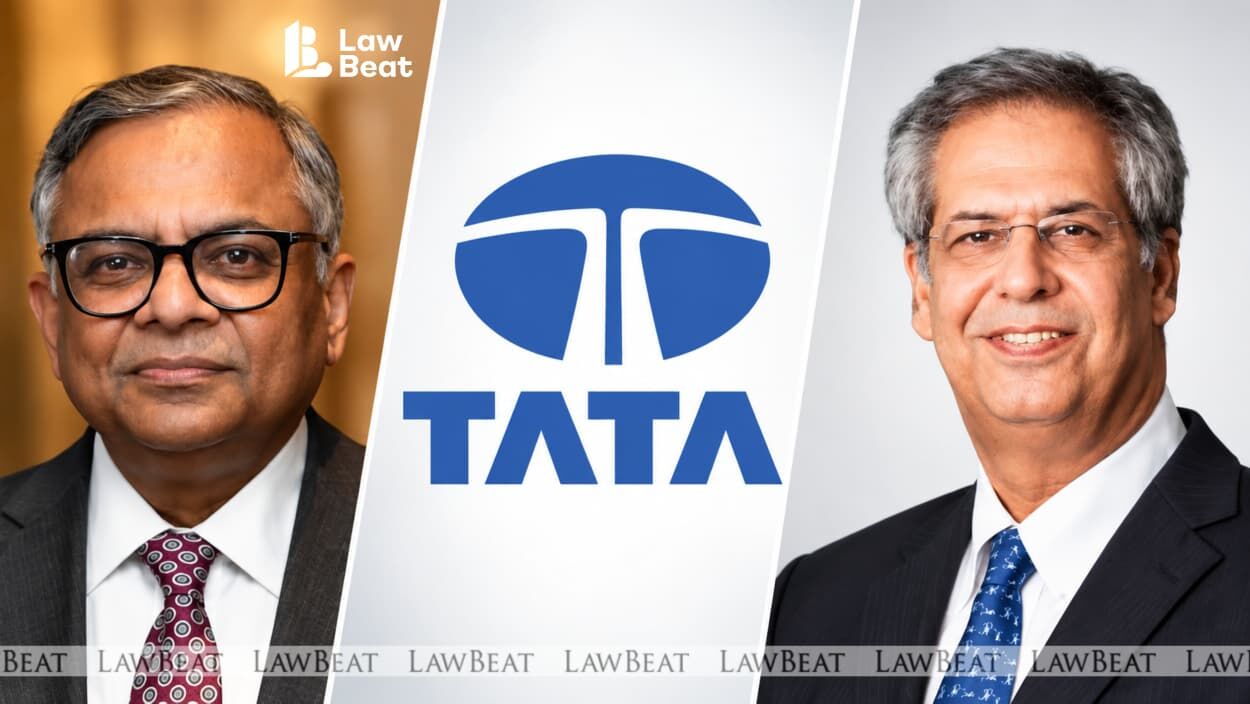
Tata Sons Chandrasekaran Reappointment Dispute: Trusts Challenge Validity
Summary
- The Tata Sons board reappointed N Chandrasekaran as executive chairman for five years, but Tata Trusts, a 66% shareholder, opposes the decision.
- Tata Trusts chairman Noel Tata voted against the reappointment, while the other nominee director voted in favor, leading to a 4-1 board vote.
- The dispute centers on Article 121 of Tata Sons' Articles of Association, which Tata Trusts argues requires affirmative support from a majority of its two nominee directors, which was not obtained.
- Tata Trusts also challenges the legality of using a chairman's casting vote to override specific AoA requirements for nominee director approval.
- The 2021 Supreme Court ruling in the Cyrus Mistry case, which upheld the special rights of Tata Trusts' nominee directors, is cited as a relevant precedent by Tata Trusts.
Chandrasekaran's Reappointment Sparks Governance Dispute
This ongoing challenge underscores the critical need for corporate lawyers and compliance officers to meticulously scrutinize Articles of Association, particularly provisions governing nominee director voting rights and the chairman's casting vote, to ensure the legal validity of board resolutions and mitigate governance challenges in complex corporate structures.
The board of Tata Sons recently reappointed N Chandrasekaran as its executive chairman for an additional five-year term, a decision that has ignited a significant governance dispute with Tata Trusts. Despite Chandrasekaran's prior indications that he would not seek another term, the board ultimately requested his continuation. The resolution for his reappointment was passed at a board meeting held on September 17, where it garnered four votes in favor and one against. Chandrasekaran himself did not participate in the vote.
However, the validity of this reappointment is now being challenged by Tata Trusts, which holds a substantial 66% stake in Tata Sons. Noel Tata, who chairs Tata Trusts, cast the sole dissenting vote against Chandrasekaran's reappointment. While the other director nominated by Tata Trusts, Venu Srinivasan, supported the resolution, the Trusts contend that the voting process failed to meet specific requirements outlined in Tata Sons' Articles of Association (AoA), thereby rendering the resolution legally invalid. This disagreement extends beyond the immediate leadership question, touching upon fundamental aspects of corporate governance, including the special rights afforded to Tata Trusts under the AoA and the permissible use of the chairman's casting vote.
Legal Challenge Centered on Nominee Director Voting Rights
At the heart of the Tata Sons Chandrasekaran reappointment dispute lies Article 121 of the company's Articles of Association. Tata Trusts asserts that this particular provision mandates the affirmative support of a majority of its nominated directors for certain key decisions. Given that Tata Trusts currently has two nominee directors on the Tata Sons board—Noel Tata and Venu Srinivasan—and only one of them voted in favor of Chandrasekaran's reappointment, the Trusts argue that the necessary majority was not achieved. Their interpretation posits that a majority of two directors requires both to agree, not just one.
Consequently, Tata Trusts maintains that the resolution to reappoint N Chandrasekaran was not validly passed and therefore holds no legal effect. The precise interpretation of Article 121 is anticipated to be a pivotal point of contention should the matter proceed to court. Furthermore, the challenge also encompasses the legality of the chairman's casting vote. Tata Trusts contends that while a casting vote can be exercised in instances of a tie, it cannot be employed to circumvent or override a distinct requirement within the AoA, such as the need for majority support from its nominee directors. The question of whether a chairman's casting vote can legitimately operate under such circumstances remains an unresolved legal issue.
Precedent from Cyrus Mistry Case and Broader Implications
The current disagreement over N Chandrasekaran's reappointment validity also draws parallels to the 2021 Supreme Court judgment concerning the Cyrus Mistry-Tata Sons case. That earlier litigation, among other issues, delved into the special rights granted to Tata Trusts-nominated directors under Tata Sons' Articles of Association. Crucially, the Supreme Court ultimately dismissed claims that the exercise of these special rights constituted oppression or mismanagement, effectively upholding their validity.
Tata Trusts is now leveraging this precedent, arguing that Tata Sons previously defended the legitimacy of these special rights before the Supreme Court. Therefore, the Trusts contend that Tata Sons cannot now disregard these very provisions when they impact a current board decision. The 2021 judgment and the specific AoA provisions discussed therein could prove highly significant if the present Tata Sons board powers dispute escalates to litigation. This ongoing challenge underscores the critical need for corporate lawyers and compliance officers to meticulously scrutinize Articles of Association, particularly provisions governing nominee director voting rights and the chairman's casting vote, to ensure the legal validity of board resolutions and mitigate governance challenges in complex corporate structures.
Practical Implications
This dispute underscores the critical need for corporate lawyers and compliance officers to meticulously scrutinize Articles of Association, particularly provisions governing nominee director voting rights and the chairman's casting vote, to ensure the legal validity of board resolutions and mitigate governance challenges in complex corporate structures.
Source
Source: Original reporting via {source}
How does this affect you?
Get an AI analysis of this article grounded in your jurisdictions, practice areas, and any policy documents you've uploaded to Wansom.
Finish Reading the Full Story and the Expert Analysis.
Get the latest legal & regulatory intelligence in India
Wansom is AI and can make mistakes.