
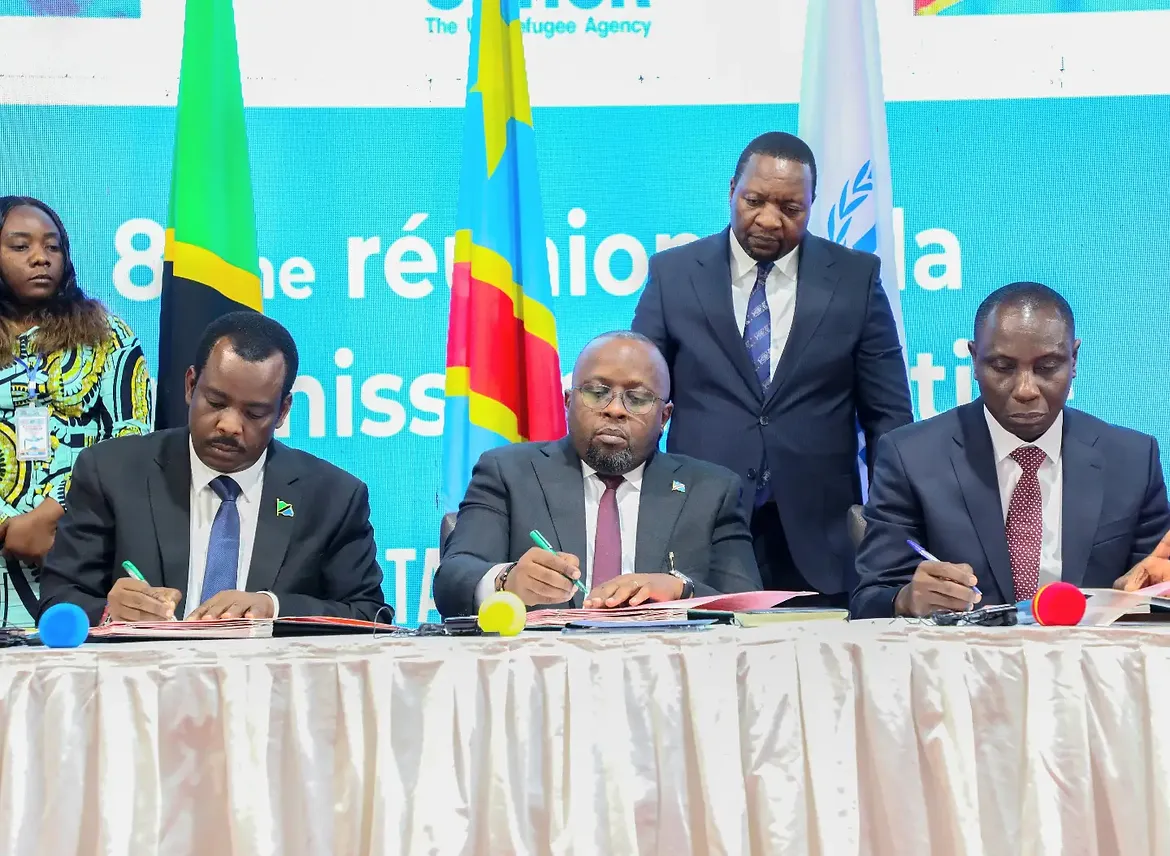
Tanzania, DRC, UNHCR: Formalize Refugee Repatriation Process
Summary
- Tanzania, the Democratic Republic of Congo, and UNHCR have agreed to begin a process for the voluntary repatriation of Congolese refugees.
- The agreement specifically targets Congolese refugees currently residing in Tanzania who are willing to return to their home country.
- This understanding was formalized during a Tripartite Commission Meeting held in Lubumbashi.
- A Deputy Minister for Home was present at the meeting where the agreement was reached.
A New Repatriation Initiative
The explicit mention of "voluntarily repatriating" is paramount, affirming that no refugee will be compelled to return against their will.
The governments of Tanzania and the Democratic Republic of Congo (DRC), in collaboration with the United Nations High Commissioner for Refugees (UNHCR), have formally agreed to initiate a process aimed at facilitating the voluntary return of Congolese refugees currently residing in Tanzania. This significant step marks the beginning of a structured program for individuals who express a willingness to repatriate to their home country. The agreement underscores a commitment by all parties to find durable solutions for displaced populations within the framework of international refugee protection.
This pivotal understanding was reached during a Tripartite Commission Meeting, a standard forum for such discussions, which convened in Lubumbashi. The gathering saw the participation of key officials, including a Deputy Minister for Home, signaling the high-level commitment to addressing the complex issue of refugee returns. The focus remains squarely on ensuring that any repatriation is undertaken freely and without coercion, respecting the fundamental rights of the refugees involved.
Legal Framework and Voluntary Returns
The agreement to commence the process of Tanzania DRC UNHCR refugee repatriation is grounded in the principles of international refugee law, particularly the emphasis on voluntary repatriation as a preferred durable solution. For Congolese refugees in Tanzania, this development introduces a formal pathway for those who choose to exercise their right to Congolese refugee voluntary return. The involvement of UNHCR is critical in upholding these principles, ensuring that the decision to return is informed, free, and safe. This tripartite structure, often seen in International refugee law Africa, provides a robust mechanism for managing complex cross-border movements of people.
The UNHCR Tripartite Commission Lubumbashi meeting served as the platform to formalize this commitment, establishing a collaborative framework among the host country (Tanzania), the country of origin (DRC), and the international body responsible for refugee protection (UNHCR). This collaborative approach is designed to address the logistical, legal, and safety considerations inherent in large-scale returns. It also sets the stage for potential refugee status changes Tanzania for those who opt to repatriate, as their need for international protection may be reassessed upon their return to the DRC.
Implications for Congolese Refugees
For the Congolese refugees living in Tanzania, this agreement carries profound implications, primarily centered on their right to choose their future. The explicit mention of "voluntarily repatriating" is paramount, affirming that no refugee will be compelled to return against their will. This principle is a cornerstone of DRC refugee rights Tanzania and globally, ensuring that individuals can make decisions about their lives free from undue pressure. Legal advisors and humanitarian organizations will now focus on providing comprehensive information to refugees about the conditions in the DRC and the support available for returnees.
The initiation of this process means that refugees will need to be fully apprised of their options, including the right to remain in Tanzania if they do not feel it is safe or appropriate to return. The role of UNHCR will be crucial in monitoring the voluntariness of returns and advocating for the rights of those who choose to stay. This formal agreement opens a new chapter for thousands of individuals, offering a structured, internationally supported route back to their homeland for those who are willing.
Practical Implications
This agreement initiates a formal process for the voluntary repatriation of Congolese refugees from Tanzania, directly impacting their legal status and rights. Lawyers advising these individuals, or organizations involved in refugee protection, must monitor the implementation details to ensure compliance with international refugee law and to counsel clients on their options, rights, and the practical implications of returning to the DRC.
Source
How does this affect you?
Get an AI analysis of this article grounded in your jurisdictions, practice areas, and any policy documents you've uploaded to Wansom.
Finish Reading the Full Expert Analysis.
Wansom is AI and can make mistakes.