
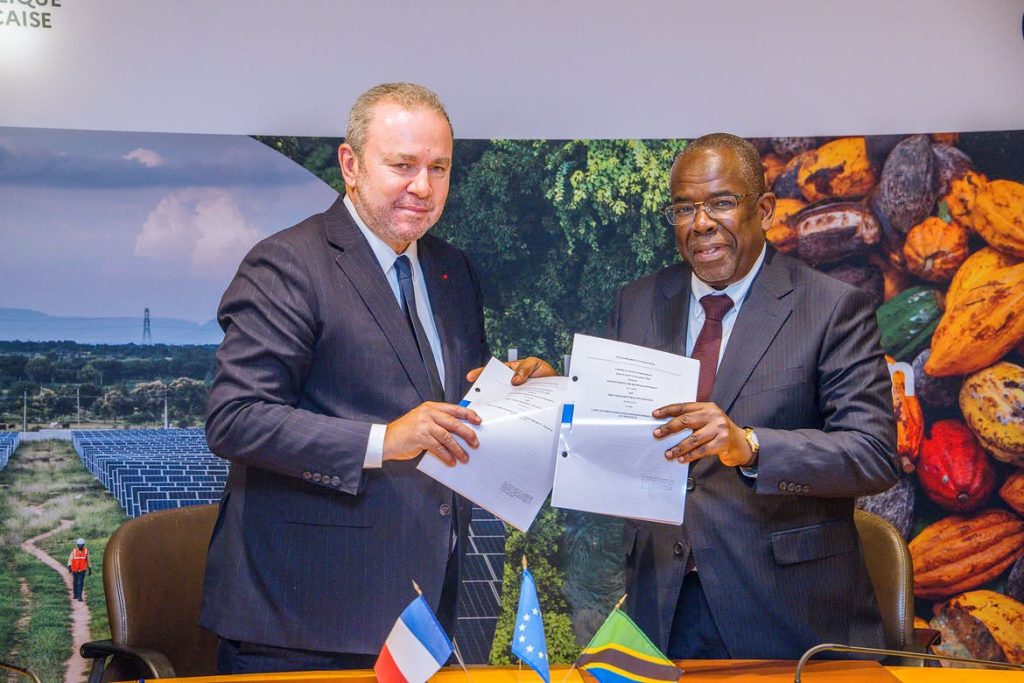
Tanzania: Finalizes Eur 175m AFD Loan Deals for Key Development
Summary
- The Tanzanian government and the French Development Agency (AFD) have signed three concessional loan agreements.
- These agreements total Eur 175 million, equivalent to approximately 513 billion Tanzanian shillings.
- The funding will support water supply and sanitation around Lake Victoria, food infrastructure in Mwanza and Tanga, and the development of fisheries and small-scale dairy farming.
- The agreements were formalized in Paris on November 24, 2026, with the Tanzanian Minister for Finance, Ambassador Khamis Mussa Omar, as a signatory.
A New Financial Commitment
Lawyers and compliance officers should closely monitor the evolving legal frameworks and regulatory requirements arising from these significant AFD-funded development projects in Mwanza and Tanga.
The Tanzanian government has formally entered into three distinct concessional loan agreements with the French Development Agency (AFD), marking a significant financial commitment towards key development sectors. These agreements, collectively valued at Eur 175 million, which translates to approximately 513 billion Tanzanian shillings, were officially concluded during a signing ceremony held in Paris on November 24, 2026. The Minister for Finance, Ambassador Khamis Mussa Omar, represented the Tanzanian side in finalizing these crucial Tanzania AFD Euro 175m loan deals.
This substantial funding from the French Development Agency Tanzania is specifically allocated to bolster vital infrastructure and economic activities. The nature of these concessional loan agreements implies favorable terms, designed to support long-term sustainable growth rather than commercial ventures. The overarching goal is to address critical needs in water provision, food security, and the enhancement of primary economic sectors such as fisheries and dairy farming across specific regions of the country.
Strategic Development Initiatives
The Eur 175 million in funding is strategically channeled into a diverse portfolio of development initiatives, targeting both essential services and economic growth. A significant portion is dedicated to advancing water supply and sanitation projects situated around the critical Lake Victoria basin. These efforts are poised to improve public health outcomes and environmental sustainability for communities reliant on the lake's resources, addressing long-standing infrastructure gaps.
Furthermore, the agreements will finance crucial food infrastructure in the Mwanza and Tanga regions. This investment aims to strengthen the entire food value chain, from production to distribution, thereby enhancing food security and reducing post-harvest losses in these key areas. Concurrently, dedicated resources are allocated for the comprehensive development of fisheries and small-scale dairy farming, particularly benefiting local communities in Mwanza and Tanga. These Tanzania fisheries dairy farming initiatives are expected to boost local economies, create employment opportunities, and improve livelihoods through sustainable practices. These Mwanza Tanga development projects represent a concerted effort to foster regional economic resilience and improve the quality of life for residents.
Legal and Compliance Landscape
The implementation of these extensive Tanzania AFD Euro 175m loan deals will undoubtedly introduce a complex array of legal and regulatory considerations for all stakeholders. Lawyers and compliance officers should closely monitor the evolving legal frameworks and regulatory requirements arising from these significant AFD-funded development projects in Mwanza and Tanga. This vigilance is crucial, particularly in sectors like water, fisheries, and agriculture, where new compliance obligations, contractual opportunities, or environmental impact assessments are highly probable.
Adherence to both national legislation and international standards will be paramount throughout the project lifecycles. Legal professionals will need to navigate potential land use regulations, water rights, environmental protection laws, and labor standards to ensure the projects proceed without impediment and in full compliance. Furthermore, the substantial investment presents numerous contractual opportunities for local and international firms, necessitating robust legal due diligence and contract management. The long-term success and sustainability of these Tanzania concessional loan agreements will heavily depend on a proactive and thorough approach to legal and regulatory governance.
Practical Implications
Lawyers and compliance officers should monitor the legal frameworks and regulatory requirements arising from these significant AFD-funded development projects in Mwanza and Tanga, particularly in sectors like water, fisheries, and agriculture, as they may present new compliance obligations, contractual opportunities, or environmental impact assessments.
Source
How does this affect you?
Get an AI analysis of this article grounded in your jurisdictions, practice areas, and any policy documents you've uploaded to Wansom.
Finish Reading the Full Story and the Expert Analysis.
Get the latest legal & regulatory intelligence in Tanzania
Wansom is AI and can make mistakes.