
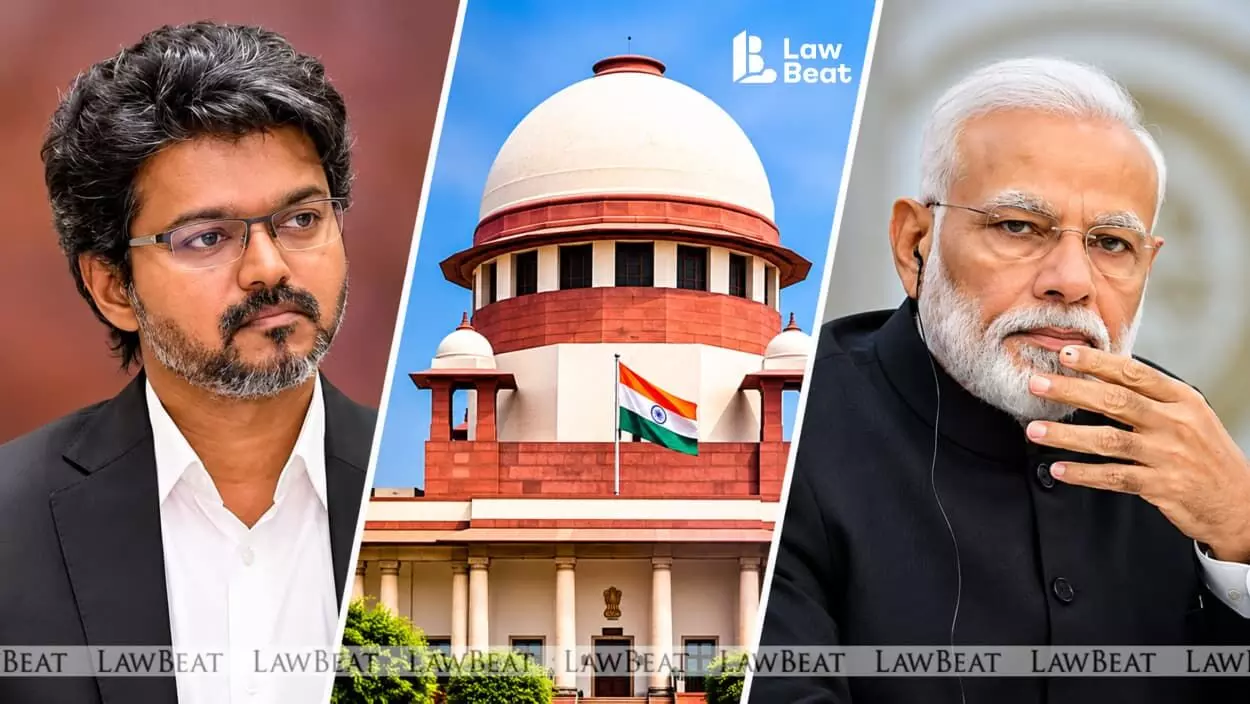
Tamil Nadu CM Vijay Urges PM for Supreme Court Chennai Bench
Summary
- Tamil Nadu Chief Minister C. Joseph Vijay has written to Prime Minister Narendra Modi, advocating for a permanent Supreme Court bench in Chennai.
- The Chief Minister cited geographical, financial, and logistical difficulties faced by litigants from southern states in accessing the Supreme Court in New Delhi.
- He relied on Article 130 of the Indian Constitution, which permits the Supreme Court to sit in places other than Delhi with the Chief Justice's approval.
- Past Supreme Court Full Court resolutions in 2007 and 2010 rejected proposals for regional benches, but the issue was referred to a five-judge Constitution Bench in 2016.
- Parliamentary Standing Committees and the 229th Law Commission Report have previously recommended establishing regional benches, including one for southern India.
Renewed Call for a Chennai Bench
The creation of a Supreme Court bench in Chennai would not only benefit Tamil Nadu but also significantly enhance access to justice for citizens across other southern states.
Tamil Nadu Chief Minister C. Joseph Vijay has recently reignited a long-standing demand for a permanent regional bench of the Supreme Court to be established in Chennai. In a letter addressed to Prime Minister Narendra Modi on November 4, Vijay underscored the significant geographical, financial, and logistical hurdles faced by litigants from India's southern states when seeking justice from the nation's highest court in New Delhi. This initiative by the Chief Minister revives an advocacy effort that Tamil Nadu has consistently pursued since 1980.
Chief Minister Vijay articulated that the creation of a Supreme Court bench in Chennai would not only benefit Tamil Nadu but also significantly enhance access to justice for citizens across other southern states. He emphasized that the current arrangement disproportionately impacts economically weaker sections and individuals residing in southern India, making the constitutional remedy guaranteed by Article 32 practically less accessible to them compared to those living closer to the capital or possessing greater financial means to cover travel and litigation expenses. The Chief Minister urged the Prime Minister to engage with the Supreme Court on this matter to facilitate a favorable outcome.
Constitutional Basis and Past Resistance
The constitutional foundation for establishing a Supreme Court bench outside Delhi rests on Article 130 of the Indian Constitution. This article stipulates that "The Supreme Court shall sit in Delhi or in such other place or places, as the Chief Justice of India may, with the approval of the President, from time to time, appoint." Despite this provision, the Supreme Court's Full Court has historically resisted the idea, notably declining to reconsider earlier resolutions opposing regional benches during its meeting on August 7, 2007, even after Tamil Nadu offered assurances regarding necessary infrastructure. The proposal was again rejected by the Supreme Court Full Court in 2010, which found no justification for establishing benches outside the capital.
However, the debate gained renewed judicial attention following the Supreme Court's order on July 13, 2016, in the case of *V. Vasanthakumar v. H.C. Bhatia and Others*. In this instance, the question concerning the establishment of regional benches was referred to a five-judge Constitution Bench for authoritative consideration, indicating a potential shift in the judiciary's stance. Furthermore, the Union Government informed Parliament in February 2026 that Article 130 indeed governs the possibility of the Supreme Court convening outside Delhi, acknowledging the constitutional pathway for such a move.
Arguments for Enhanced Access and Infrastructure
Chief Minister Vijay's appeal highlights several compelling reasons for establishing a permanent Supreme Court bench in Chennai. He presented Chennai as an ideal location, citing its prominence as a major legal and administrative hub in southern India, the distinguished legal legacy of the Madras High Court, established in 1862, and the professional competence of its Bar. The Chief Minister also assured that the State government is prepared to provide all necessary infrastructure, including residential accommodation for Supreme Court judges, to facilitate the establishment of such a bench.
Addressing potential concerns about judicial autonomy, CM Vijay maintained that the creation of a regional bench would not compromise judicial independence, as administrative control would continue to reside with the Chief Justice of India. His arguments consistently circle back to the fundamental principle of improving access to justice, particularly for those in southern states who currently face significant barriers to exercising their constitutional right to approach the apex court.
Legislative and Commission Recommendations
The call for regional benches of the Supreme Court has received consistent support from various legislative and expert bodies over the years. Chief Minister Vijay's letter specifically referenced recommendations from Parliamentary Standing Committees in 2004, 2006, 2008, and 2021, all of which have advocated for the establishment of permanent regional benches. These recommendations underscore a broad consensus within legislative circles regarding the necessity of decentralizing the Supreme Court's operations.
Further bolstering the Chief Minister's position are successive Law Commission reports, including the influential 229th Law Commission Report. This report specifically recommended the establishment of a Constitution Bench in Delhi alongside four regional Cassation Benches, with one designated for southern India in either Chennai or Hyderabad. Such recommendations from authoritative legal bodies provide significant weight to the ongoing demand for a permanent Supreme Court bench in Chennai, aiming to improve access to justice for southern states India.
Practical Implications
Lawyers and compliance officers in southern India should monitor this renewed push for a Supreme Court bench in Chennai. While not an immediate change, its eventual establishment would significantly reduce logistical and financial barriers for litigants accessing the highest court, potentially impacting future case strategy and client advice regarding appeals.
Source
How does this affect you?
Get an AI analysis of this article grounded in your jurisdictions, practice areas, and any policy documents you've uploaded to Wansom.
Finish Reading the Full Story and the Expert Analysis.
Get the latest legal & regulatory intelligence in India
Wansom is AI and can make mistakes.