
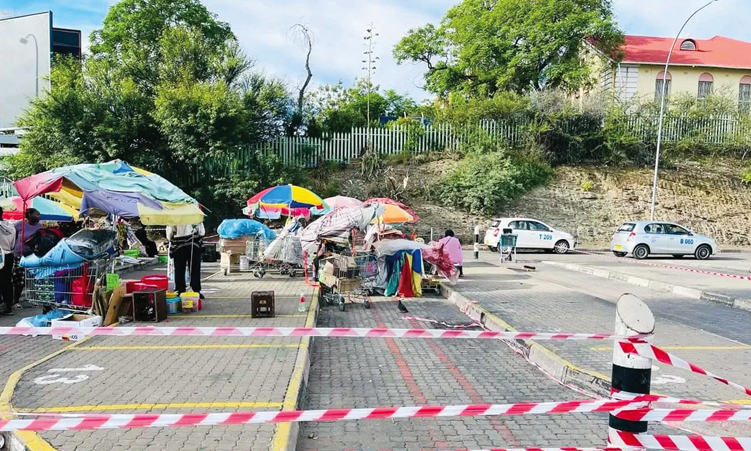
Swapo Youth League Urges Legal Vending Sites, End to Harassment
The Swapo Party Youth League (SPYL), through its Secretary Ephraim Nekongo, has urged the Windhoek City Council and other municipal authorities in Namibia to cease harassing street vendors and instead establish designated legal trading spaces to facilitate their economic activities. This call advocates for a significant shift in municipal policy, moving away from punitive measures towards a more supportive and structured approach for informal traders.
The SPYL, represented by its Secretary Ephraim Nekongo, has publicly appealed to the Windhoek City Council and other local authorities to adopt a more facilitative stance towards street vendors. The League specifically advocates for an immediate end to the confiscation, removal, and destruction of vendors' goods, asserting that such actions are counterproductive and do not effectively strengthen regulatory frameworks. Instead, the SPYL proposes that municipalities proactively create specific, legally sanctioned trading areas where vendors can operate lawfully and generate income, thereby transitioning from a policy of enforcement and deterrence to one of enablement and integration.
This advocacy carries substantial legal and policy implications for municipal governance, the regulation of the informal sector, and the protection of socio-economic rights across Namibia. It underscores a persistent tension between municipal by-laws, which are typically designed to maintain public order, hygiene, and traffic flow, and the economic realities faced by a significant portion of the population that relies on informal trade for their livelihood. For legal practitioners, this signals potential shifts in municipal enforcement policies, the possibility of legal challenges to existing by-laws, or the development of entirely new regulatory frameworks specifically tailored for street vending. Furthermore, the issue touches upon fundamental constitutional rights related to dignity, livelihood, and economic activity, which could form the basis for future litigation or advocacy efforts. Formal retail businesses might also experience impacts from changes in street vending regulations, affecting market competition and broader urban planning dynamics.
The regulation of street vending in Namibia primarily falls under the jurisdiction of local authorities, which are empowered by legislation such as the Local Authorities Act 23 of 1992. This Act grants municipal councils the authority to enact by-laws concerning public health, safety, and the use of public spaces, often including specific provisions for the licensing, zoning, and control of street hawkers. Enforcement actions, such as the confiscation of goods, are typically carried out under the authority of these by-laws. However, such actions are frequently scrutinized against constitutional provisions, including Article 21 (Fundamental Freedoms, encompassing the freedom to practice any profession or carry on any occupation, trade, or business) and Article 10 (Equality and Freedom from Discrimination). The SPYL's call for designated trading spaces aligns with a broader regional trend in many African cities to formalize and integrate the informal sector, acknowledging its vital economic contribution while simultaneously addressing urban management challenges.
The key parties involved in this advocacy are the Swapo Party Youth League (SPYL) and its Secretary Ephraim Nekongo, who are advocating on behalf of street vendors. The primary entities being addressed are the Windhoek City Council and other municipal authorities throughout Namibia, which bear the responsibility for enacting and enforcing local by-laws. Street vendors themselves are the direct beneficiaries or subjects of these proposed policy changes. The excerpt does not mention any specific court cases or regulatory bodies beyond the local authorities. Attorneys advising local authorities, informal traders, or businesses affected by urban planning should closely monitor any developments stemming from this advocacy. This includes potential amendments to municipal by-laws, the establishment of new trading zones, or changes in enforcement practices. Practitioners should be prepared to advise clients on their rights and obligations under both existing and prospective regulations, including challenging unlawful confiscations or assisting with applications for trading permits in designated areas. Furthermore, this issue may lead to public interest litigation concerning the delicate balance between municipal regulatory powers and the socio-economic rights of informal traders, requiring specialized expertise in constitutional and administrative law.
How does this affect you?
Get an AI analysis of this article grounded in your jurisdictions, practice areas, and any policy documents you've uploaded to Wansom.
Finish Reading the Full Story and the Expert Analysis.
Get the latest legal & regulatory intelligence in Namibia
Wansom is AI and can make mistakes.