
Supreme Court: White House Ballroom Standing Allows Construction
Summary
- The Supreme Court, in a 5-4 vote, allowed construction on a new White House ballroom to continue, pausing a lower court's order.
- The majority opinion emphasized that the plaintiff likely lacked legal standing to challenge the project, without ruling on its legality.
- Chief Justice John Roberts and the three Democratic appointees dissented, believing the construction was "likely unlawful."
- The decision followed an administrative stay issued by Chief Justice Roberts 10 days prior.
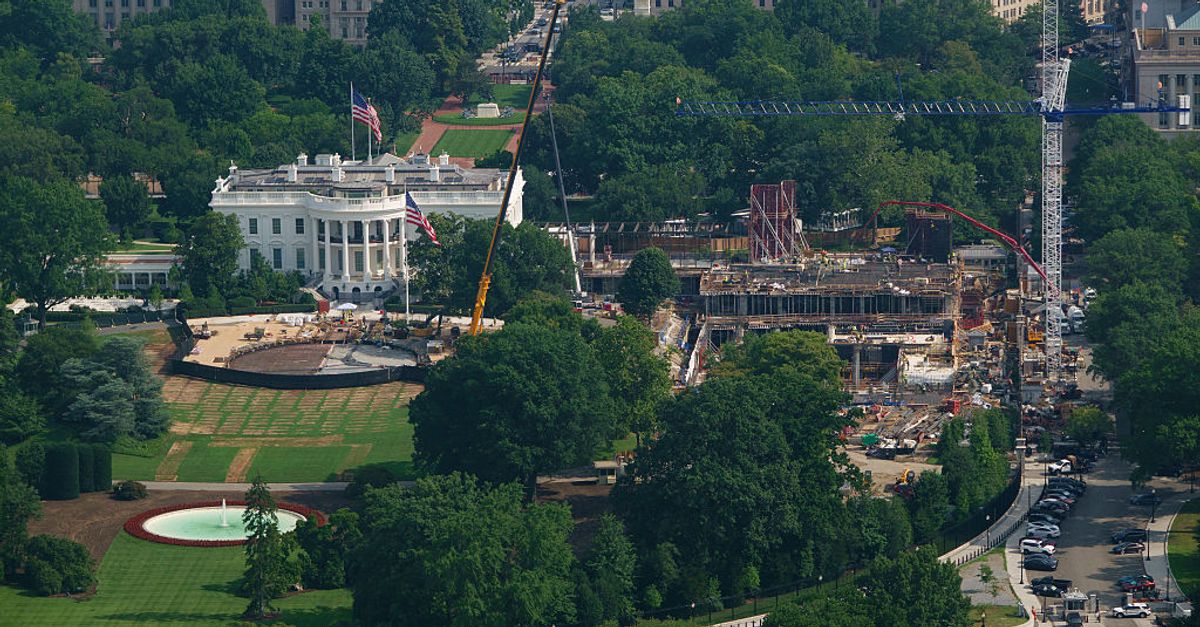
- The Trump administration stated the project was 65% complete, and the ruling means it could finish before the legal dispute is resolved.
What Happened
This pivotal ruling did not delve into the legality of the construction itself but rather focused on a fundamental procedural question: whether the challenger possessed the necessary legal standing to bring the case.
The nation's highest court recently intervened in a dispute concerning a significant construction endeavor at the executive mansion, allowing work on a new White House ballroom to proceed. In a 5-4 decision, the Supreme Court granted the Trump administration's request, effectively pausing a lower court's order that would have halted above-ground construction of the project. This pivotal ruling did not delve into the legality of the construction itself but rather focused on a fundamental procedural question: whether the challenger possessed the necessary legal standing to bring the case.
This development followed an earlier temporary intervention by Chief Justice John Roberts. Ten days prior to the full court's decision, Chief Justice Roberts had issued an administrative stay Supreme Court, which temporarily put the D.C. federal judge's ruling on hold. This initial measure provided the justices with additional time to deliberate on the government's plea to continue the Trump administration White House project. The subsequent majority opinion underscored the critical importance of establishing a direct legal right to challenge such undertakings, signaling a significant hurdle for future litigants in cases involving Supreme Court White House ballroom standing.
Legal Context and the Standing Hurdle
The Supreme Court's majority, in an eight-page, unsigned opinion, made it clear that its decision was not an endorsement of the project's lawfulness. Instead, the justices determined that the plaintiff in the case likely lacked the legal right, known as standing, to contest the construction at all. This procedural finding effectively sidestepped a substantive review of the ballroom's legality, prioritizing the jurisdictional question over the merits of the challenge.
The plaintiff, the National Trust for Historic Preservation, is a private nonprofit organization that describes its mission as leading efforts to save historic sites. Despite its stated purpose, the Court's majority found its connection to the specific harm alleged insufficient to establish National Trust for Historic Preservation standing. Notably, Chief Justice John Roberts, who had initially issued the administrative stay, joined the three Democratic appointees on the Court in dissenting from the majority's ultimate decision. These dissenting justices expressed a strong belief that the ongoing construction "is likely unlawful" and characterized the majority's focus on standing as "no victory for the separation of powers," suggesting a concern that the Court was avoiding a review of executive action.
Project Status and Implications
The immediate consequence of the Supreme Court's ruling is that the construction of the White House ballroom is permitted to continue without interruption. The order from Senior U.S. District Judge Richard Leon, which aimed to halt the above-ground work, had never actually taken effect before the Supreme Court's intervention. This means that the project has been able to progress unimpeded by the lower court's concerns.
According to a statement from the Trump administration on August 13, the project was already "65% complete in its entirety, and moving quickly toward total completion." The Supreme Court's decision now raises the distinct possibility that the entire SCOTUS White House construction could be substantially finished, or even fully completed, by the time the underlying legal dispute over its legality is finally resolved through the judicial system. This outcome highlights how procedural rulings, particularly concerning standing, can have significant practical impacts on the progress of government initiatives, potentially rendering subsequent legal challenges moot.
Practical Implications
This ruling highlights the critical importance of establishing legal standing when challenging government projects, as the Supreme Court prioritized this procedural hurdle over the merits of the construction's legality. Lawyers advising clients on similar challenges must ensure their clients meet standing requirements to avoid early dismissal or administrative stays.
Source
How does this affect you?
Get an AI analysis of this article grounded in your jurisdictions, practice areas, and any policy documents you've uploaded to Wansom.
Finish Reading the Full Story and the Expert Analysis.
Wansom is AI and can make mistakes.