
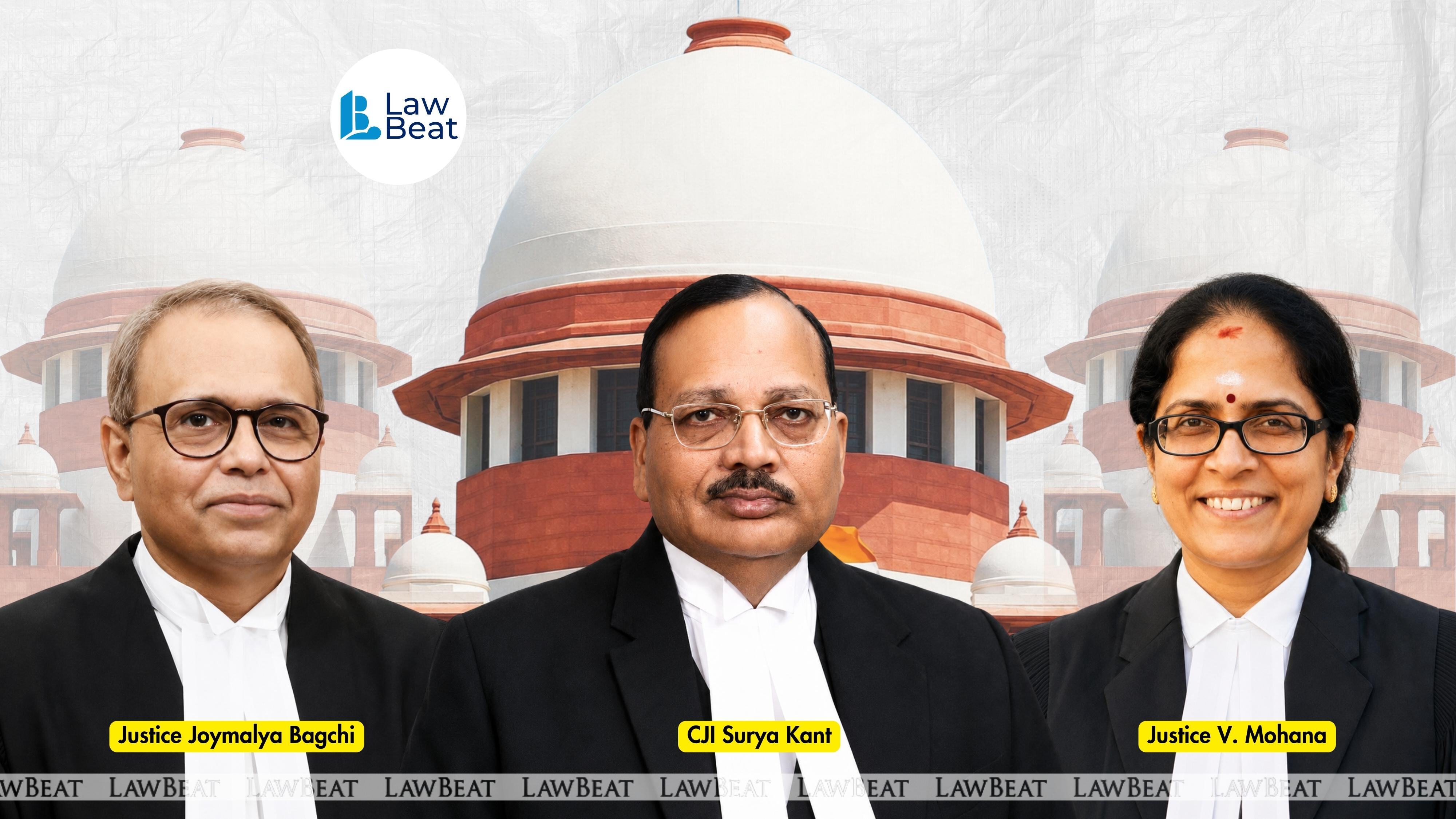
Supreme Court: V-Courts Traffic Challan Glitch Referred to e-Committee
Summary
- The Supreme Court has referred a Public Interest Litigation to its e-Committee regarding a glitch in the V-Courts portal.
- The PIL alleges that paying traffic fines online via V-Courts for compoundable offenses is currently treated as a guilty plea, leading to unintended convictions.
- The petition highlights issues like delayed notices, confusing interface design, lack of driver identification options, and no online grievance redressal.
- The Delhi High Court had previously flagged similar concerns and recommended system modifications, including an option to compound offenses without conviction.
- The Supreme Court deemed the issue of "paramount importance" for the proper functioning of the V-Courts system.
Supreme Court Addresses V-Courts Traffic Challan Glitch
The Supreme Court has referred a significant issue concerning its V-Courts portal to its e-Committee, following a Public Interest Litigation (PIL) that highlighted a critical flaw in the online traffic fine payment system.
The Supreme Court has referred a significant issue concerning its V-Courts portal to its e-Committee, following a Public Interest Litigation (PIL) that highlighted a critical flaw in the online traffic fine payment system. The PIL, brought by petitioner Prabhjot Singh Dhillon through Senior Advocate Maninder Singh, contended that the V-Courts platform inadvertently equates the payment of traffic fines for compoundable offences with an admission of guilt. This mechanism, the petition argues, leads to citizens being unknowingly convicted, often without their informed consent or full understanding of the legal ramifications.
The Supreme Court bench, comprising CJI Surya Kant, Justice Joymalya Bagchi, and Justice V Mohana, acknowledged the "paramount importance" of the matter for the effective operation of the V-Courts portal. The referral underscores a judicial recognition of the potential for widespread legal implications arising from the current digital process for handling traffic challans. The petition specifically seeks modifications to both the V-Courts and Delhi Traffic Police (DTP) portals to rectify these systemic issues.
The V-Courts Online Traffic Fine Conviction Issue
The core of the grievance, as articulated in the writ petition filed by AoR Prabhas Bajaj, is that the V-Courts online payment system for compoundable offences incorrectly registers a fine payment as a guilty plea. This directly contravenes established legal principles governing the compounding of offences, where a settlement typically avoids a formal conviction. Citizens utilizing the V-Courts website to settle their traffic challans are thus unwittingly entering a plea of guilt, leading to a conviction without full awareness of the consequences.
Beyond this central issue, the petition identifies several other fundamental problems with the existing system. Firstly, there is a lack of a reliable mechanism to notify vehicle owners of alleged offences within the prescribed 15-day period, with delays frequently extending to several months on the DTP website. This is particularly problematic given that Section 209 of the Motor Vehicles Act, 1988, bars conviction under Sections 183 and 184 unless notice is issued within 14 days and summons served within 28 days—timelines often not met. Secondly, the V-Courts interface is described as having "dark patterns," meaning a confusing user experience that implicitly links fine payment to a guilty plea. Thirdly, the platform offers no straightforward option for vehicle owners to identify the actual driver at the time of an alleged offence, compelling registered owners to contest challans and appear in court even if they were not driving. Finally, the absence of a time-bound online grievance redressal mechanism forces citizens into a difficult choice: either accept wrongful convictions or endure a burdensome physical legal process.
Legal Context and Prior Warnings
This is not the first time these deficiencies in the online traffic challan system have come under judicial scrutiny. The petition highlights that the Delhi High Court had previously addressed many of these issues in the case of Benetton India Private Limited vs. State of NCT of Delhi. In that ruling, the High Court had specifically requested the e-Committee to implement several modifications to improve the system. These recommendations included streamlining the process for updating mobile numbers linked to vehicles, establishing a time-bound resolution mechanism with the district ACP, and crucially, enabling an option for citizens to identify the actual driver of a vehicle.
Most pertinently, the Delhi High Court had also called for an option to compound offences without it automatically constituting a record of conviction, directly anticipating the central problem now before the Supreme Court. The petitioner, Prabhjot Singh Dhillon, had also made prior attempts to address these issues, including filing two RTI applications with the e-Committee on February 18, indicating a history of concerns regarding the system's functionality and legal implications.
Practical Implications
Lawyers should advise clients against simply paying traffic challans online via V-Courts in India, as this currently equates to an unintended guilty plea and conviction for compoundable offenses. They should monitor the Supreme Court e-Committee's review for potential system modifications to ensure clients avoid inadvertent criminal records and understand the correct procedure for compounding offences without admitting guilt.
Source
How does this affect you?
Get an AI analysis of this article grounded in your jurisdictions, practice areas, and any policy documents you've uploaded to Wansom.
Finish Reading the Full Story and the Expert Analysis.
Wansom is AI and can make mistakes.