
Supreme Court: OBC Creamy Layer CSE 2025 Criteria Hearing Set
Summary
- The Supreme Court will hear the Centre's plea on September 17 regarding the applicability of its March 11, 2026 OBC creamy layer judgment to Civil Services Examination (CSE) 2025 candidates.
- The Centre seeks clarification on whether the OBC creamy layer criteria should apply to the CSE 2025 reservation process.
- Respondents argue that affected candidates have already cleared examination stages and previously won cases at the Central Administrative Tribunal and High Court.
- The Court declined a request for provisional progression of candidates and directed parties to thoroughly examine the interim application (IA 5/1879) before the next hearing.
- The purpose of the OBC creamy layer exclusion is to ensure reservation benefits reach genuinely backward groups, preventing socially advanced sections from monopolizing them.
Supreme Court to Address OBC Creamy Layer Applicability for CSE 2025
The underlying rationale for excluding the 'creamy layer' from OBC reservation benefits, as articulated by the Supreme Court in its March 11, 2026 judgment, is to ensure that the advantages of affirmative action reach the most deserving segments of the Other Backward Classes.
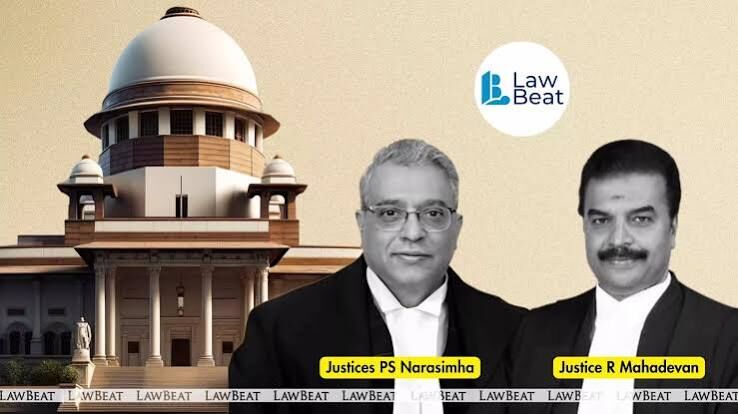
The Supreme Court has scheduled a crucial hearing for September 17 at 3 pm to consider a plea from the Centre. This plea seeks definitive clarification on whether the Court's judgment from March 11, 2026, which established criteria for identifying the Other Backward Classes (OBC) creamy layer, should be applied to candidates participating in the Civil Services Examination (CSE) 2025. The proceedings will be overseen by a bench comprising Justices PS Narasimha and R Mahadevan.
The urgent consideration of an interim application, which directly impacts candidates caught in this dispute, was specifically requested by Solicitor General Tushar Mehta. This intervention highlights the immediate implications of the Court's decision for those aspiring to join the civil services through the CSE 2025 reservation process. The outcome of this hearing is anticipated to provide much-needed clarity on the OBC creamy layer criteria applicability for future recruitment cycles.
Contentious Arguments Over Candidate Progression
During the initial proceedings, counsel representing the respondents emphasized that the affected candidates have already successfully navigated various stages of the examination process. These individuals are currently awaiting their service allocation and subsequent training, with their progression now stalled by the ongoing legal challenge. Advocate Sanjay Hegde, representing the respondents, strongly opposed the Centre's request, pointing out that the candidates had previously secured favorable rulings from both the Central Administrative Tribunal (CAT) and the High Court.
Hegde articulated the respondents' frustration, stating that despite their prior legal victories, the entire process has been stayed, which he deemed highly unfair. He urged the Court to allow the process for these candidates to move forward, even as the legal arguments unfold. Furthermore, the respondents' counsel requested the Court to scrutinize Interim Application (IA) 5/1879, arguing that its prayer effectively seeks to alter the operation of an earlier judgment specifically for the current examination year. They also raised a maintainability objection, indicating that preliminary objections and relevant judgments would be presented to the Court.
Court's Stance on Interim Relief and Examination of Application
Senior Advocate P Wilson, also representing the respondents, pressed for immediate interim relief, proposing that the batch of candidates awaiting service allocation and training be permitted to proceed provisionally. However, the bench declined this suggestion, indicating a cautious approach. The Solicitor General countered, asserting that allowing this particular batch to proceed would not prejudice the petitioners, as it would not adversely affect any of them.
Despite the Solicitor General's assurance, the Court maintained its reserved position, stating, “We don’t know. We will consider your application.” Justice PS Narasimha specifically directed all parties to first thoroughly examine the prayer within the interim application before proceeding further. The Court mandated that the application be properly served and its contents reviewed by all involved parties prior to the next hearing. The Solicitor General indicated his intention to press for interim orders again at the upcoming September 17 hearing, subject to the Court's persuasion.
The Principle Behind Creamy Layer Exclusion
The underlying rationale for excluding the 'creamy layer' from OBC reservation benefits, as articulated by the Supreme Court in its March 11, 2026 judgment, is to ensure that the advantages of affirmative action reach the most deserving segments of the Other Backward Classes. This principle aims to prevent socially and economically advanced individuals within the OBC community from monopolizing opportunities intended for genuinely backward groups.
By implementing the OBC creamy layer criteria, the Court seeks to uphold the true spirit of reservation policies, which is to uplift those who have historically faced systemic disadvantages. The objective is to avoid creating artificial distinctions among beneficiaries and instead focus on equitable distribution of benefits, ensuring that the reservation system effectively serves its purpose of social justice.
Practical Implications
Lawyers advising on public service recruitment or reservation policies must monitor this hearing as its outcome will clarify the application of OBC creamy layer criteria for CSE 2025, potentially impacting candidate eligibility and future legal challenges to recruitment processes.
Source
How does this affect you?
Get an AI analysis of this article grounded in your jurisdictions, practice areas, and any policy documents you've uploaded to Wansom.
Finish Reading the Full Story and the Expert Analysis.
Wansom is AI and can make mistakes.