
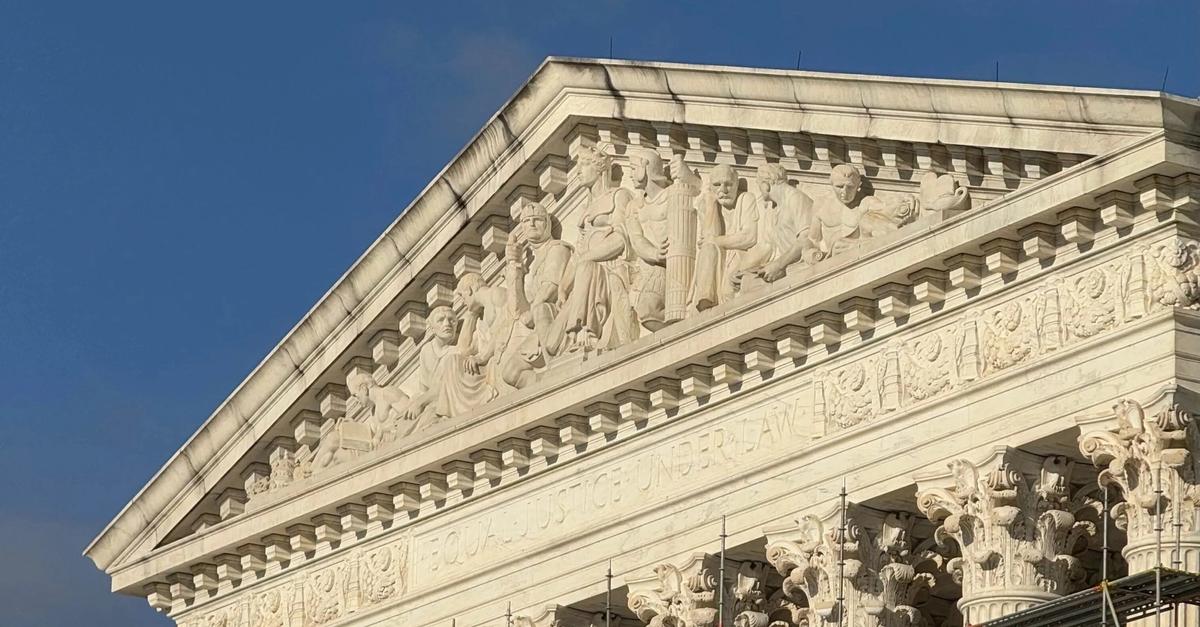
Supreme Court: Emergency Challenge to Texas DOJ Deportation Pause
Summary
- The Supreme Court received an emergency application on October 15, 2026, to pause an agreement between Texas and the Department of Justice concerning a Biden-era immigration rule; a decision is pending.
- This agreement currently prevents immigration judges from pausing certain deportation proceedings, as allowed by the Biden administration policy, which was vacated in June 2026.
- The Court also granted an FCC request to block a ruling on political advertising rates, with Justices Sotomayor and Jackson dissenting.
- Oral arguments were heard on the Video Privacy Protection Act's internet applicability and judicial deference to sentencing guidelines commentary.
- Three new cases were added to the 2026-27 term docket, covering government information access, material support for terrorism, and prisoner appeals.
What Happened
The Court's decision on this emergency request could have immediate and far-reaching implications for immigration enforcement and the authority of immigration judges.
The Supreme Court concluded the second and final week of its October sitting with a flurry of activity, including an urgent request to intervene in a significant immigration dispute. On Thursday, an emergency application was publicly docketed, asking the justices to halt an agreement between the state of Texas and the Department of Justice. This agreement currently prevents the implementation of a Biden administration policy that would empower immigration judges to temporarily suspend certain deportation proceedings. The application was brought forward by three municipalities and a legal aid organization dedicated to assisting immigrants, underscoring the immediate impact of the ongoing legal battle.
This particular emergency filing highlights the Court's active role in managing time-sensitive requests, even as it navigates a full calendar of scheduled arguments and case considerations. The justices are currently considering the emergency application, which was filed on October 15, 2026, and a decision is pending. This period of intense judicial review precedes a brief lull before the November sitting commences on November 2.
Legal Context of the Immigration Dispute
At the heart of the emergency application is a Biden-era rule designed to provide immigration judges with the discretion to pause specific deportation cases. This policy aims to streamline the immigration court system and potentially offer relief in certain circumstances. However, an agreement forged between the state of Texas and the Department of Justice has effectively blocked the enforcement of this federal rule, creating a direct conflict over immigration policy implementation. The rule was vacated nationwide in June 2026 through a consent decree between Texas and the Department of Justice, approved by a Texas federal court.
The cities and immigrant legal services group contend that the Texas-DOJ agreement undermines the federal government's intended approach to managing deportation proceedings, thereby impacting individuals and communities. Their appeal to the Supreme Court seeks immediate relief, requesting that the Court step in to allow the Biden administration's rule to take effect while the broader legal challenges unfold. The Court's decision on this emergency request could have immediate and far-reaching implications for immigration enforcement and the authority of immigration judges.
Broader Judicial Engagements
Beyond the pressing immigration matter, the Supreme Court addressed several other critical issues throughout the week. On Wednesday, the justices granted an emergency request from the Federal Communications Commission, effectively blocking a lower federal appeals court ruling. That ruling would have compelled the FCC to swiftly decide on a challenge to its 'public notice,' which extends preferential advertising rates to political parties and joint fundraising committees. Justices Sonia Sotomayor and Ketanji Brown Jackson noted their dissent from this decision, though without providing a rationale.
The Court also heard two oral arguments this week. On Wednesday, Salazar v. Paramount Global explored how the 1988 Video Privacy Protection Act, originally enacted after a report on Supreme Court nominee Robert Bork’s video rental history, applies in the contemporary internet era. The previous day, Tuesday, Beaird v. United States focused on the level of deference courts should grant to the U.S. Sentencing Commission’s interpretations of federal sentencing guidelines. These cases represent the Court's ongoing work in interpreting statutes and defining judicial standards.
Further expanding its future workload, the Court announced on Tuesday that it had added three new cases to its oral argument docket for the 2026-27 term. These include cases examining the types of orders trial courts can issue regarding access to government information, whether working as a cook for a terrorist group constitutes 'material support' under federal immigration law, and the conditions under which a certificate of appealability can be granted to a prisoner whose claim is barred by circuit precedent but might be valid elsewhere. Additionally, the Court is awaiting a decision on a September 28 request from the Trump administration to implement a new Federal Bureau of Prisons policy preventing gender-transition surgeries, hormone therapy, and social accommodations for transgender inmates, with a ruling possible at any moment. Another interim docket item involves a New Hampshire voter ID dispute, where Secretary of State David M. Scanlan seeks to prevent the use of student IDs for voter registration, with the state having appealed to the Supreme Court after a First Circuit decision declined to fully block their use as evidence.
Source
How does this affect you?
Get an AI analysis of this article grounded in your jurisdictions, practice areas, and any policy documents you've uploaded to Wansom.
Finish Reading the Full Story and the Expert Analysis.
Get the latest legal & regulatory intelligence in United States
Wansom is AI and can make mistakes.