
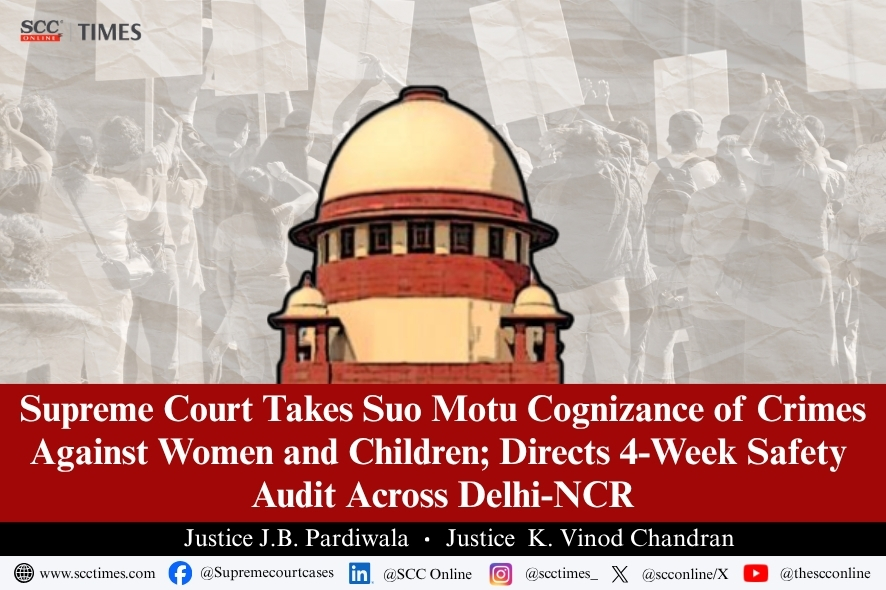
Supreme Court: Delhi-NCR Safety Audit for Women, Children Mandated
Summary
- The Supreme Court took *suo motu* cognizance of crimes against women and children in Delhi-NCR.
- The Court directed a four-week safety audit across the region.
- The audit includes vulnerability mapping, CCTV audits, and enhanced patrolling.
Supreme Court Mandates Delhi-NCR Safety Review
This proactive stance by the Supreme Court Delhi-NCR safety audit women children signals a new era of accountability for public safety.
The Supreme Court of India has initiated a significant intervention concerning public safety in the Delhi-National Capital Region (NCR), taking *suo motu* cognizance of the escalating issue of crimes against women and children. This proactive judicial step underscores a deep concern for the security of vulnerable populations within the capital's extended metropolitan area. The Court's directive mandates a comprehensive safety audit to be completed within a strict four-week timeframe, signaling an urgent call for action from relevant authorities.
This audit is not merely a general review but includes specific, actionable components designed to enhance security infrastructure and response mechanisms. Among the key directives are the implementation of vulnerability mapping exercises, thorough audits of existing Closed-Circuit Television (CCTV) surveillance systems, and the deployment of enhanced patrolling strategies across the Delhi-NCR region. These measures collectively aim to identify and mitigate risks, thereby creating safer environments for women and children.
The Significance of Suo Motu Cognizance
The Supreme Court's decision to take *suo motu* cognizance, meaning acting on its own initiative without a formal petition, highlights the gravity with which the judiciary views the current safety situation. This power allows the Court to intervene directly in matters of public importance, particularly when fundamental rights, such as the right to life and personal liberty, are perceived to be under threat. In this instance, the Court has identified a systemic failure in ensuring the safety of women and children, prompting its direct oversight and issuance of specific directives.
Such judicial activism serves as a powerful signal to executive and administrative bodies regarding their constitutional obligations. By stepping in, the India Supreme Court emphasizes that the protection of its citizens, especially the most vulnerable, is paramount and cannot be neglected. This approach reinforces the judiciary's role as a guardian of rights and a check on governmental inaction, compelling a swift and coordinated response to a pressing societal challenge.
Detailed Directives for Enhanced Security
The Court's directions for a Delhi-NCR crimes against women children audit are multifaceted, targeting various aspects of urban safety. Vulnerability mapping, a crucial component, involves systematically identifying and categorizing areas within Delhi-NCR that are prone to criminal activity or lack adequate safety infrastructure. This process typically considers factors such as lighting, public transport access, population density, and historical crime data to pinpoint high-risk zones requiring immediate attention and intervention.
Furthermore, the mandate for CCTV audits aims to assess the efficacy and coverage of existing surveillance networks. This includes evaluating the functionality of cameras, their strategic placement, and the operational efficiency of monitoring systems. Gaps in coverage or non-functional equipment will likely be identified for immediate rectification. Concurrently, the directive for enhanced patrolling signifies an increase in visible security presence, particularly in identified vulnerable areas, serving as both a deterrent to potential offenders and a reassurance to the public. The combination of these measures forms a comprehensive strategy to bolster security.
Broader Implications and Compliance Outlook
This proactive stance by the Supreme Court Delhi-NCR safety audit women children signals a new era of accountability for public safety. The directives, while immediately focused on Delhi-NCR, set a precedent that could influence safety protocols and judicial oversight in other urban centers across India. Entities operating public spaces, facilities, or transportation within the region should anticipate heightened scrutiny and potential new compliance obligations stemming from this ruling.
Legal counsel and compliance officers, particularly those advising organizations with a significant presence in Delhi-NCR, must prepare for potential directives related to infrastructure improvements, security personnel training, and reporting mechanisms. The Court's emphasis on a time-bound audit suggests that non-compliance or inadequate implementation of safety measures could lead to further judicial intervention. This ruling underscores a firm commitment from the judiciary to ensure tangible improvements in the safety and security landscape for women and children.
Practical Implications
Compliance officers and legal counsel for entities operating public spaces or facilities in Delhi-NCR should anticipate increased scrutiny and potential directives regarding safety measures, including vulnerability mapping and CCTV infrastructure. This ruling signals a proactive judicial stance on public safety that may lead to new compliance obligations or enforcement actions.
Source
Source: Original reporting via SCC Times
How does this affect you?
Get an AI analysis of this article grounded in your jurisdictions, practice areas, and any policy documents you've uploaded to Wansom.
Finish Reading the Full Story and the Expert Analysis.
Get the latest legal & regulatory intelligence in India
Wansom is AI and can make mistakes.