
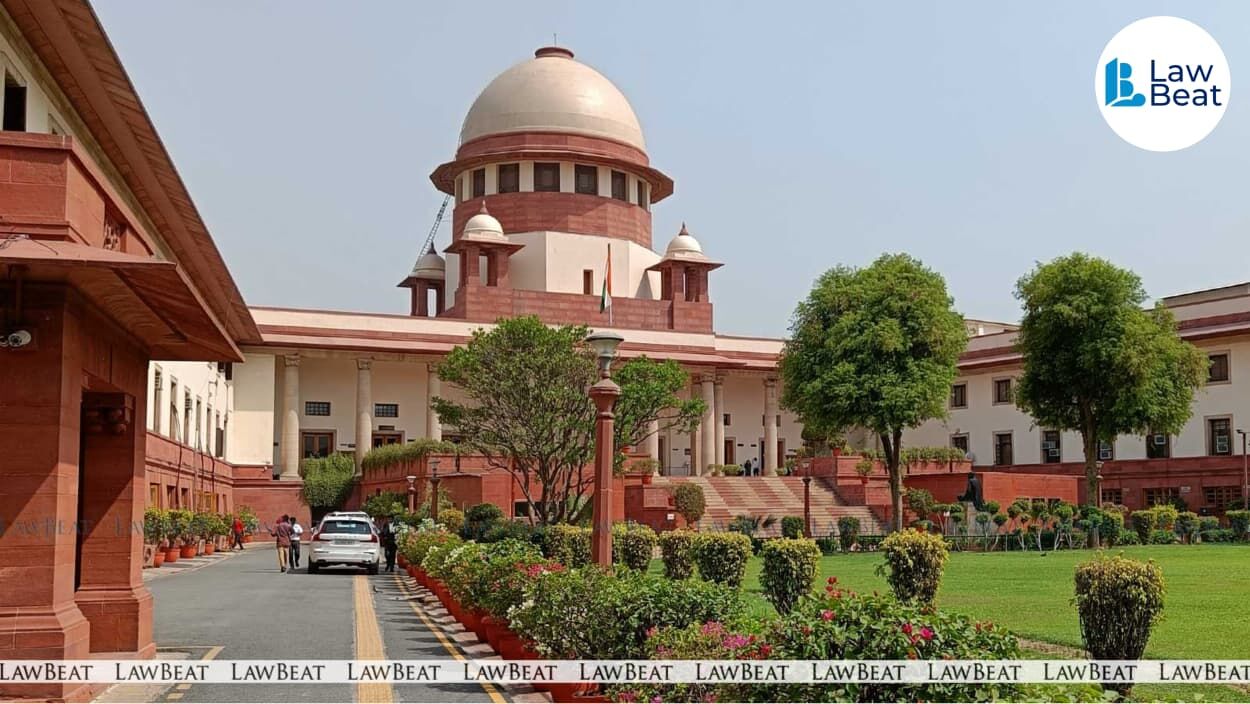
Supreme Court: Centre to Consider Legal Education Commission India
Summary
- The Supreme Court of India has urged the Centre to consider establishing an expert body to review the nation's legal education framework.
- This directive follows a Public Interest Litigation (PIL) filed by Advocate Ashwini Upadhyay, seeking comprehensive reforms in legal education.
- The PIL advocates for an overhaul of LLB and LLM curricula and duration to align with global standards and the National Education Policy (NEP) 2020.
- The petitioner criticizes current five-year integrated law programs as excessively long, financially burdensome, and academically inefficient due to non-law subjects.
- The court emphasized the relevance of an expert body in the current era, noting a lack of response from key regulatory institutions regarding these proposed changes.
Supreme Court Urges Expert Body for Legal Education Reform
The formation of an expert body on legal education in India, as suggested by the Supreme Court, could be pivotal in addressing these systemic issues and shaping the future of legal professionals.
The Supreme Court of India has recently called upon the Centre to consider establishing an expert body dedicated to scrutinizing the nation's legal education framework. This directive emerged during a hearing concerning a Public Interest Litigation (PIL) filed by Advocate Ashwini Upadhyay, which advocates for significant reforms in the sector. A bench comprising Chief Justice of India Surya Kant, alongside Justices Joymalya Bagchi and V Mohana, underscored the critical importance of such an institution in the contemporary era, emphasizing that the present time necessitates specialized expert bodies, particularly for legal education.
During the proceedings, Chief Justice Kant highlighted the pressing need for a dedicated expert body to address the evolving landscape of legal studies in India. The court's observation came as the petitioner, Ashwini Upadhyay, pointed out a notable lack of response from key governmental and regulatory bodies, including the Centre, the Bar Council of India, and the Law Commission of India, regarding the proposed reforms. The PIL specifically seeks the constitution of a Legal Education Commission or a similar expert entity to undertake a comprehensive review and restructuring of the existing legal education system in India.
Petitioner Highlights Flaws in Current Legal Education Framework
Advocate Upadhyay's PIL outlines a series of concerns regarding the current state of legal education, particularly advocating for an overhaul of the LLB and LLM syllabi, curriculum, and overall duration. The petition stresses the necessity for these changes to align with global standards and the principles articulated in the National Education Policy (NEP) 2020, aiming to foster a more inclusive, rational, and modern approach to legal studies. The petitioner expressed disappointment that neither the Centre nor the Bar Council of India has moved to establish a dedicated commission or expert committee to review the course structure and duration in line with the NEP 2020, drawing a parallel with the Medical Education Commission.
A central argument within the PIL targets the perceived inefficiencies of the current five-year integrated law programs, such as BA-LLB and BBA-LLB. Upadhyay contends that these programs are excessively long, impose a substantial financial burden on students, and are academically inefficient. The petitioner argues that the extended duration, coupled with the compulsory inclusion of non-law subjects like Sociology, Political Science, History, and English in the initial years, unnecessarily prolongs students' academic journeys without significantly enhancing their legal proficiency. For instance, subjects unrelated to law, including Economics, Sociology, and History, are mandated during the first two years of these integrated programs.
Calls for Modernization Amidst Evolving Academic Landscape
The PIL further highlights a disconnect between the static nature of legal education and the dynamic reforms occurring in other professional disciplines, especially in light of the NEP 2020's emphasis on multidisciplinary, flexible, and student-centric learning. The petitioner referenced recent policy statements from the University Grants Commission (UGC), noting that students with four-year undergraduate degrees are now eligible to directly pursue PhD programs and appear for the National Eligibility Test (NET), irrespective of their undergraduate stream. This development, the PIL argues, exemplifies the flexibility promoted by the NEP 2020, a flexibility currently absent in the Indian legal education framework.
Concerns were also raised about the disproportionate financial burden placed on students from lower and middle-income backgrounds, suggesting that the lengthy five-year law programs effectively deter talented but economically disadvantaged individuals from entering the legal profession. The PIL draws a comparison with engineering degrees from premier institutions like the IITs, which are completed within four years with a more focused curriculum. A Hindustan Times news report from April 21, 2024, was cited to underscore the shifting academic landscape and the Bar Council of India's perceived failure to adapt to these changes. The formation of an expert body on legal education in India, as suggested by the Supreme Court, could be pivotal in addressing these systemic issues and shaping the future of legal professionals.
Practical Implications
Lawyers and compliance officers in India should monitor the proposed Legal Education Commission's formation and recommendations, as these could significantly reshape legal education, impacting the skills of future legal professionals and potentially influencing professional development requirements.
Source
How does this affect you?
Get an AI analysis of this article grounded in your jurisdictions, practice areas, and any policy documents you've uploaded to Wansom.
Finish Reading the Full Story and the Expert Analysis.
Wansom is AI and can make mistakes.