
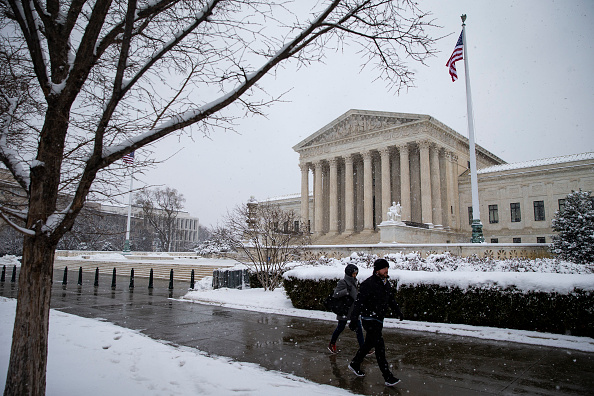
Supreme Court: Staff Email Disclaimers Attempt to Skirt State Disclosure Laws
Summary
- A Fix the Court report, "Broken Records," revealed unusual email signatures used by Supreme Court employees.
- Public information and chambers staff have been appending specific disclaimers to their emails since at least spring 2022.
- The reported text in these email signatures is: "This record, and all records created in response to it, are records of the Supreme Court of the United States, and are not 'agency records' under 5 U.S.C. § 552 or similar state statutes. No such records may be disclosed without the prior written approval of the Marshal of the Supreme Court of the United States".
- The source draws a parallel between these signatures and legally unfounded social media privacy notices, suggesting a potential attempt to control information or skirt disclosure laws.
Unusual Email Practices Revealed
The specific text identified in these email signatures reads: "This record, and all records created in response to it, are records of the Supreme Court of the United States, and are not 'agency records' under 5 U.S.C. § 552 or similar state statutes. No such records may be disclosed without the prior written approval of the Marshal of the Supreme Court of the United States".
A recent report from Fix the Court, titled "Broken Records," has brought to light an unusual practice among certain Supreme Court employees. The report indicates that staff members, primarily those in public information and chambers roles, have been appending peculiar disclaimers to their official email signatures. This practice has been observed since at least the spring of 2022, raising questions about internal communication protocols at the nation's highest court.
The source draws a striking parallel between these official email additions and the often-circulated, legally unfounded privacy notices seen on social media platforms. These social media posts typically claim to protect personal content through vague legal references, despite lacking any actual legal standing. The implication is that the Supreme Court's use of such language could be perceived as an attempt to control information or skirt state disclosure laws, mirroring the intent behind those informal online declarations.
The Nature of the Disclaimers
The analogy to social media privacy notices is particularly pertinent given the nature of the language identified. Online, individuals sometimes post statements like, "I give notice to Facebook it is strictly forbidden to copy my photos per UCC 1-308, 1-103, and the Rome Statute." Such wording is widely recognized as legally meaningless, yet it persists due to a misunderstanding of legal principles.
In a similar vein, the specific text found in the email signatures of Supreme Court employees, as reported by Fix the Court, reads: "This record, and all records created in response to it, are records of the Supreme Court of the United States, and are not 'agency records' under 5 U.S.C. § 552 or similar state statutes. No such records may be disclosed without the prior written approval of the Marshal of the Supreme Court of the United States". The presence of this text in official communications from Supreme Court staff is highlighted as unusual, prompting scrutiny into its purpose and origin within the institution.
Transparency and Public Information Concerns
The roles of the employees involved — public information staff and chambers staff — are central to the concerns raised by this discovery. These positions are inherently tied to the dissemination of information and communication with the public, making the use of unconventional disclaimers particularly noteworthy. The practice could potentially complicate or obscure the transparency expected from a judicial body of the Supreme Court's stature.
The "Broken Records" report underscores the broader implications of such internal practices for an institution that is frequently scrutinized for its openness and adherence to legal norms. The use of language that appears to be an attempt to assert control over information, even if legally ineffective, could contribute to perceptions that the Supreme Court is trying to skirt state disclosure laws or public information standards through informal and unusual means, thereby impacting public trust and accountability.
Source
How does this affect you?
Get an AI analysis of this article grounded in your jurisdictions, practice areas, and any policy documents you've uploaded to Wansom.
Finish Reading the Full Story and the Expert Analysis.
Get the latest legal & regulatory intelligence in United States
Wansom is AI and can make mistakes.