
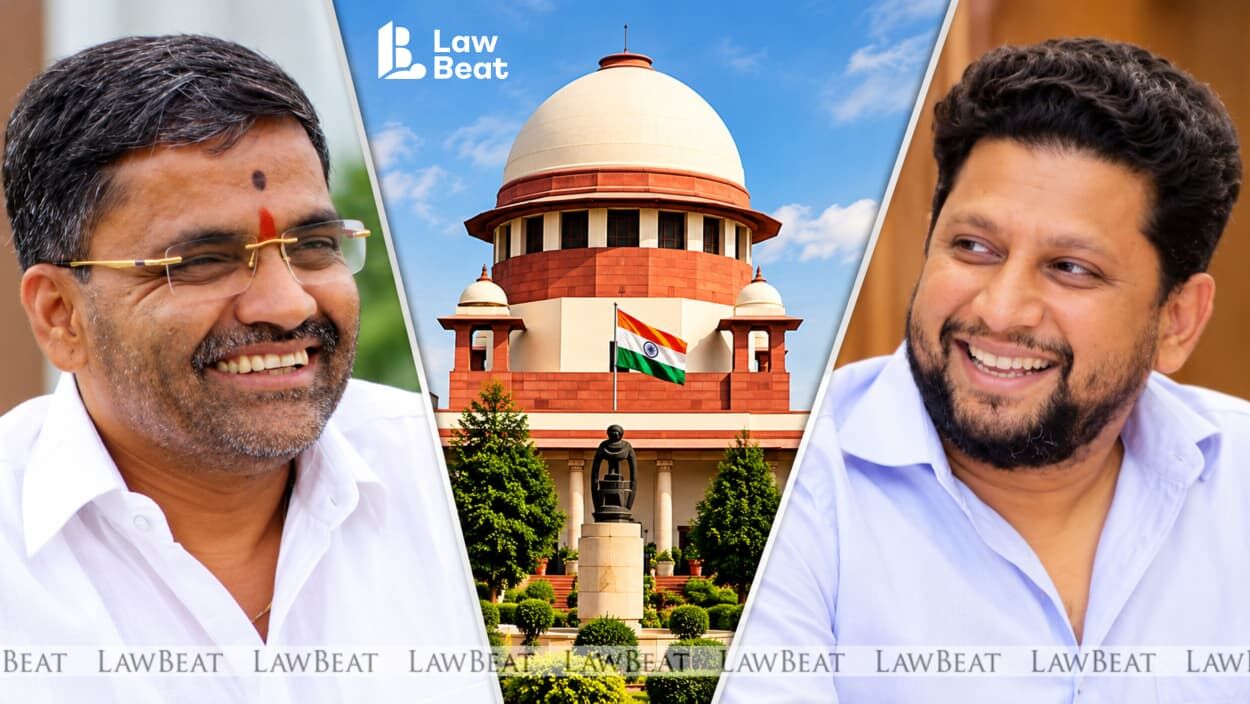
Supreme Court: Nilesh Lanke Election Challenge Notice Issued
Summary
- The Supreme Court has sought a response from MP Nilesh Dnyandev Lanke regarding a challenge to his 2024 Lok Sabha election victory from Ahmednagar.
- BJP leader Sujay Radhakrishna Vikhe-Patil filed the challenge after the Bombay High Court dismissed his initial election petition on April 8, 2026.
- The High Court had dismissed Vikhe-Patil's petition at a preliminary stage, citing vague allegations and a lack of sufficient material facts under Order VII Rule 11 of the Code of Civil Procedure.
- Vikhe-Patil's petition alleged corrupt electoral practices, excessive expenditure, and voting irregularities, invoking provisions of the Representation of the People Act, 1951.
- A Supreme Court bench, including Chief Justice of India Surya Kant, issued notice on the matter, with a hearing scheduled for September 24, 2026.
Supreme Court Intervenes in Ahmednagar Election Dispute
Lawyers advising political clients or involved in election law should note the Supreme Court's scrutiny of election petitions, particularly regarding the sufficiency of material facts and particulars required to avoid dismissal at the preliminary stage under Order VII Rule 11 CPC.
The Supreme Court of India has initiated proceedings in a significant election dispute, seeking a formal response from Member of Parliament Nilesh Dnyandev Lanke concerning his 2024 Lok Sabha election victory. This action by the apex court comes in response to a plea filed by BJP leader Sujay Radhakrishna Vikhe-Patil, who is challenging Lanke's election from the Ahmednagar constituency in Maharashtra.
A bench comprising Chief Justice of India Surya Kant, Justice Joymalya Bagchi, and Justice V. Mohana issued notice on Vikhe-Patil’s challenge. The challenge specifically targets an April 8, 2026, order from the Bombay High Court, which had previously dismissed Vikhe-Patil’s election petition against Lanke at a preliminary stage. This development signals the Supreme Court's scrutiny of the High Court's decision and the underlying electoral allegations.
Senior Advocate N.K. Kaul, representing Vikhe-Patil, argued before the Supreme Court that the election dispute had already advanced considerably, encompassing issues that necessitate a full trial for proper determination. Kaul contended that a “mini trial” had effectively occurred, asserting that the election petition should not have been rejected under Order VII Rule 11 of the Code of Civil Procedure. He also requested a fixed returnable date for the notice, highlighting that Lanke would continue to hold his parliamentary office while the legal proceedings remained pending, a point acknowledged by CJI Kant who indicated a returnable date would be provided. The Supreme Court Nilesh Lanke election challenge is now formally underway.
Background of the Electoral Challenge
The electoral contest for the Ahmednagar Lok Sabha seat in the 2024 general election saw a close battle between Nilesh Dnyandev Lanke, who ran on the NCP (Sharadchandra Pawar) ticket, and Sujay Radhakrishna Vikhe-Patil of the BJP. Lanke was declared the winner on June 4, 2024, securing 6,24,797 votes against Vikhe-Patil’s 5,95,868 votes, resulting in a victory margin of 28,929 votes.
Following his defeat, Vikhe-Patil lodged an election petition with the Bombay High Court, contesting Lanke’s victory. His petition contained a range of serious allegations, including claims of corrupt electoral practices, excessive election expenditure, and the non-disclosure of certain financial outlays. Furthermore, the petition cited instances of alleged bogus or duplicate voting and raised concerns about irregularities in the verification process of Electronic Voting Machines (EVMs).
The Sujay Vikhe-Patil election petition specifically invoked several provisions of the Representation of the People Act, 1951. These included Sections 123(4) and 123(6), which pertain to corrupt practices, and Section 100, which outlines the grounds upon which an election may be declared void. The Ahmednagar Lok Sabha election dispute thus brought forth a comprehensive challenge under established election law.
High Court's Dismissal and Legal Context
The Bombay High Court’s decision to dismiss Vikhe-Patil’s election petition on April 8, 2026, formed the immediate basis for the current Supreme Court intervention. Lanke had sought the petition’s dismissal at the outset, arguing that the allegations presented did not establish a proper cause of action and lacked the necessary particulars required for an election petition under Order VII Rule 11 of the Code of Civil Procedure. This procedural rule allows for the rejection of a plaint if it fails to disclose a cause of action or lacks essential details.
The High Court concurred with Lanke’s application, finding that the allegations concerning corrupt practices were vague and lacked specificity. It concluded that the petition did not furnish sufficient material facts to justify proceeding to a full trial. Beyond the substantive allegations, the High Court also considered various procedural objections, including those related to limitation periods, the proper form of affidavits, alleged defects in the pleadings, and other compliance requirements stipulated by the Representation of the People Act, 1951. This preliminary dismissal under Order VII Rule 11 CPC election petition rules is now under the Supreme Court's review.
Lawyers advising political clients or involved in election law should note the Supreme Court's scrutiny of election petitions, particularly regarding the sufficiency of material facts and particulars required to avoid dismissal at the preliminary stage under Order VII Rule 11 CPC. This case underscores the high bar for pleading corrupt practices under the Representation of the People Act, 1951, and the need for robust evidence from the outset. The Supreme Court India election law landscape demands meticulous adherence to procedural and substantive requirements.
Implications for Election Law and Future Proceedings
The Supreme Court’s decision to issue notice in the SUJAY RADHAKRISHNA VIKHE-PATIL Vs NILESH DYANDEV LANKE case, scheduled for a hearing on September 24, 2026, carries significant implications for the interpretation and application of election law in India. By reviewing the Bombay High Court’s preliminary dismissal, the apex court will further clarify the standards for what constitutes sufficient material facts and particulars in an election petition, especially when allegations of corrupt practices are involved.
This case highlights the critical role of Order VII Rule 11 CPC in election disputes, serving as a gatekeeper against petitions that may lack substantive grounds or proper pleading. The Supreme Court’s examination will likely reinforce or refine the stringent requirements for challenging an election outcome, particularly concerning the detailed evidence needed to substantiate claims under the Representation of the People Act, 1951. The outcome could set an important precedent for how future election petitions are evaluated at their initial stages, influencing legal strategy for all parties involved in electoral challenges across the country.
Practical Implications
Lawyers advising political clients or involved in election law should note the Supreme Court's scrutiny of election petitions, particularly regarding the sufficiency of material facts and particulars required to avoid dismissal at the preliminary stage under Order VII Rule 11 CPC. This case underscores the high bar for pleading corrupt practices under the Representation of the People Act, 1951, and the need for robust evidence from the outset.
Source
Source: Original reporting via Live Law
How does this affect you?
Get an AI analysis of this article grounded in your jurisdictions, practice areas, and any policy documents you've uploaded to Wansom.
Finish Reading the Full Story and the Expert Analysis.
Get the latest legal & regulatory intelligence in India
Wansom is AI and can make mistakes.