
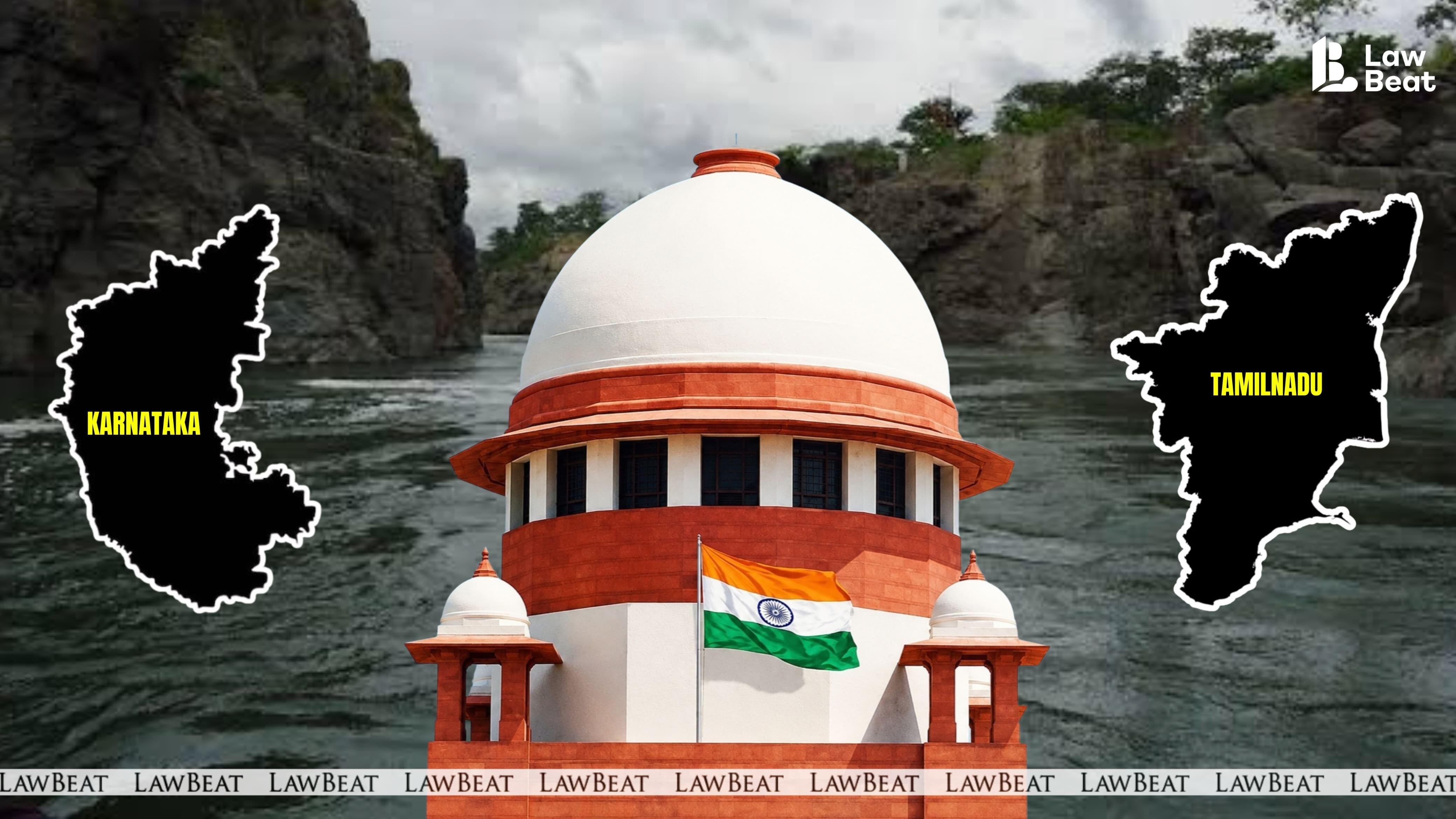
Supreme Court: Karnataka Must Reply on Cauvery Water Release Shortfall
Summary
- The Supreme Court has directed Karnataka and other respondents to file a response within one week to Tamil Nadu's plea regarding a shortfall in Cauvery water releases.
- Tamil Nadu alleges a 20 TMC shortfall, citing a 50.5% deficit in cumulative net flows into Karnataka's reservoirs as assessed by the Cauvery Water Regulation Committee.
- Karnataka disputes these claims, asserting it faces severe drought but has complied with and often exceeded Cauvery Water Management Authority directions.
- The Court has ordered that existing water release arrangements and directions will continue until the next hearing on October 12.
- Tamil Nadu's plea seeks enforcement of the Cauvery Water Disputes Tribunal award, particularly proportional water release during a distress year.
Court Directs Response in Water Row
The Supreme Court has mandated that Karnataka and other named respondents submit their replies within one week concerning a plea filed by Tamil Nadu.
The Supreme Court has mandated that Karnataka and other named respondents submit their replies within one week concerning a plea filed by Tamil Nadu. This plea alleges a significant shortfall in the release of Cauvery water, despite specific directions issued by the Cauvery Water Management Authority (CWMA) and the Cauvery Water Regulation Committee (CWRC). A bench comprising Justices Vikram Nath, AG Masih, and Sandeep Mehta heard the matter, setting October 12 as the date for the next listing.
During the proceedings, the Supreme Court clarified that the existing arrangements and directives regarding water release would remain in effect until further orders. This directive comes amidst an ongoing Supreme Court Cauvery water release shortfall dispute, highlighting the judiciary's role in overseeing inter-state water allocation. The Court's order for a formal response underscores the gravity of the allegations presented in the SC writ petition water allocation.
Tamil Nadu's Allegations and Legal Grounds
Tamil Nadu, represented by Senior Advocate C.S. Vaidyanathan, asserted that its plea primarily seeks the enforcement of the Cauvery Water Disputes Tribunal award. The state emphasized the necessity of proportional water release, particularly during a distress year, citing Clause 7 of the final award which mandates a proportionate reduction in allocated shares when the Cauvery basin's yield is lower.
The state further highlighted an assessment by the CWRC, which documented a 50.5% deficit in cumulative net flows into Karnataka’s four designated reservoirs during the relevant period. While the CWRC's subsequent directions reduced the required release, Tamil Nadu contended that these directions failed to address how the accumulated shortfall should be rectified. Similarly, the Cauvery Water Management Authority (CWMA) acknowledged the deficit and both states' submissions but did not provide a mechanism for making good the accumulated shortfall. Tamil Nadu calculated its shortfall at approximately 20 TMC, contrasting with Karnataka's assessment of around 16 TMC. The state also alleged that Karnataka had substantially reduced its reservoir storage for a summer crop, contributing to the current situation, and noted the rapidly closing window to address the deficit as the monsoon recedes.
Karnataka's Defense Amidst Drought
Karnataka, through Senior Advocate Shyam Divan, vehemently disputed Tamil Nadu’s allegations, labeling them as "absolutely baseless." Divan argued against making factual assertions without a supporting affidavit. Karnataka informed the Supreme Court that it is currently grappling with a severe drought, yet it has consistently complied with Cauvery Water Management Authority directions regarding water releases.
Furthermore, Karnataka asserted that on multiple occasions, it had released quantities of water exceeding those directed by the CWMA, despite the challenging conditions. Divan presented an updated chart to the bench, illustrating Karnataka's releases over the preceding 15 days, which showed periods of both deficit and surplus. Karnataka also pointed out that while it had filed replies in previous instances without formal notice, the Court had not yet formally required a reply to the present application.
Ongoing Challenges in Inter-State Water Sharing
The ongoing Karnataka Tamil Nadu Cauvery dispute underscores the persistent challenges in managing inter-state water resources, particularly in years of hydrological stress. The Supreme Court's involvement, through this SC writ petition water allocation, highlights the judiciary's critical role in ensuring the implementation of established awards and the directives of regulatory bodies like the CWMA and CWRC. The Court's decision to seek a formal response and maintain existing arrangements reflects the complex balance required to address the water needs of both states.
This legal proceeding is a crucial development in the long-standing Supreme Court inter-state water dispute, with potential implications for future water allocation mechanisms. The resolution of such disputes is vital for regional stability and the livelihoods of millions dependent on the Cauvery river basin, especially as climate patterns introduce greater variability in water availability.
Practical Implications
Lawyers advising clients in Karnataka or Tamil Nadu on water-dependent sectors (e.g., agriculture, industry, infrastructure) must closely monitor the Supreme Court's directives on Cauvery water allocation. The ongoing dispute and potential future rulings could significantly impact water availability, operational planning, and compliance with regulatory body decisions in these states.
Source
Source: Original reporting via Live Law
How does this affect you?
Get an AI analysis of this article grounded in your jurisdictions, practice areas, and any policy documents you've uploaded to Wansom.
Finish Reading the Full Story and the Expert Analysis.
Get the latest legal & regulatory intelligence in India
Wansom is AI and can make mistakes.