
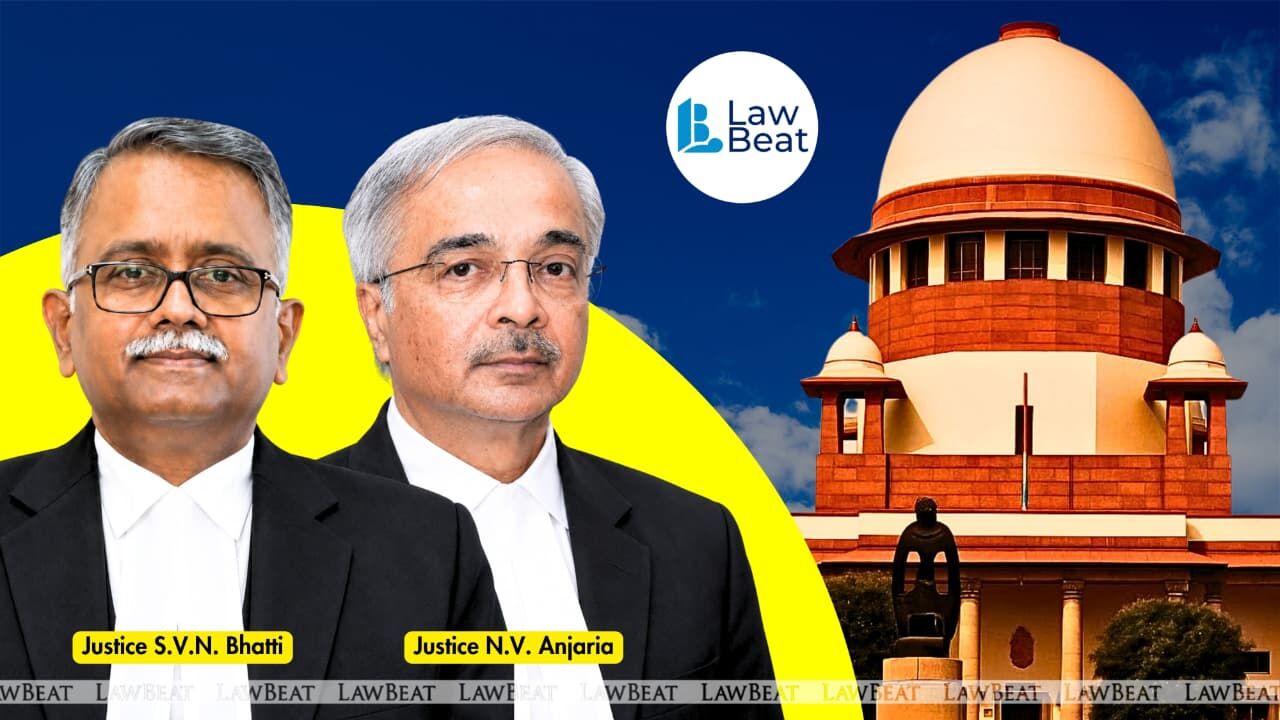
Supreme Court: Section 17A PC Act Prior Approval Not for Bribe Demand
What Happened
Home / Top Stories / Supreme Court Judgments Section 17A PC Act Does Not Offer Blanket Protection To Public Servants: Supreme Court X Supreme Court says Section 17A PC Act prior approval applies only to acts linked to official decisions. The Supreme Court holds that Section 17A of the Prevention of Corruption Act requires prior approval only for offences linked to official recommendations or decisions, not for acts such as demanding bribes. The Supreme Court has held that Section 17A of the Prevention of Corruption Act does not provide blanket protection to public servants from enquiry or investigation, clarifying that prior approval is required only when the alleged offence is relatable to a recommendation made or decision taken in the discharge of official functions or duties. A Bench of Justices S V N Bhatti and N V Anjaria said the provision does not provide protection to public servants, particularly where the alleged act, such as demanding a bribe, is a criminal act wholly disconnected from official duties. Section 17A of the Prevention of Corruption Act (PC Act) mandates prior approval from the competent authority before an enquiry or investigation into an alleged offence by a public servant. Court made the observations while dismissing an appeal filed by Tejaram, a police constable in Rajasthan, who challenged the Rajasthan High Court's March 26, 2025 order upholding the trial court's decision to frame charges against him in a bribery case. When does Section 17A PC Act protection apply? Regarding Section 17A, inserted through the 2018 amendment to the PC Act, the Bench said, "Though the legislature has intended to protect the public servant by engrafting Section 17A in the statute book, the protection envisaged could be extended only if the conditions contemplated in the Section are satisfied. The Section cannot be viewed to have an omnibus application." The Bench noted that Section 17A bars a police officer from conducting an enquiry or investigation into an offence allegedly committed by a public servant under the PC Act where the offence is relatable to a recommendation made or decision taken by the public servant in the discharge of official functions or duties. It emphasised that these essential conditions were absent in the present case. "The allegation is of demanding illegal gratification by the appellant, which is a pure criminal act unconnected to discharge of the official functions or duties," Court said. Court further held that the allegation that Tejaram demanded Rs 1.5 lakh as illegal gratification could not, "by any stretch of imagination", be treated as part of the discharge of his official functions. The alleged demand was not relatable to any recommendation or decision taken by him in his capacity as a public servant, but was an act unrelated to his official duties, it said. "The act of demanding a bribe is a pure criminal act, not connected with official functions and not relatable to or having any linkage with recommendation or decision of the appellant in his capacity, as public servant," the Bench held. The appellant contended that he was a public servant and that prior approval under Section 17A was mandatory before the investigation could be initiated against him. The complainant, Devendra Kumar, was also a constable posted at Police Station, Abu City, Sirohi, Rajasthan. According to the appellant, Devendra Kumar had been asked to travel to Madurai with another constable for official work connected with an investigation. The appellant alleged that the complainant had taken illegal gratification from accused persons to allow them to escape. He claimed that, in retaliation, the complainant sent an email to the Anti-Corruption Bureau on April 22, 2021, alleging that Tejaram had demanded a bribe of Rs 1.5 lakh on behalf of the Superintendent of Police. An FIR was registered against Tejaram on June 4, 2021 under Section 7A of the PC Act and Section 120B of the Indian Penal Code (now Section 61(2) of the Bhartiya Nyaya Sanhita, 2023).
Practical Implications
Lawyers advising public servants or prosecuting corruption cases in India must note that the Supreme Court has significantly narrowed the scope of Section 17A of the Prevention of Corruption Act, clarifying that prior approval for investigation is not required for criminal acts like demanding bribes, as these are not considered part of official duties. This ruling impacts defense strategies for public servants accused of corruption and prosecution's approach to such cases.
Source
Source: Original reporting via LawBeat
How does this affect you?
Get an AI analysis of this article grounded in your jurisdictions, practice areas, and any policy documents you've uploaded to Wansom.
Finish Reading the Full Story and the Expert Analysis.
Wansom is AI and can make mistakes.