
Supreme Court: Upholds 2018 SC/ST Act Amendment Validity
Summary
- The Supreme Court recently dismissed a challenge to the constitutional validity of the 2018 amendments to the SC/ST Act.
- These amendments restored stringent provisions, including a bar on anticipatory bail and the removal of requirements for preliminary inquiries or prior approval for arrest.
- The Court declined to reconsider its 2020 judgment in `Prithvi Raj Chauhan v. Union of India`, which had previously upheld these amendments.
- The 2018 amendments were enacted by Parliament to reverse safeguards introduced by a March 2018 Supreme Court ruling, following widespread protests.
Supreme Court Reaffirms Stringent SC/ST Act Provisions
The Supreme Court's consistent stance, culminating in the recent dismissal, unequivocally confirms that the 2018 amendments to the Scheduled Castes and Scheduled Tribes (Prevention of Atrocities) Act are fully in force.
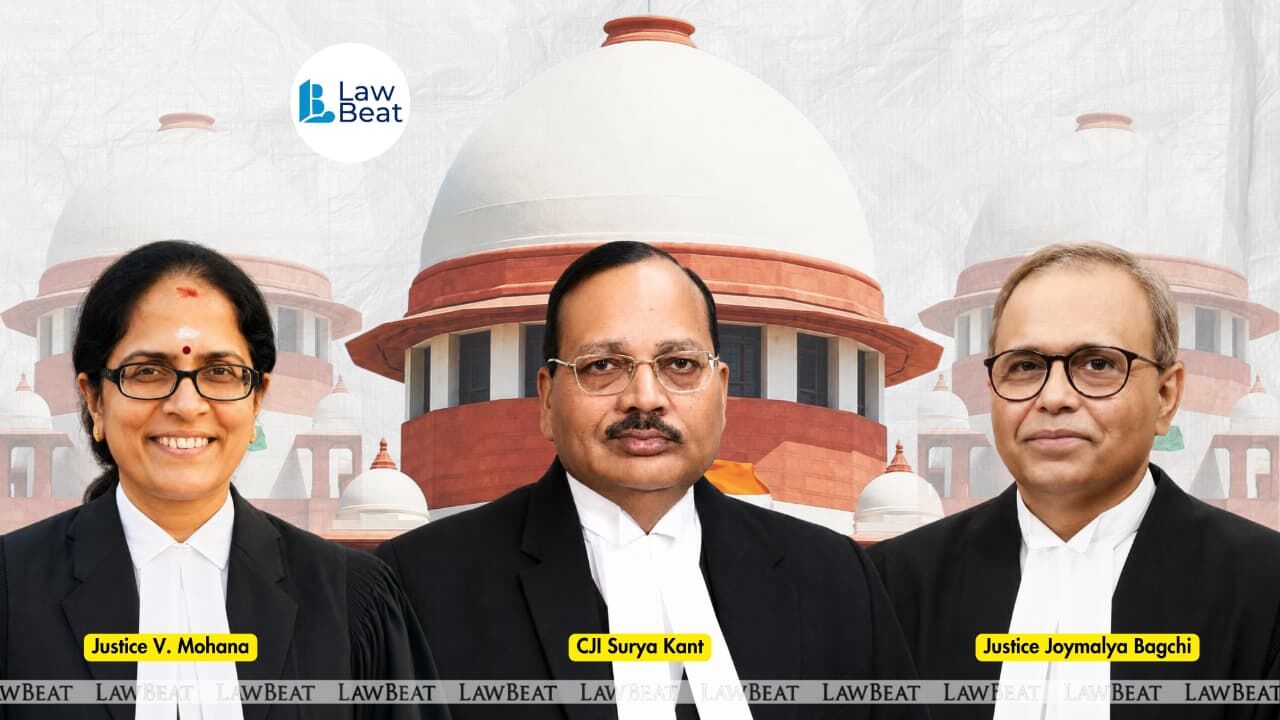
The Supreme Court recently dismissed a petition challenging the constitutional validity of the 2018 amendments to the Scheduled Castes and Scheduled Tribes (Prevention of Atrocities) Act, 1989. This decision, rendered by a three-judge Bench comprising Chief Justice of India Surya Kant and Justices Joymalya Bagchi and V. Mohana, effectively upholds the stringent provisions of the Act, including the bar on anticipatory bail and the removal of requirements for preliminary inquiries or prior approval before arrest.
Petitioner Brijbhushan Saini had sought a reconsideration of the Court's 2020 judgment in `Prithvi Raj Chauhan v. Union of India`, which had already affirmed the validity of these amendments. Saini contended that the rigorous nature of the provisions could lead to misuse of the law and infringe upon fundamental rights guaranteed by Articles 14, 21, and 22 of the Constitution. He specifically characterized the statutory bar on anticipatory bail as a form of “reverse discrimination.” However, the Bench noted that the Supreme Court had already established safeguards against potential misuse, thereby declining to entertain the fresh challenge.
The Genesis of the 2018 Amendments
The current legal landscape surrounding the `SC/ST Act 2018 amendment validity` traces back to a significant Supreme Court ruling in March 2018, `Dr Subhash Kashinath Mahajan v. State of Maharashtra`. In this case, the Court introduced several safeguards concerning arrests and the registration of cases under the Act. These included allowing anticipatory bail where a prima facie case was not established or if the complaint appeared to be mala fide. Additionally, the judgment mandated prior approval for arrests: from the appointing authority for public servants and from the Senior Superintendent of Police for non-public servants. It also permitted a preliminary inquiry by a Deputy Superintendent of Police to ascertain the veracity of allegations and prevent frivolous or motivated complaints.
These judicial directives sparked widespread public outcry and protests, culminating in a nationwide 'Bharat Bandh' in April 2018. Responding to the public sentiment, the Union Government moved to amend the law. Parliament subsequently passed the Scheduled Castes and the Scheduled Tribes (Prevention of Atrocities) Amendment Bill, 2018, in August of that year. This amendment introduced Section 18A into the Act, which explicitly stated that no preliminary inquiry would be required for registering an FIR, nor would an investigating officer need prior approval for arresting an accused. Crucially, Section 18A also reaffirmed that Section 438 of the Code of Criminal Procedure, which deals with `anticipatory bail SC/ST Act` cases, would not apply. In essence, the 2018 amendment restored the legal position that existed prior to the Supreme Court's March 2018 judgment.
Supreme Court's Definitive Stance in 2020
The constitutional validity of the 2018 amendment was subsequently challenged before the Supreme Court in the landmark case of `Prathvi Raj Chauhan v. Union of India`. On February 10, 2020, a three-judge Bench, comprising former Justices Arun Mishra, Vineet Saran, and S. Ravindra Bhat, delivered a judgment upholding the amendment. The Court observed that the directions concerning preliminary inquiry and prior approval for arrest, which had been issued in the 2018 `Subhash Kashinath Mahajan` judgment, had already been recalled during review proceedings in October 2019.
Given this development, the Court concluded that Section 18A was not unconstitutional merely because it sought to restore the statutory position regarding these safeguards. The 2020 ruling thus solidified the legal framework established by the 2018 amendments, confirming that the stringent provisions, including the bar on anticipatory bail, were indeed valid and enforceable. This decision set a clear precedent, which the Supreme Court has now reiterated by dismissing the latest challenge.
Why It Matters
The Supreme Court's consistent stance, culminating in the recent dismissal, unequivocally confirms that the 2018 amendments to the Scheduled Castes and Scheduled Tribes (Prevention of Atrocities) Act are fully in force. This means that individuals accused under the Act cannot seek anticipatory bail, and law enforcement agencies are not required to conduct a preliminary inquiry or obtain prior approval before registering an FIR or making an arrest. The Court has firmly upheld the `SC/ST Act 2018 amendment validity`, reinforcing the legislative intent to provide robust protection against atrocities.
This finality in the legal position underscores the stringent nature of the Act's provisions. The repeated affirmation by the Supreme Court, particularly in cases like `Prithvi Raj Chauhan v. Union of India`, ensures that the protective measures intended for Scheduled Castes and Scheduled Tribes remain unhindered by procedural requirements that were previously seen as diluting the law's effectiveness. The `Supreme Court upholds 2018 SC/ST Act amendment` as a constitutionally sound measure, solidifying its impact on legal proceedings and defense strategies for those accused under its purview.
Practical Implications
Lawyers must advise clients that the stringent provisions of the SC/ST Act, including the bar on anticipatory bail and absence of preliminary inquiry/prior approval for arrest, are definitively in force, impacting defense strategies for clients accused under the Act.
Source
How does this affect you?
Get an AI analysis of this article grounded in your jurisdictions, practice areas, and any policy documents you've uploaded to Wansom.
Finish Reading the Full Story and the Expert Analysis.
Get the latest legal & regulatory intelligence in India
Wansom is AI and can make mistakes.