
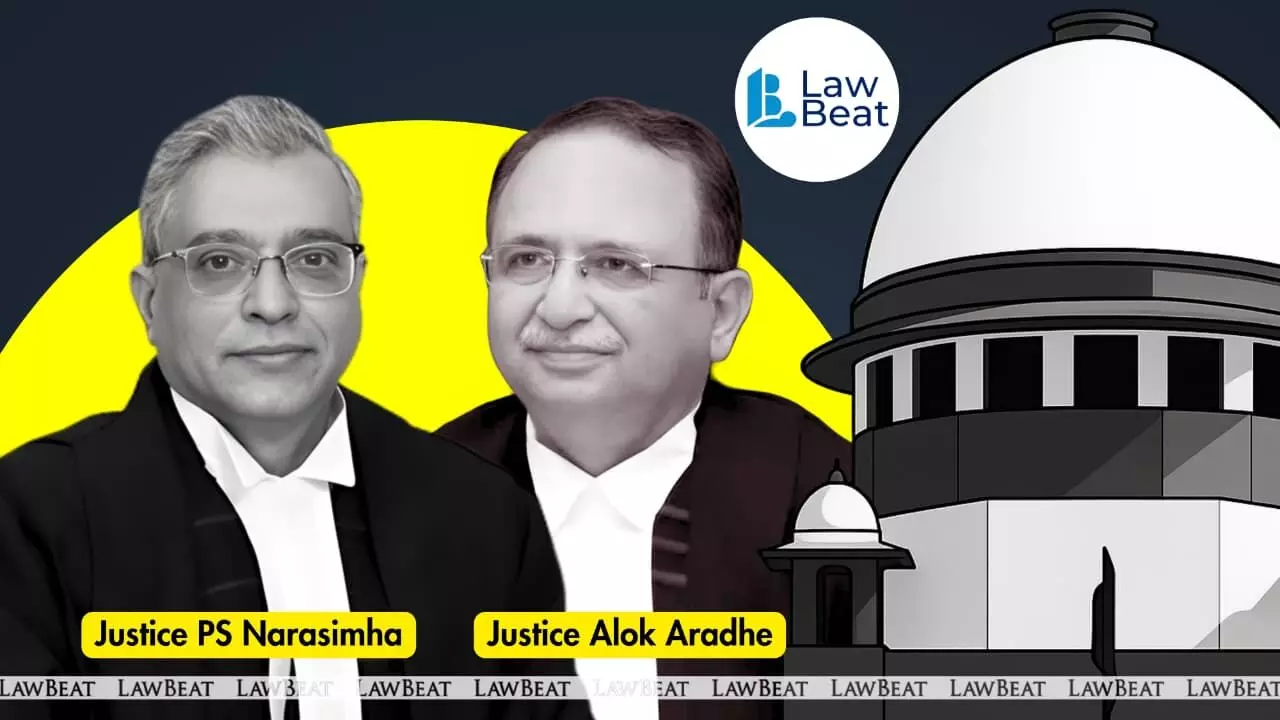
Supreme Court Refers Two-Child Policy Judgment To Larger Bench, Questions Its Relevance
What Happened
Home / Top Stories / Supreme Court Judgments Supreme Court Refers Two-Child Policy Judgment To Larger Bench, Questions Its Relevance X Supreme Court reconsiders disqualification over having more than two children. The Supreme Court has referred its 2003 Javed judgment upholding the two-child norm for Panchayat elections to a larger Bench, citing changing demographics and concerns over reproductive autonomy under Article 21 The Supreme Court has observed that laws disqualifying people from contesting Panchayat elections for having more than two children have lost their relevance in view of changing demographic realities, particularly the decline in India's fertility rate. It has referred the issue to a larger Bench for reconsideration of its 2003 judgment in Javed v. State of Haryana, which upheld such restrictions. A Bench of Justices P S Narasimha and Alok Aradhe said that the rationale underlying the two-child policy, namely the fear of overpopulation, has collapsed over the past two decades. It added that even if such a law was valid when enacted, it could become invalid when the circumstances forming its foundation change. The Bench directed the Registry to place the judgment before the Chief Justice of India for constitution of an appropriate larger Bench to reconsider the ruling in Javed. Court was hearing an appeal filed by Mangala Bhimrao Ingle, whose election as Sarpanch of Kakoda Gram Panchayat was set aside on the ground that she was disqualified from contesting Panchayat elections for having more than two children under Section 14(1)(j-1) of the Maharashtra Village Panchayats Act , 1959. Why has the Supreme Court questioned the two-child policy? In Javed, the Supreme Court had examined the constitutional validity of the Haryana Panchayati Raj Act, 1994, and upheld the disqualification of persons having more than two living children from contesting or holding Panchayat positions. While examining the challenge under Article 14 of the Constitution, Court applied the twin test of intelligible differentia and its rational connection with the object sought to be achieved. It concluded that the provisions did not violate the right to equality. Court had also relied on the prevailing perception of a population boom and its adverse impact on the economy to justify the legislation. However, reconsidering the issue in the present matter, the Bench said, "We are of the strong opinion that laws that penalise having more than two children have lost their relevance. The foundation of such laws, i.e. the fear of overpopulation, has crumbled due to demographic changes in the past few decades." The Bench explained that India's Total Fertility Rate (TFR) had declined from 3.02 in 2003, when Javed was decided, to 1.93. A TFR of 2.1, known as the replacement rate, allows one generation to completely replace itself. It observed that although India's population is not yet declining, a TFR below the replacement rate would eventually lead to an ageing population with a declining share of the working-age population. "Therefore, laws aimed at limiting population growth have now lost their significance. If we fail to take note of such demographic changes, India will face serious consequences," the Bench said. Emphasising the need for constitutional courts to adapt to changing circumstances, it said failure to adapt could itself produce injustice and amount to an abuse of power. "Thus, failure to use power to adapt to change is in its own way an abuse of power. This has compelled us to stay the proceedings herein, and refer the matter to a larger bench for immediate re-visitation of the precedent in Javed," it said. Two-child policy impacts political representation and reproductive autonomy The Bench also questioned the constitutional reasoning adopted in Javed, observing that allowing such restrictions to continue excludes an entire class of citizens from political representation on grounds having little rational connection with their ability
Source
Source: Original reporting via LawBeat
How does this affect you?
Get an AI analysis of this article grounded in your jurisdictions, practice areas, and any policy documents you've uploaded to Wansom.
Finish Reading the Full Story and the Expert Analysis.
Get the latest legal & regulatory intelligence in India
Wansom is AI and can make mistakes.