
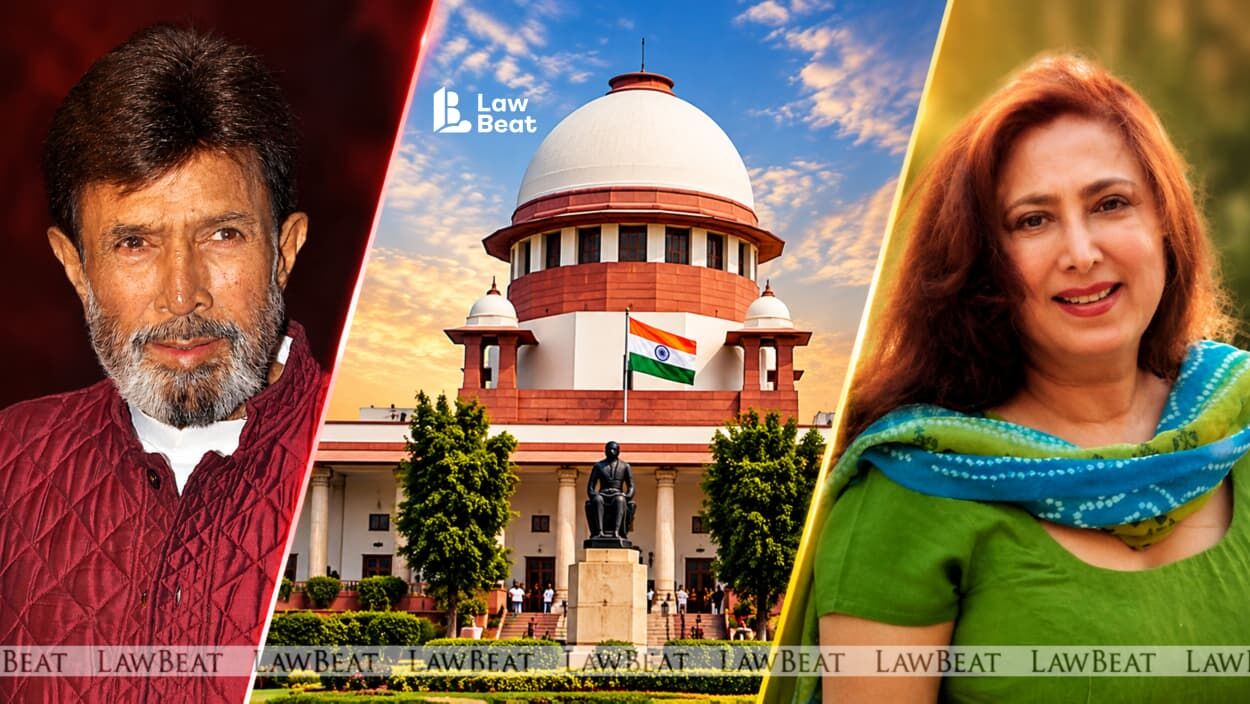
Supreme Court: Declines Anita Advani Rajesh Khanna Marriage Recognition
Summary
- The Supreme Court of India rejected Anita Advani's plea to legally recognize her live-in relationship with late actor Rajesh Khanna as a marriage.
- The Court upheld the Bombay High Court's decision, which cited Khanna's subsisting legal marriage to Dimple Kapadia until his death as a bar to Advani's claim.
- Advani had sought recognition as Khanna's widow, claiming cohabitation and financial contributions to his residence.
- The Supreme Court characterized the ongoing legal dispute as "luxury litigation."
- This ruling reinforces that a live-in relationship cannot be legally recognized as a marriage if one party has an undissolved prior legal marriage.
Supreme Court Rejects Recognition of Live-in Relationship
This ruling clarifies that a live-in relationship cannot be legally recognized as a marriage if one party was already in a subsisting legal marriage that had not been formally dissolved.
India's Supreme Court recently declined to grant legal recognition to the relationship between former actor Anita Advani and the late Bollywood icon Rajesh Khanna as a marriage. A bench comprising Justices MM Sundresh and Prasanna B Varale dismissed Advani's petition, which challenged an earlier decision by the Bombay High Court. The apex court found no sufficient grounds to intervene in the matter, effectively upholding the lower court's stance.
During the proceedings, Advani's legal counsel contended that the plea was fundamentally about preserving dignity and that her civil suit, which sought a declaration regarding her association with Khanna, was rooted in this principle. However, the Supreme Court chose not to entertain the challenge, notably labeling the protracted legal battle as "luxury litigation," indicating its perspective on the nature of the dispute.
The Genesis of the Dispute
The legal saga began with Anita Advani's assertion that she had maintained a live-in relationship with Rajesh Khanna for several years, residing with him at his Mumbai residence, Aashirwad, until 2012. Following Khanna's demise on July 18, 2012, at the age of 69, Advani alleged that she was forcibly evicted from the bungalow by Khanna's legal wife, Dimple Kapadia, their daughter Twinkle Khanna, and son-in-law Akshay Kumar.
Advani maintained that her bond with the actor transcended mere companionship, characterizing it as being akin to a marriage. She sought official recognition of this relationship and the legal status of Khanna's widow. This led her to file a civil suit requesting a declaration that her relationship with Khanna was "in the nature of marriage." Additionally, in 2013, Advani lodged a complaint with a Mumbai magistrate against Kapadia, Twinkle Khanna, and Akshay Kumar, seeking maintenance and accommodation, including a three-bedroom flat in Bandra.
Lower Court Rulings and Legal Context
The Dindoshi court in Mumbai initially rejected Advani's civil suit in 2017. Subsequently, the Bombay High Court, on April 1, 2026, upheld this rejection, dismissing Advani's appeal. The High Court's decision was predicated on the crucial fact that Rajesh Khanna's marriage to actor Dimple Kapadia remained legally subsisting until his death. Despite reports of Khanna and Kapadia living separately for decades, their marriage, which took place in 1973, was never formally dissolved.
The Bombay High Court explicitly stated that Advani could not claim the status of a legally recognized spouse given Khanna's ongoing marital ties to Kapadia. It further clarified that for a relationship to be considered "in the nature of marriage," both parties must possess the legal capacity to enter into a marriage. Advani had presented arguments that she and Khanna had cohabited for many years and were socially perceived as a couple, even claiming to have contributed financially to renovations at his home. However, the High Court concluded that allowing the suit to proceed to trial would be unproductive due to the legal impediment posed by Khanna's undissolved marriage, a stance later reinforced by the Supreme Court.
Implications for Live-in Relationships in India
This Supreme Court ruling carries significant implications for the legal recognition of live-in relationships in India, particularly when a prior legal marriage remains undissolved. The consistent judicial stance, from the Dindoshi court through the Bombay High Court to the Supreme Court, underscores the primacy of formal marital dissolution. It clarifies that claims for marital status or inheritance based on a live-in relationship are unlikely to succeed if one party was legally married to another individual at the time of the live-in arrangement and that marriage was never formally ended.
The decision reinforces the legal principle that the capacity to marry is a fundamental prerequisite for a relationship to be deemed "in the nature of marriage" for legal purposes. The court's characterization of the dispute as "luxury litigation" also signals a potential judicial inclination to discourage protracted legal battles over such claims, especially when clear legal impediments exist. This outcome provides important guidance for legal practitioners and individuals navigating the complexities of family law concerning live-in relationships versus formal marriages in India.
Practical Implications
This ruling clarifies the Indian Supreme Court's stance on the legal recognition of live-in relationships as marriage, particularly when a prior legal marriage remains undissolved. Lawyers should advise clients that claims for marital status or inheritance based on a live-in relationship are unlikely to succeed if one party was legally married to another individual at the time, reinforcing the primacy of formal marital dissolution. The 'luxury litigation' comment also signals the court's potential view on such protracted disputes.
Source
How does this affect you?
Get an AI analysis of this article grounded in your jurisdictions, practice areas, and any policy documents you've uploaded to Wansom.
Finish Reading the Full Story and the Expert Analysis.
Wansom is AI and can make mistakes.