
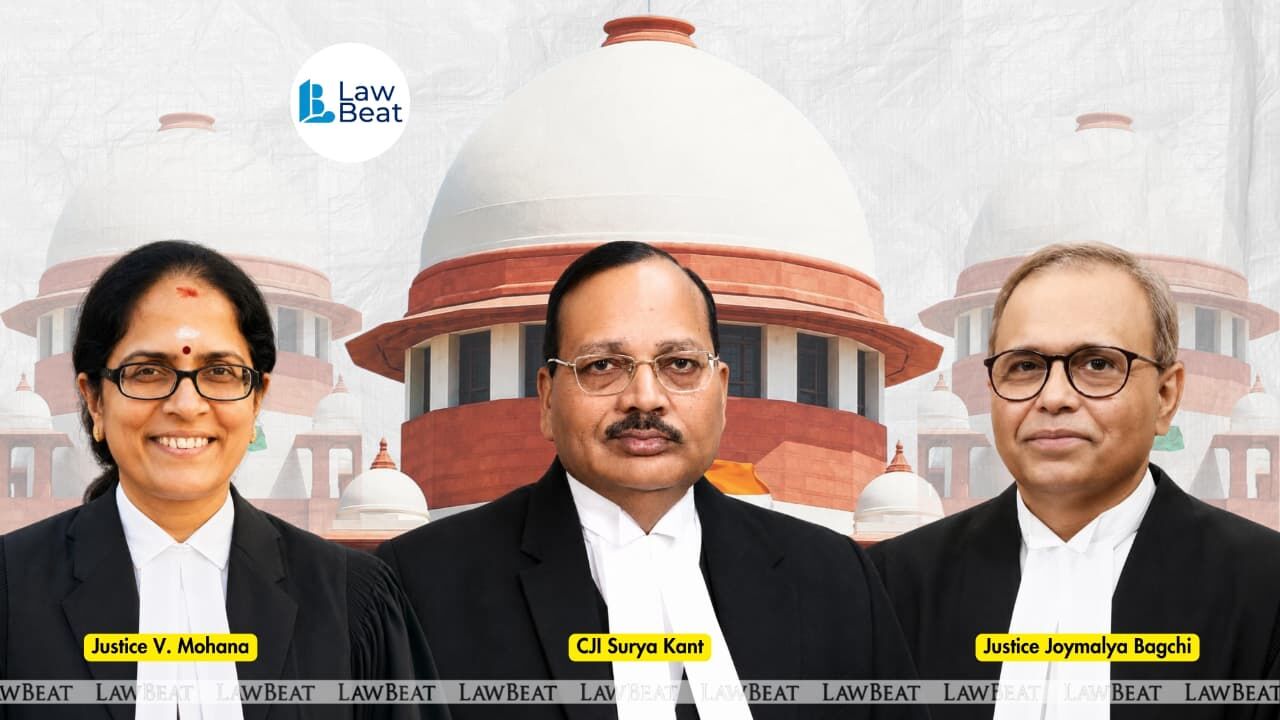
Supreme Court: Rajasthan Judge Facilities Case Directed To High Court
Summary
- The Supreme Court permitted District Judge Dinesh Kumar Gupta to withdraw his contempt petition concerning a lack of basic facilities at his posting.
- The Court directed Mr. Gupta to approach the Rajasthan High Court for redressal of his administrative grievances, including the absence of a stenographer and office.
- Mr. Gupta, who was due to retire in four days from the hearing date, had alleged non-compliance with earlier Supreme Court orders protecting his substantive rank and financial entitlements as a Principal District Judge.
- The contempt petition, *Dinesh Kumar Gupta v. Chanchal Mishra*, was filed against Chanchal Mishra, the Registrar General of the Rajasthan High Court.
- This ruling clarifies the appropriate judicial hierarchy, directing judicial officers to their respective High Courts for administrative issues rather than the Supreme Court.
Judicial Officer Directed to High Court for Facilities Grievances
This Supreme Court ruling underscores the established judicial hierarchy for addressing administrative and infrastructural grievances of judicial officers.
The Supreme Court recently directed a senior District Judge from Rajasthan, Dinesh Kumar Gupta, to withdraw his petition concerning a lack of basic operational facilities and instead approach the Rajasthan High Court for redressal. This decision came during a hearing on September 25, 2026, where the judge, who was due to retire in just four days, highlighted significant challenges in his current posting as Presiding Officer of a Labour Court-cum-Industrial Tribunal. His counsel, Senior Advocate Vikas Singh, informed the bench that despite being the senior-most District Judge in Rajasthan, Mr. Gupta was functioning without essential support, including a stenographer or even a dedicated office, forcing him to complete judgments late into the night, sometimes as late as 2 AM.
Chief Justice of India Surya Kant, presiding over a bench that also included Justice V. Mohana, noted that a new Chief Justice had recently assumed leadership of the Rajasthan High Court. CJI Kant suggested that Mr. Gupta present his judicial grievances directly to the newly appointed head of the High Court. Following this guidance, Mr. Singh requested permission to withdraw the ongoing contempt petition, Dinesh Kumar Gupta v. Chanchal Mishra, while simultaneously seeking the liberty to approach the appropriate authority to ensure his client's concerns, particularly regarding the Rajasthan judicial officer facilities, would receive prompt consideration.
The Supreme Court granted both the request for contempt petition withdrawal facilities and the liberty to pursue the matter through the proper channels. This ruling effectively directs the judge to utilize the High Court as the primary forum for addressing administrative issues such as inadequate facilities, rather than seeking direct intervention from the apex court. The SC directs judge approach High Court, emphasizing the hierarchical structure for such administrative matters, particularly concerning Supreme Court Rajasthan judge facilities High Court.
Genesis of the Legal Challenge
The recent proceedings before the Supreme Court stemmed from an earlier, broader dispute concerning Mr. Gupta's service conditions and postings. Prior to the current contempt petition, Mr. Gupta had approached the Supreme Court alleging that he had been subjected to repeated transfers in contravention of established transfer policies. He also contended that his assignment as Presiding Officer of the Labour Court-cum-Industrial Tribunal was not commensurate with his substantive status as a Principal District Judge.
In response to these earlier submissions, the Supreme Court had issued significant directives on January 29, 2026. The apex court explicitly protected Mr. Gupta's substantive rank, stipulating that he would continue to be recognized as a Principal District Judge. Furthermore, it ensured his entitlement to all financial allowances associated with that higher rank, even while serving in his specific tribunal role. The Court also mandated that Mr. Gupta should not be required to report to any junior officer or District Judge, clarifying that his administrative control would remain directly under the Administrative/Portfolio Judge of the Sessions Division where the Labour Court-cum-Industrial Tribunal was located.
The contempt petition, which brought the issue of inadequate facilities to the Supreme Court's attention, had been filed against Chanchal Mishra, the Registrar General of the Rajasthan High Court. This petition alleged non-compliance with the Supreme Court's earlier orders from January 29, 2026, regarding Mr. Gupta's rank, entitlements, and reporting structure. It was during the pendency of these contempt proceedings that Mr. Gupta's counsel highlighted the challenging working conditions and lack of basic infrastructure.
Upholding Judicial Administrative Protocols
This Supreme Court ruling underscores the established judicial hierarchy for addressing administrative and infrastructural grievances of judicial officers. By permitting the withdrawal of the contempt petition and directing the District Judge to approach the Rajasthan High Court, the apex court reinforces the principle that High Courts are the appropriate initial forum for such concerns within their respective jurisdictions. This approach streamlines the resolution process and respects the administrative autonomy of the High Courts over their subordinate judiciary.
Moreover, the case highlights the Supreme Court's consistent stance on safeguarding the professional standing and financial well-being of judicial officers. The earlier directions from January 29, 2026, which protected Mr. Gupta's substantive rank as a Principal District Judge and his associated financial entitlements despite his specific posting, serve as a crucial precedent. This ensures that judicial officers maintain their rightful status and benefits, irrespective of the particular administrative roles they may be assigned, thereby upholding the dignity and independence of the judiciary.
Practical Implications
This ruling clarifies the appropriate judicial hierarchy for addressing administrative grievances of judicial officers, directing them to the High Court rather than the Supreme Court for issues like lack of facilities. It also reinforces the Supreme Court's prior stance on protecting a judicial officer's substantive rank and financial entitlements despite specific postings, which could be relevant for lawyers advising on judicial service conditions or administrative law.
Source
How does this affect you?
Get an AI analysis of this article grounded in your jurisdictions, practice areas, and any policy documents you've uploaded to Wansom.
Finish Reading the Full Story and the Expert Analysis.
Get the latest legal & regulatory intelligence in India
Wansom is AI and can make mistakes.