
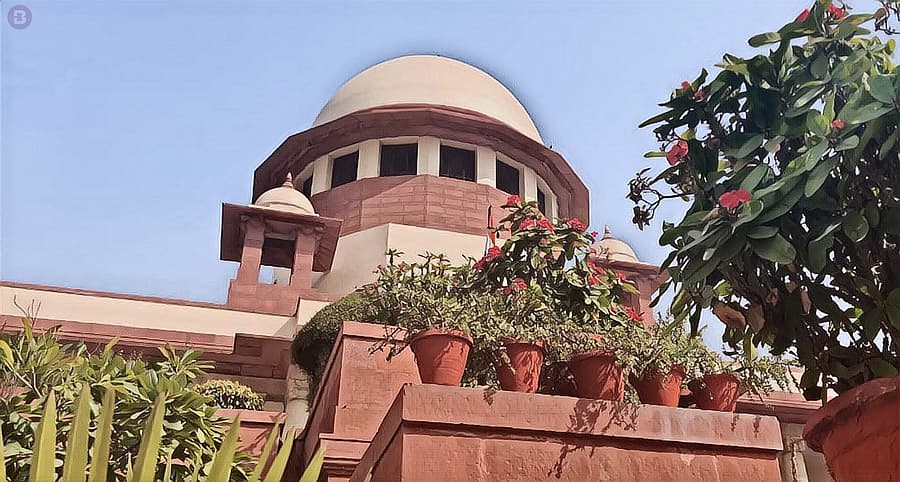
Supreme Court Questions Odisha on CBI Request for IPS Officer in DGP Selection
The Supreme Court of India, specifically a Bench comprising Chief Justice of India Surya Kant and Justices Joymalya Bagchi and V Mohana, recently questioned whether the Odisha government was aware of the Central Bureau of Investigation (CBI)'s request to question senior IPS officer Susanta Kumar Nath when it included his name in the panel of officers for appointment as Director General of Police (DGP).
This judicial inquiry delves into critical aspects of public integrity, transparency in high-level government appointments, and the ethical obligations of state governments when recommending candidates for sensitive positions. The Supreme Court's questioning highlights the expectation that all material facts, particularly those concerning ongoing criminal investigations, must be disclosed to appointing authorities like the Union Public Service Commission (UPSC). The withdrawal of the integrity certificate for IPS officer Susanta Kumar Nath, following the CBI's request to question him in connection with a sub-inspector recruitment scam, underscores the serious implications of such probes on an officer's suitability for leadership roles. This case is significant for reinforcing the principle that integrity is paramount in public service and that any perceived attempt to withhold relevant information can attract judicial scrutiny.
The legal context for DGP appointments in India is often guided by Supreme Court pronouncements, such as those in Prakash Singh v. Union of India, which aim to ensure merit-based selection and insulate police leadership from undue influence. The UPSC plays a crucial role in evaluating candidates based on various criteria, including their integrity. The CBI's involvement signifies a criminal investigation, which directly impacts an officer's integrity assessment. The Supreme Court is examining the State's duty to inform the UPSC about such probes, implying a potential breach of transparency or good governance principles. The withdrawal of the integrity certificate and the subsequent submission of a fresh list of IPS officers by the Odisha government indicate an acknowledgment of the issue. The key parties involved are the Supreme Court of India, the Odisha government, the Central Bureau of Investigation (CBI), senior IPS officer Susanta Kumar Nath, and the Union Public Service Commission (UPSC).
Attorneys advising state governments, public sector undertakings, or individuals involved in high-level public appointments must be acutely aware of the stringent requirements for integrity and transparency. This case emphasizes the critical importance of conducting thorough due diligence and disclosing all relevant information, including ongoing investigations or adverse reports, to appointing authorities like the UPSC. Failure to do so can lead to judicial scrutiny, reputational damage, and potential administrative or legal repercussions for both the recommending authority and the individual. For officers under investigation, it highlights how such probes can impact career progression, even before a formal charge sheet is filed. The outcome of this matter is not yet reported, but the Supreme Court's observations will likely shape future protocols for integrity checks and disclosure requirements in public appointments, making it a crucial development for administrative law practitioners.
How does this affect you?
Get an AI analysis of this article grounded in your jurisdictions, practice areas, and any policy documents you've uploaded to Wansom.
Finish Reading the Full Story and the Expert Analysis.
Get the latest legal & regulatory intelligence in India
Wansom is AI and can make mistakes.