
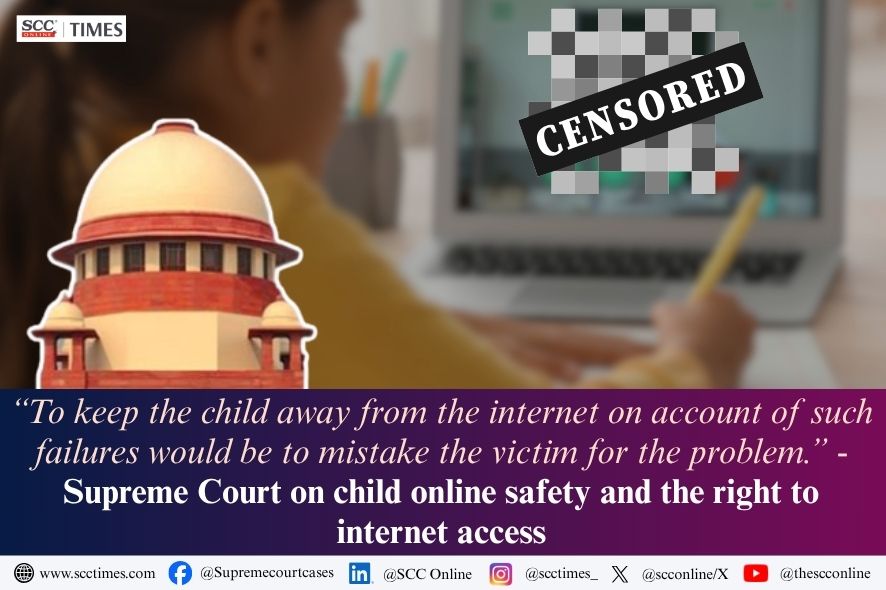
India Supreme Court: Child Abuse Database Proposed for Online Safety
Summary
- The Supreme Court of India has proposed new measures to enhance online child safety.
- Key proposals include a National Hash & URL Database and time-bound reporting for child abuse material.
- The Court emphasized stronger accountability for social media intermediaries.
- It also formally recognized the fundamental right to internet access in India.
- These directives aim to improve the detection and swift removal of child abuse content.
Court's Directives for Online Safety
Lawyers advising social media platforms and other internet intermediaries in India should monitor upcoming regulations and guidelines closely, as these developments will likely reshape their legal and technical responsibilities.
The Supreme Court of India has recently put forth significant proposals aimed at bolstering online child safety, particularly concerning the detection and reporting of child abuse material. Central to these directives is the suggestion for establishing a National Hash & URL Database. This database would serve as a critical tool for internet intermediaries, including social media platforms, to identify and track instances of child abuse content more effectively across their services.
Alongside the database, the Court has also proposed the implementation of time-bound reporting mechanisms. This would mandate platforms to report identified child abuse material within a specific timeframe, ensuring a swift response to such egregious content. These measures collectively underscore the judiciary's commitment to creating a safer digital environment for children, addressing the pressing challenge of online child exploitation through the India Supreme Court child abuse database proposal.
Legal Framework and Intermediary Accountability
In its deliberations, the Supreme Court of India underscored the necessity for heightened accountability from social media intermediaries. The Court emphasized that these platforms bear a significant responsibility in safeguarding children from online harms, advocating for the implementation of proportionate safeguards to protect children's online safety. This stance reflects a growing global recognition of the role technology companies play in moderating content and protecting vulnerable users.
Crucially, the Court's pronouncements also included an explicit recognition of the fundamental right to internet access in India. This acknowledgment provides an important legal context, balancing the need for online safety and content moderation with the constitutional rights of citizens to access digital services. The challenge lies in developing regulations that uphold both these principles simultaneously, ensuring that enhanced safety measures do not unduly restrict legitimate internet usage.
Impact on Digital Platforms
The proposals from the Supreme Court of India are poised to introduce new and stringent compliance obligations for social media platforms and other internet intermediaries operating within the country. The establishment of a National Hash & URL Database India, coupled with requirements for Time-Bound Reporting child abuse India, will necessitate significant operational adjustments and investments in technology and personnel for these entities. This development will likely introduce new compliance obligations for detecting and reporting child abuse material, requiring platforms to enhance their internal processes and collaborate more closely with law enforcement agencies.
Lawyers advising social media platforms and other internet intermediaries in India should monitor upcoming regulations and guidelines closely, as these developments will likely reshape their legal and technical responsibilities. This framework reinforces the evolving landscape of online content governance in India, where the judiciary is actively shaping the framework for online child safety. The emphasis on robust detection mechanisms and prompt action against child abuse material signals a clear intent to hold platforms more accountable, while also reinforcing the recognition of internet access as a fundamental right in India. This move, while challenging for intermediaries, aligns with the broader objective of protecting children in the digital age, further solidifying the Supreme Court's commitment to online safety.
Practical Implications
Lawyers advising social media platforms and other internet intermediaries in India should monitor upcoming regulations and guidelines, as the Supreme Court's proposals for a National Hash & URL Database and time-bound reporting will likely introduce new compliance obligations for detecting and reporting child abuse material. This development also reinforces the recognition of internet access as a fundamental right in India.
Source
How does this affect you?
Get an AI analysis of this article grounded in your jurisdictions, practice areas, and any policy documents you've uploaded to Wansom.
Finish Reading the Full Story and the Expert Analysis.
Get the latest legal & regulatory intelligence in India
Wansom is AI and can make mistakes.