
Supreme Court: Procedural Irregularity Appointments Not Void Ab Initio
Summary
- The Supreme Court overturned the termination of Live Stock Inspectors who had served for 18 years.
- Their termination was based on a procedural irregularity in the selection committee's constitution, for which the candidates were not responsible.
- The Court ruled that such irregularities do not automatically invalidate appointments if candidates are blameless and have served for a significant period.
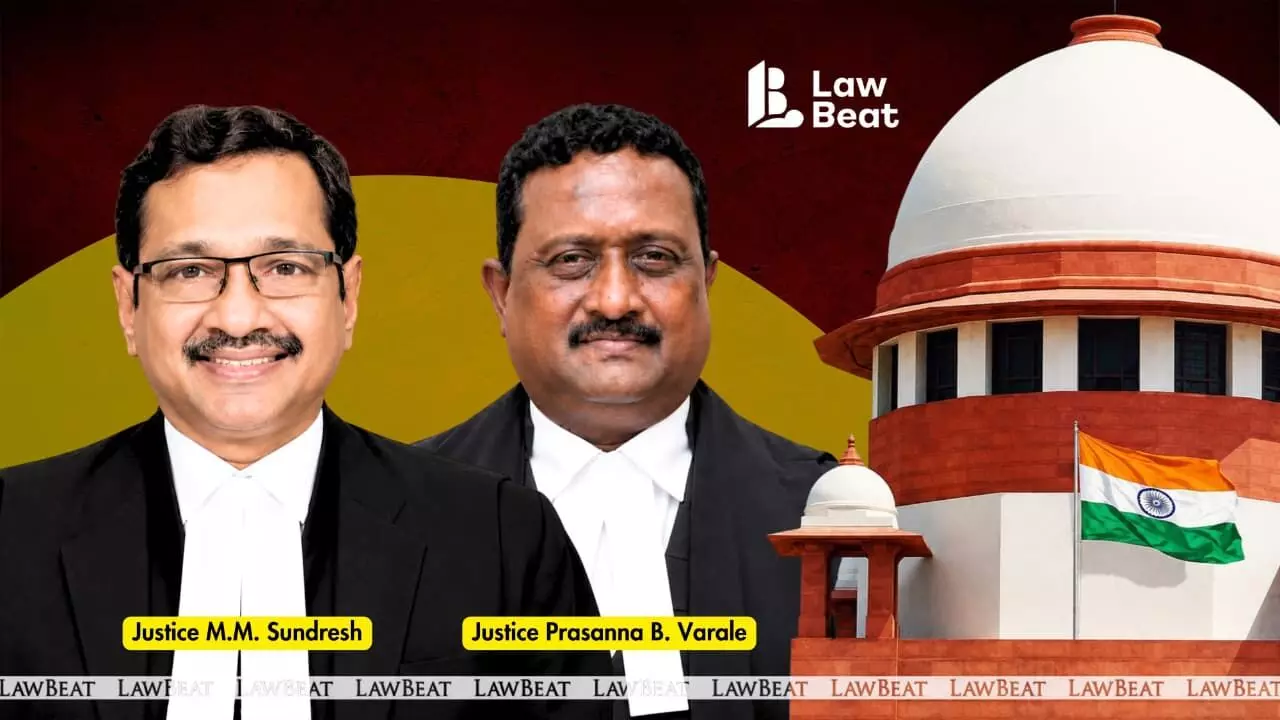
- Justices M. M. Sundresh and Prasanna B. Varale emphasized the distinction between void ab initio and voidable procedural violations.
- The decision in Girijakanta Rout's appeal protects blameless employees from termination due to administrative errors.
Background to the Dispute
The Supreme Court set aside the termination of the Live Stock Inspectors, who had continuously served for 18 years, finding that procedural irregularities in the constitution of a selection committee, for which the appointed candidates bore no responsibility, could not be the sole basis to invalidate their appointments.
The case originated from the appointment of Live Stock Inspectors in Odisha, following an advertisement issued by the Director, Veterinary and Animal Husbandry, Odisha, on January 16, 2004. A key procedural element involved the constitution of the selection committee. Initially, a notification from January 7, 2000, by the Government of Orissa's Fisheries and A R D Department, did not include the Project Director, DRDA, as a committee member. However, a subsequent notification on November 28, 2003, by the State Government, added the Project Director, DRDA, to the selection committee.
Following the advertisement, 45 candidates were interviewed on June 22, 2004, and the selection process was finalized in 2006 by the reconstituted committee. The successful candidates underwent training and were formally appointed in 2008, subsequently serving for 18 years. The appointments faced an initial challenge in 2006 from unselected candidates, which the Orissa Administrative Tribunal dismissed in 2011. Despite this, the Additional Secretary to the Government of Odisha, Fisheries and Animal Resources Development Department, Bhubaneswar, initiated a suo motu proceeding, concluding that the inclusion of the Project Director, DRDA, meant the prescribed procedure was not followed, rendering the selection null and void. This led to the termination of the private appellants and 11 other individuals on June 27, 2012. Their subsequent challenges before the tribunal and the high court were unsuccessful, with both bodies upholding the termination and directing a fresh selection.
Supreme Court's Decisive Ruling
In a significant intervention, the Supreme Court set aside the termination of the Live Stock Inspectors, who had continuously served for 18 years. The Court, hearing an appeal filed by Girijakanta Rout, found that procedural irregularities in the constitution of a selection committee, for which the appointed candidates bore no responsibility, could not be the sole basis to invalidate their appointments. The bench, comprising Justices M. M. Sundresh and Prasanna B. Varale, emphasized that terminating individuals solely due to selection committee procedural defect is legally unsustainable when the employees have participated in the process, are blameless, and have served for a substantial period.
The Court specifically ruled that such procedural irregularities do not automatically render the entire selection process void ab initio, particularly when the selected candidates are not at fault and have dedicated a considerable duration to their service. This decision effectively quashed the high court's directive for a fresh selection, reinforcing the principle that blameless employees should not suffer the consequences of administrative errors. Notably, before the Supreme Court, both the private appellants and the State challenged the high court's decision, with the State taking a supportive stance towards the appellants, acknowledging their lack of fault and continuous service.
Legal Context and Precedent
This Supreme Court procedural irregularity appointments judgment provides crucial clarity on the distinction between procedural violations that render a decision void ab initio and those that merely make it voidable. The principles of natural justice, as highlighted by the bench, dictate that not every procedural flaw automatically invalidates an entire selection process, especially when the defect is external to the candidates' conduct and they have served for a significant period. The ruling underscores that a selection committee procedural defect, for which candidates are not responsible, cannot by itself invalidate the entire selection process, thereby protecting the legitimate expectations and service of blameless appointees.
This ruling provides a crucial precedent for challenging or defending the termination of employees whose appointments are later questioned due to procedural irregularities in the selection committee, particularly when the employees themselves are not at fault and have served for a significant period. The decision in the Girijakanta Rout Supreme Court judgment offers a vital framework for future appointments challenge India, particularly concerning Odisha Live Stock Inspectors termination and similar cases. It reinforces that while upholding procedural integrity is important, it must be balanced against the rights of individuals who have diligently served, especially when faced with natural justice procedural violations that were beyond their control.
Practical Implications
This ruling provides a crucial precedent for challenging or defending the termination of employees whose appointments are later questioned due to procedural irregularities in the selection committee, particularly when the employees themselves are not at fault and have served for a significant period. Lawyers should advise clients on the distinction between void and voidable procedural violations, emphasizing that not all irregularities automatically invalidate an entire selection process, especially where principles of natural justice protect blameless appointees.
Source
Source: Original reporting via Live Law
How does this affect you?
Get an AI analysis of this article grounded in your jurisdictions, practice areas, and any policy documents you've uploaded to Wansom.
Finish Reading the Full Story and the Expert Analysis.
Get the latest legal & regulatory intelligence in India
Wansom is AI and can make mistakes.