
Supreme Court: Plea Seeks Removal of Filibeck 'Vote Chor' Videos
Summary
- A petition has been filed in the Supreme Court of India seeking the removal of social media videos.
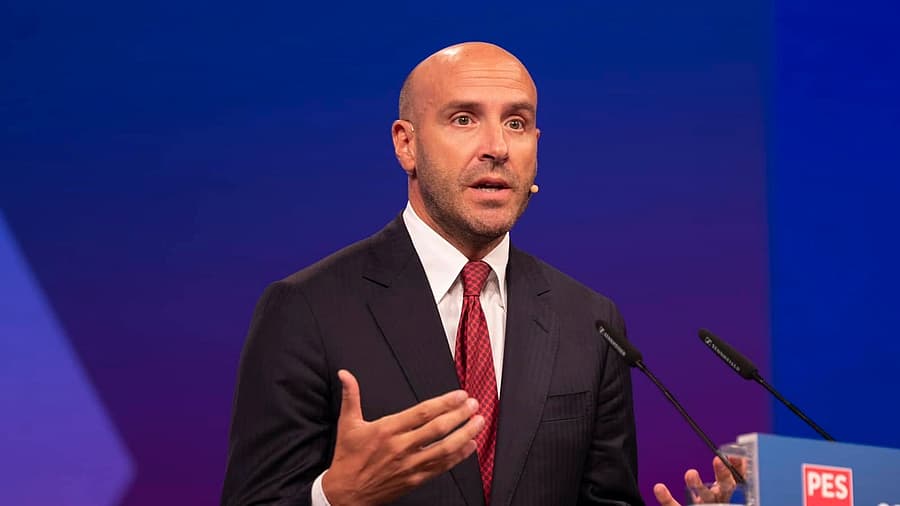
- The videos feature Italian politician Giacomo Filibeck saying "Vote Chor, Gaddi Chhod" at the Bharat Summit 2026.
- The slogan, meaning 'vote thief, leave your seat,' is used by Indian opposition parties against Prime Minister Narendra Modi.
- Petitioner's counsel Syed Rizwan Ahmed alleges Filibeck interfered in India's domestic politics by criticizing the government and supporting the opposition.
- The Supreme Court has agreed to list the case for hearing on November 20.
Judicial Intervention Sought Over Political Slogan
The Court's eventual decision in this matter could establish important precedents regarding content moderation directives and the extent to which foreign individuals' political statements made on Indian soil, and subsequently shared online, can be controlled.
A significant legal development has emerged in India, with a petition formally lodged before the Supreme Court. This plea specifically requests judicial directives for the removal of certain social media videos that have garnered attention. These videos prominently feature Giacomo Filibeck, an Italian politician and the Secretary General of the Party of European Socialists, delivering a controversial statement. The incident occurred during the Bharat Summit 2026, an event hosted in Hyderabad, where Filibeck was recorded uttering the phrase "Vote Chor, Gaddi Chhod".
The slogan, which directly translates to 'vote thief, leave your seat,' carries considerable political weight within India. It is a well-known expression frequently utilized by various opposition parties to challenge Prime Minister Narendra Modi, often implying alleged illegalities or improprieties within the nation's electoral processes. The urgency of this matter was underscored when the petition was brought before a Supreme Court bench. This bench, comprising Chief Justice of India Surya Kant, alongside Justices Joymalya Bagchi and V Mohana, acknowledged the request and subsequently scheduled the case for a detailed hearing on November 20. This swift action highlights the perceived importance and sensitivity of the content in question.
Allegations of Foreign Interference in Domestic Politics
The core of the petition, as articulated by the petitioner's counsel, Syed Rizwan Ahmed, centers on a serious accusation of foreign interference. Ahmed contended that Mr. Filibeck, in his capacity as a prominent European political figure, directly intervened in India's sovereign domestic politics. This alleged intervention manifested through his public criticism of the Indian government and his overt expression of support for the opposition, actions which Ahmed argued crossed a line into inappropriate external influence.
Further context provided by Ahmed shed light on the event itself. The Bharat Summit 2026, where the controversial remarks were made, was reportedly organized under the auspices of the Government of Telangana and several foundations, including the Samruddha Bharat Foundation. This gathering was characterized as a "global alliance against fascist forces," an initiative primarily orchestrated by India's main opposition. The presence of foreign invitees, including Filibeck, at such a politically charged event, and his subsequent use of what Ahmed termed a "very abusive slogan," forms the basis of the urgency cited by the counsel to have the content removed from social media platforms. The argument posits that such statements, particularly from a foreign national, have the potential to disrupt the democratic discourse.
Broader Implications for Digital Speech and Sovereignty
This Supreme Court plea concerning Giacomo Filibeck's "Vote Chor, Gaddi Chhod" remarks carries significant implications that extend beyond the immediate request for content removal. The case brings into sharp focus the evolving challenges faced by judicial systems in regulating social media content, particularly when it involves political speech by foreign nationals within a country's borders. It compels a critical examination of the delicate balance between upholding freedom of expression and safeguarding national sovereignty from perceived external political influence.
The Court's eventual decision in this matter could establish important precedents regarding content moderation directives and the extent to which foreign individuals' political statements made on Indian soil, and subsequently shared online, can be controlled. This scenario underscores the increasing complexities of the digital age, where politically sensitive remarks can rapidly disseminate across borders, potentially impacting domestic political narratives. Lawyers and legal observers will be closely monitoring the outcome for insights into how India's highest court intends to navigate the intersection of international political engagement, digital platforms, and the protection of its internal democratic processes. The ruling will inevitably shape future discussions on the boundaries of political discourse and the role of foreign actors in national elections.
Practical Implications
This case highlights the Supreme Court's potential role in regulating social media content involving foreign nationals' political speech in India. Lawyers should monitor the court's decision for precedents on freedom of expression, alleged foreign interference in domestic politics, and the scope of content moderation directives, particularly concerning politically sensitive statements.
Source
Source: Original legal news reporting
How does this affect you?
Get an AI analysis of this article grounded in your jurisdictions, practice areas, and any policy documents you've uploaded to Wansom.
Finish Reading the Full Story and the Expert Analysis.
Get the latest legal & regulatory intelligence in India
Wansom is AI and can make mistakes.