
Supreme Court: Notional Service Breaks Count for Pension, Pre-Regularisation Service
Summary
- The Supreme Court ruled that artificial or notional service breaks must be ignored when calculating pensionary benefits.
- Pre-regularisation service as contract, ad hoc, or daily wage employees must count as qualifying service for pension.
- Pension is considered a deferred wage, not a bounty, and should not be denied on technical grounds.
- Prior litigation for regularisation does not bar subsequent claims for pensionary benefits due to different causes of action.
- The ruling upheld a Punjab and Haryana High Court order, entitling Punjab School Education Board employees to the old pension scheme.
What Happened
Pension is not a discretionary payment but rather a deferred wage earned through past service.
The Supreme Court of India recently delivered a significant ruling clarifying pension entitlements for employees with non-standard service histories, emphasizing that artificial breaks in service must be disregarded. The apex court affirmed that periods of service rendered on a contract, ad hoc, or daily wage basis prior to an employee's regularisation must be fully counted as qualifying service for pensionary benefits. This decision came in an appeal filed by the Punjab School Education Board, which challenged a 2020 order from the Punjab and Haryana High Court.
The High Court's judgment, now upheld by the Supreme Court, had determined that employees of the Punjab School Education Board were entitled to have their pre-regularisation service included in their pension calculations. Crucially, this meant these employees qualified for the benefits under the old pension scheme, rather than the new defined contributory pension scheme that came into effect on January 1, 2004. The Supreme Court not only dismissed the Board's appeal but also underscored the principle that such Supreme Court notional service breaks pension calculations should not be hindered by administrative or technical distinctions.
Key Principles Established
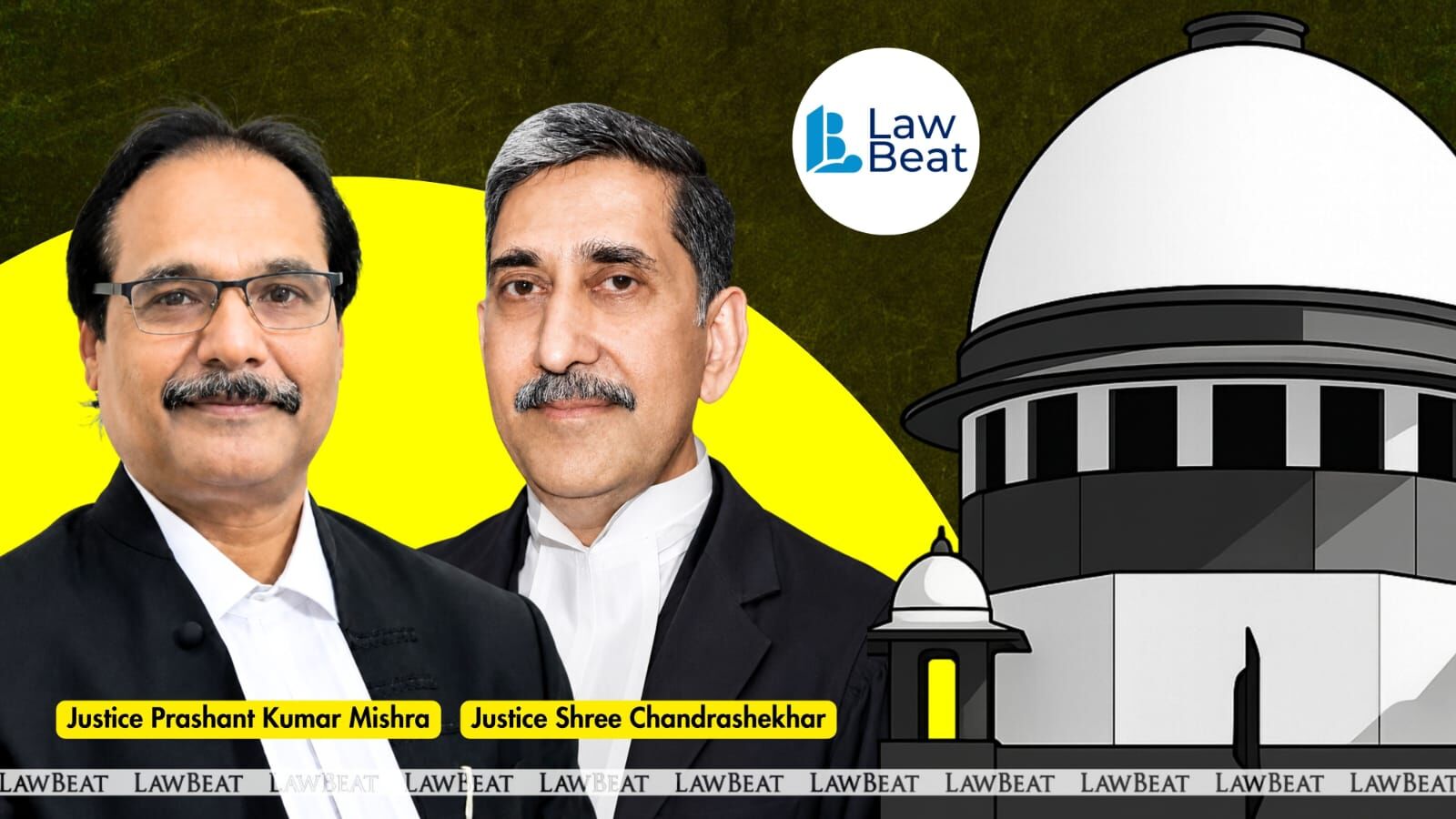
In its comprehensive judgment, the Supreme Court articulated fundamental principles governing pension entitlements, reinforcing that pension is not a discretionary payment but rather a deferred wage earned through past service. The Bench, comprising Justices Prashant Kumar Mishra and Shree Chandrashekhar, stressed that courts should generally avoid denying pensionary benefits on mere technical grounds, especially when an employee has a history of long and continuous service that eventually led to regularisation. This stance provides critical clarity for India Supreme Court pension pre-regularisation cases.
The Court further clarified that qualifying service for pension purposes typically encompasses all periods spent on duty without interruption. Therefore, pensionary benefits must be determined based on the total duration of service rendered and the emoluments last drawn by the employee. This ruling significantly impacts qualifying service pension calculation, ensuring that ad hoc daily wage pension benefits are not arbitrarily denied due to the nature of initial employment. The emphasis was on treating service as continuous where breaks were merely notional, artificial, or administrative, or even occurred due to judicial directives.
Addressing Procedural Hurdles
A pivotal aspect of the Supreme Court's decision addressed the applicability of res judicata in pension-related disputes. The Court explicitly held that previous litigation concerning an employee's regularisation does not preclude a subsequent claim for pensionary benefits arising from that regularisation. This is because the two types of proceedings involve distinct causes of action and seek different forms of relief, thereby rendering the principle of res judicata pension regularisation inapplicable in such scenarios.
The Punjab School Education Board pension case also saw the Supreme Court dismiss several contentions raised by the Board. The Board had argued that employees needed to pass a typewriting test, complete a one-year probation period, and provide a medical certificate. However, the Court noted that the Board had voluntarily adopted a 2001 government policy with appropriate modifications, which negated these arguments. The Court viewed these requirements as mere amendments to the regularisation policy, not as conditions for fresh appointments. Furthermore, the Bench observed that denying the respondent-employees the same benefits already granted to similarly situated individuals in other departments by the high court would be prima facie discriminatory, reinforcing the need for equitable treatment.
Implications for Pension Entitlements
The Supreme Court's dismissal of the Punjab School Education Board's appeal confirms the legal soundness of the lower court's decisions and their correct application of law to the facts. This ruling sets a crucial precedent, affirming that employees with non-standard initial employment, such as contract, ad hoc, or daily wage workers, are entitled to have their full service period recognized for pension purposes once regularized. It reinforces the principle that technicalities should not override the substantive right to a pension, which is considered a deferred wage.
This judgment provides critical clarity for lawyers advising on pension entitlements in India, particularly concerning employees with non-standard service histories and 'notional' service breaks. It confirms that such service must be counted towards pension benefits and that prior regularisation litigation does not preclude subsequent pension claims, impacting employer liabilities and employee rights. The decision ensures that employees, including those seeking old pension scheme eligibility India, receive their due benefits based on their entire period of service, irrespective of initial employment status or administrative distinctions.
Practical Implications
This ruling provides critical clarity for lawyers advising on pension entitlements in India, particularly concerning employees with non-standard service histories (contract, ad hoc, daily wage) and 'notional' service breaks. It confirms that such service must be counted towards pension benefits and that prior regularisation litigation does not preclude subsequent pension claims, impacting employer liabilities and employee rights.
Source
How does this affect you?
Get an AI analysis of this article grounded in your jurisdictions, practice areas, and any policy documents you've uploaded to Wansom.
Finish Reading the Full Story and the Expert Analysis.
Get the latest legal & regulatory intelligence in India
Wansom is AI and can make mistakes.