
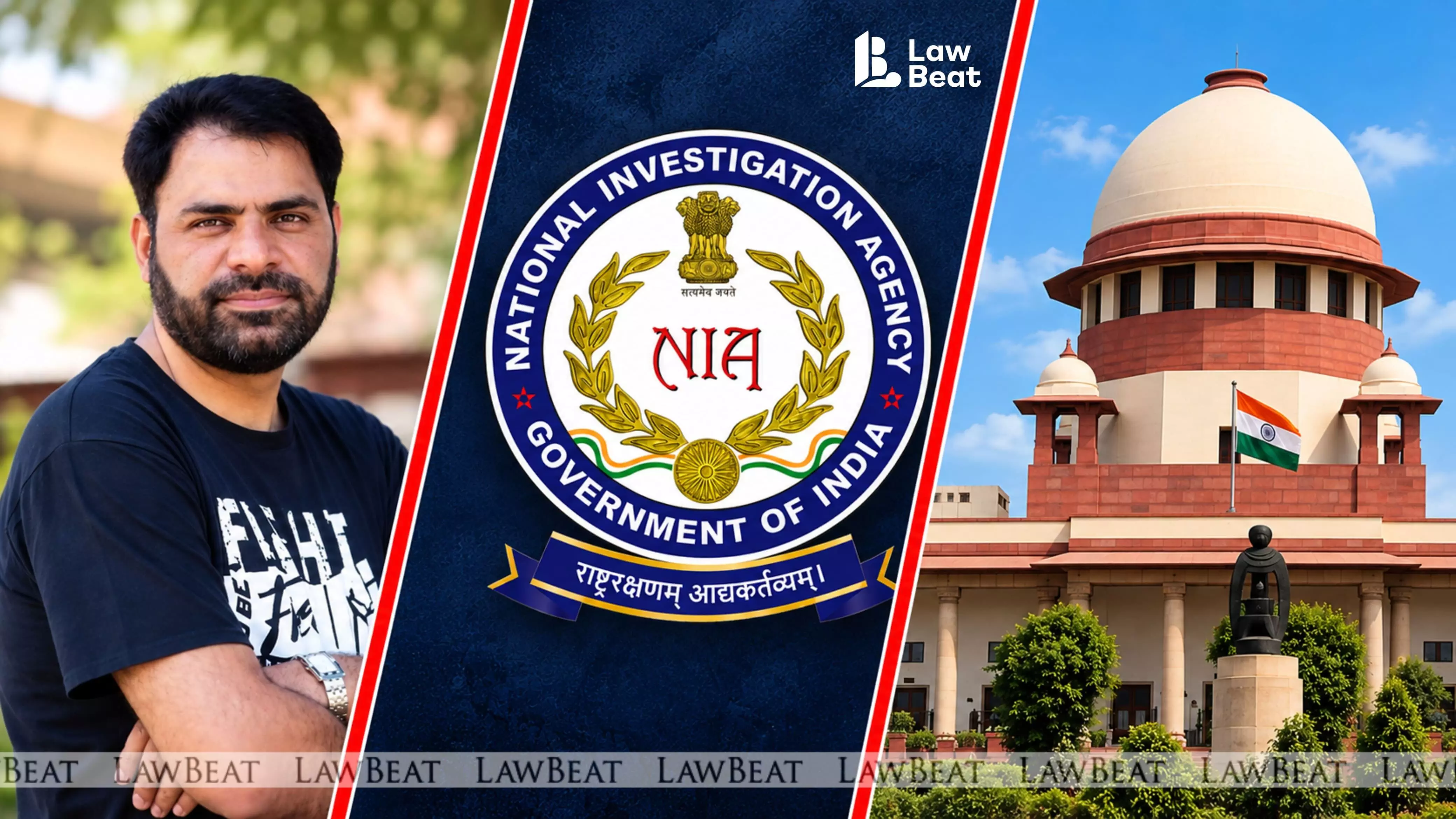
Supreme Court: Dismisses NIA Plea, Upholds Khurram Parvez UAPA Bail
Summary
- The Supreme Court upheld the Delhi High Court's decision to grant bail to Khurram Parvez in a UAPA terror funding case, dismissing the NIA's challenge.
- A key factor in the Supreme Court's ruling was Parvez's nearly five-year pre-trial incarceration and the delay in framing charges against him.
- Parvez, arrested in November 2021, faces allegations of diverting funds from NGOs to support terror activities and propagating a secessionist agenda.
- The Delhi High Court had previously refused to stay a trial court's bail order for Parvez and Irfan Mehraj, imposing stricter conditions.
- Parvez had also secured bail in a separate 2021 NIA case concerning allegations of recruiting overground workers for Lashkar-e-Taiba.
Supreme Court Upholds Bail for Khurram Parvez
The Supreme Court's ultimate decision to uphold bail for Khurram Parvez primarily hinged on the extensive period he had already spent in custody, nearing five years, and the fact that charges against him had not yet been framed, underscoring long incarceration as a significant ground for bail even in serious UAPA cases.
The Supreme Court of India recently affirmed the Delhi High Court's decision to grant bail to Khurram Parvez, a prominent human rights activist, in a case involving alleged terror funding under the Unlawful Activities (Prevention) Act (UAPA). A bench comprising Justices MM Sundresh and PB Varale declined to intervene with the High Court's July order, effectively dismissing the petition filed by the National Investigation Agency (NIA) which sought to challenge Parvez's release.
The apex court's decision was significantly influenced by the considerable duration Parvez had already spent in custody, which his counsel, Senior Advocate Tanveer Ahmed Mir, stated was nearly five years. Mir also informed the bench that Parvez uses a prosthetic leg and that charges against him had yet to be framed, with the process deferred since August 19 due to the NIA requesting time to file a supplementary chargesheet. Parvez was initially arrested on November 22, 2021, from Srinagar, marking a substantial period of pre-trial detention. Additional Solicitor General (ASG) Raja Thakare represented the NIA during the proceedings.
Allegations in the UAPA Case
The UAPA case against Khurram Parvez stems from an FIR registered by the NIA in October 2020. The agency alleges that various non-governmental organizations (NGOs), trusts, and societies operating in Jammu and Kashmir were involved in collecting funds both domestically and internationally under the guise of charitable and welfare activities. These funds, according to the NIA, were then illicitly diverted to finance terrorist activities, with alleged links to banned outfits such as Lashkar-e-Taiba (LeT) and Hizbul Mujahideen (HM).
Specifically, the NIA accused Khurram Parvez, identified as the coordinator of the Jammu and Kashmir Coalition of Civil Societies (JKCCS), of raising funds from international entities under the pretext of promoting human rights. These funds were purportedly channeled to support terror-related activities within the Kashmir Valley. Furthermore, the agency claimed that Parvez and his associates actively propagated a secessionist agenda through various NGOs and provided "material support" to protesters during the 2016 Kashmir unrest. Irfan Mehraj, also granted bail in this case, was alleged to be a close associate of Parvez and worked as a researcher with JKCCS until March 2022. The accused parties have consistently disputed these allegations.
Judicial Path and Bail Grounds
The journey to the Supreme Court's affirmation of bail began with a trial court order dated July 18, issued by Principal District and Sessions Judge Pitamber Dutt, which granted bail to both Khurram Parvez and Irfan Mehraj. The NIA subsequently challenged this order, but a division bench of the Delhi High Court, comprising Justices Prathiba M. Singh and Vikas Mahajan, refused to stay the trial court's decision. Instead, the High Court imposed stricter bail conditions on the accused individuals.
This trial court bail order was crucial for Parvez's release, especially as he had also secured bail from the Delhi High Court in a separate 2021 NIA case. That distinct case alleged that Parvez was involved in recruiting overground workers for the banned terrorist organization Lashkar-e-Taiba (LeT), and the High Court had imposed 13 specific conditions as part of that bail. The Supreme Court's ultimate decision to uphold bail for Khurram Parvez primarily hinged on the extensive period he had already spent in custody, nearing five years, and the fact that charges against him had not yet been framed, underscoring long incarceration as a significant ground for bail even in serious UAPA cases.
Practical Implications
This Supreme Court decision highlights that prolonged pre-trial detention, particularly when charges are not yet framed, can be a significant factor in securing or upholding bail even in serious UAPA cases. Lawyers should consider citing this precedent when arguing for bail in similar matters involving extensive incarceration periods for their clients.
Source
How does this affect you?
Get an AI analysis of this article grounded in your jurisdictions, practice areas, and any policy documents you've uploaded to Wansom.
Finish Reading the Full Story and the Expert Analysis.
Wansom is AI and can make mistakes.