
Supreme Court India: August 2026 Key Rulings Address Digital Arrests, Capital Punishment
Summary
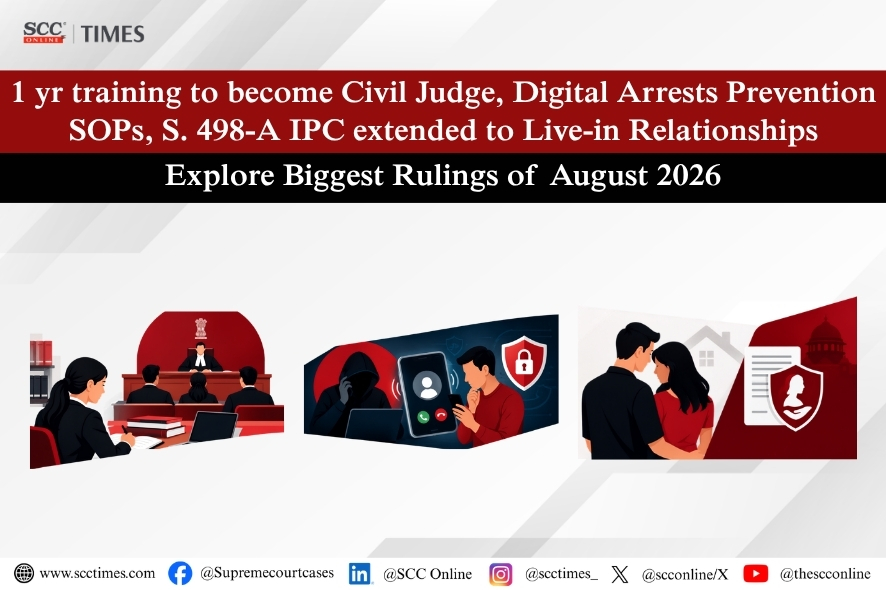
- The Supreme Court of India issued several significant judgments in August 2026, covering diverse legal areas.
- Rulings included directives for preventing digital arrests and establishing Standard Operating Procedures (SOPs) for them.
- The court also addressed the constitutionality of the death sentence when carried out by hanging.
- Guidelines were issued for handling dowry and cruelty cases, and Section 498-A IPC was extended to live-in relationships.
- A mandate for a one-year training period for Civil Judges was among the key decisions.
Supreme Court's August 2026 Docket
These pronouncements collectively underscore the Supreme Court's proactive engagement in shaping India's legal landscape, addressing both long-standing constitutional questions and emerging societal challenges.
The Supreme Court of India concluded August 2026 with a series of pivotal judgments, addressing a diverse array of legal and societal issues. These pronouncements spanned critical areas from criminal procedure and constitutional law to family matters and judicial administration, reflecting the apex court's expansive oversight of the nation's legal framework. The rulings are poised to have far-reaching implications for law enforcement, judicial training, and personal relationships across the country.
The court's decisions included significant directives aimed at modernizing legal processes and safeguarding individual rights, such as establishing protocols for digital arrests. Concurrently, it delved into deeply entrenched constitutional debates, specifically re-examining the method of capital punishment. Furthermore, the judiciary turned its attention to regulatory gaps concerning private investigative services, highlighting a need for structured oversight in this burgeoning sector.
Beyond these, the Supreme Court also issued comprehensive guidelines designed to enhance the handling of cases involving dowry and cruelty, a persistent social challenge. A notable development in family law saw the expansion of a key provision of the Indian Penal Code to encompass contemporary relationship structures. These rulings collectively underscore the Supreme Court's proactive engagement in shaping India's legal landscape, addressing both long-standing constitutional questions and emerging societal challenges.
Key Rulings on Criminal Justice and Procedure
Among the significant criminal justice pronouncements, the Supreme Court issued definitive guidelines for the prevention of digital arrests. This move included the establishment of specific Standard Operating Procedures (SOPs) to govern such arrests, aiming to introduce clarity and procedural safeguards in an evolving digital enforcement environment. These measures are critical for ensuring due process and protecting citizens from potential misuse of digital technologies in law enforcement operations.
Another major constitutional matter addressed was the legality of the death sentence when executed by hanging. The court deliberated on the constitutionality of this method, a subject that has historically drawn considerable debate regarding humane treatment and the principles of justice. While the specific outcome of this deliberation is not detailed, the court's engagement with such a fundamental aspect of capital punishment signals its ongoing commitment to scrutinizing the parameters of state power.
Additionally, the Supreme Court voiced concerns regarding the absence of a robust legal mechanism to regulate private investigators. This observation points to a significant gap in the current legal framework, where the activities of private investigative agencies operate without adequate statutory oversight. The court's highlighting of this issue suggests a potential future impetus for legislative action to establish clear rules and accountability for these services.
Family Law and Judicial Administration Directives
In the realm of family law, the Supreme Court provided crucial guidelines for effectively dealing with cases of dowry and cruelty. These directives are intended to streamline the judicial process and ensure more sensitive and efficient handling of such sensitive matters, which often involve complex family dynamics and significant emotional distress for victims. The aim is to strengthen the legal response to these social ills and provide better support to those affected.
Further impacting family and relationship law, the court extended the application of Section 498-A of the Indian Penal Code (IPC) to include live-in relationships. This expansion of the anti-cruelty provision, traditionally applied within marital contexts, signifies a recognition of evolving societal norms and the need to protect individuals in non-traditional partnerships from domestic abuse and harassment. This ruling marks a progressive step in acknowledging the legal standing and protection required for individuals in such relationships.
Finally, the Supreme Court mandated a one-year training period for individuals aspiring to become Civil Judges. This decision underscores the judiciary's emphasis on comprehensive professional development and adequate preparation for judicial officers. By requiring a full year of dedicated training, the court aims to enhance the competence, ethical grounding, and practical skills of future judges, thereby strengthening the overall quality and efficiency of the lower judiciary.
Source
Source: Original reporting via SCC Times
How does this affect you?
Get an AI analysis of this article grounded in your jurisdictions, practice areas, and any policy documents you've uploaded to Wansom.
Finish Reading the Full Story and the Expert Analysis.
Wansom is AI and can make mistakes.