
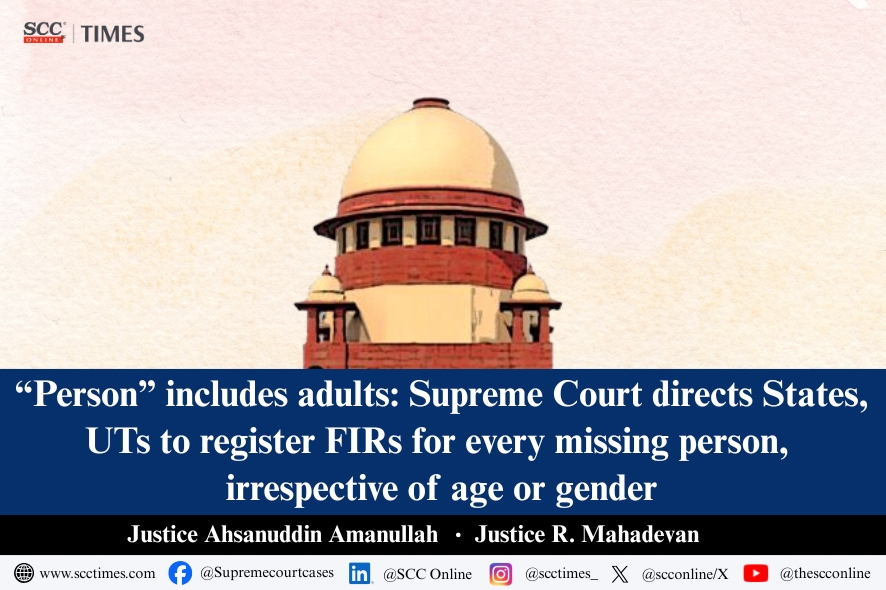
Supreme Court: FIR Registration Mandatory for All Missing Persons in India
Summary
- The Supreme Court has directed all states and union territories to register FIRs for every missing person, regardless of age or gender.
- This clarification comes after it was specified that 'person' encompasses adults as well as children in the context of missing persons.
- Law enforcement agencies across India will need to review their internal procedures for handling missing person reports and ensure timely FIR registration.
What Happened
The court's decision aims to ensure timely action is taken when a person goes missing, and an FIR is registered promptly.
The Supreme Court has issued a directive to all states and union territories in India to strictly comply with its earlier order regarding the registration of FIRs for missing persons. This clarification comes after it was specified that the direction applies regardless of age or gender, emphasizing that 'person' encompasses adults as well. The court's decision aims to ensure timely action is taken when a person goes missing, and an FIR is registered promptly. This move is expected to have significant implications for law enforcement agencies across the country.
Legal Context
The Supreme Court's directive is based on its earlier order, which emphasized the importance of registering FIRs for missing persons. The court has now clarified that this direction applies universally, without exception, and that 'person' includes adults as well as children. This clarification is significant because it underscores the seriousness with which the court views the issue of missing persons and the need for prompt action to be taken in such cases. Lawyers will need to review their firm's internal procedures for handling missing person reports, including ensuring timely FIR registration.
Why It Matters
The Supreme Court's directive has far-reaching implications for law enforcement agencies and the families of missing persons across India. By clarifying that an FIR must be registered in all cases of missing persons, regardless of age or gender, the court is ensuring that timely action is taken to locate these individuals. This decision also highlights the importance of compliance with court directions by states and union territories, which will need to review their internal procedures for handling missing person reports and ensure they are in line with the court's directive.
Practical Implications
Lawyers should note that this directive may trigger a need to review and update their firm's internal procedures for handling missing person reports, including ensuring timely FIR registration.
Source
Source: Original reporting via SCC Times
How does this affect you?
Get an AI analysis of this article grounded in your jurisdictions, practice areas, and any policy documents you've uploaded to Wansom.
Wansom is AI and can make mistakes.