
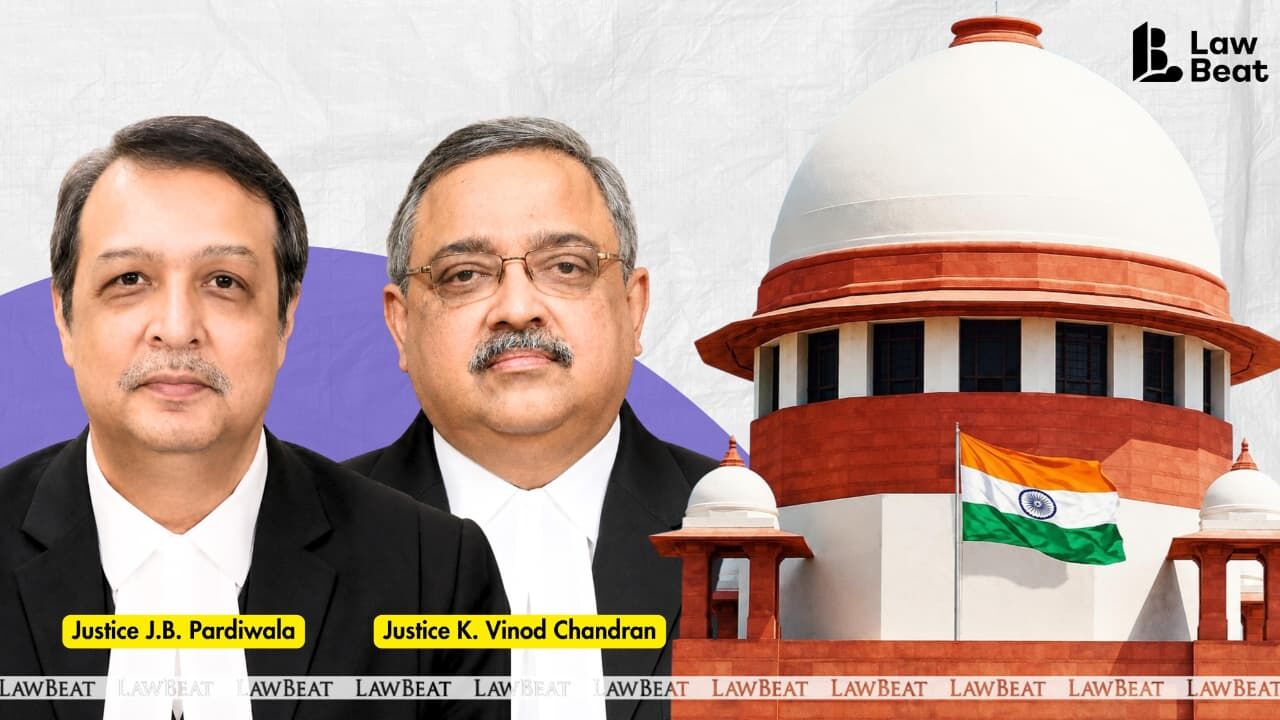
Supreme Court: Criticizes MP High Court's Casual Exception 4 Section 300 IPC Application
Summary
- The Supreme Court questioned the Madhya Pradesh High Court's casual application of Exception 4 to Section 300 IPC in a murder case.
- The High Court had converted Rampal Prateti's murder conviction (Section 302 IPC) to culpable homicide (Section 304 Part II IPC).
- The Supreme Court found the High Court's reasoning "very cryptic" and noted its failure to consider crucial evidence, including a dying declaration.
- Justices J B Pardiwala and K Vinod Chandran stated that Exception 4 requires specific conditions and cannot be invoked without proper evidence examination.
- The Supreme Court has issued a show-cause notice to the accused, indicating a potential reinstatement of the original murder conviction.
Background of the Case
The apex court emphasized that Exception 4 to Section 300 IPC cannot be invoked lightly or without a thorough examination of the evidence and proper application of legal principles to the gravity of the offense.
The Supreme Court has recently scrutinized a decision by the Madhya Pradesh High Court, which had altered a murder conviction to one of culpable homicide not amounting to murder. The case involves Rampal Prateti, who was initially convicted by the Additional Sessions Judge, Sausar, Chhindwara, for the murder of his wife, Hemwati, under Section 302 of the Indian Penal Code (IPC), now Section 103 of the Bharatiya Nyaya Sanhita (BNS). Prateti received a life sentence along with a fine for the offense.
According to the prosecution, Prateti assaulted his wife on December 28, 2021. She succumbed to her injuries two days later, on December 30, 2021. A critical piece of evidence presented was an oral dying declaration made by Hemwati on December 29, 2021, to her father (PW-1) and sister (PW-7). In this declaration, she explicitly stated that her husband had brutally assaulted her over minor domestic disputes. Following her death, an inquiry under Section 174 of the Criminal Procedure Code was initiated on December 31, 2021, leading to the registration of an FIR by her father on January 2, 2022, and subsequent charges for murder.
High Court's Decision and Supreme Court's Critique
Upon appeal, the Madhya Pradesh High Court partially allowed Prateti's plea, converting his conviction from Section 302 IPC to Section 304 Part II IPC (now Section 105 (Part II) BNS). The High Court concluded that the circumstances of the case fell under Exception 4 to Section 300 IPC (now Section 101 BNS). This exception applies when culpable homicide is committed without premeditation, in a sudden fight or in the heat of passion during a sudden quarrel, provided the offender does not take undue advantage or act in a cruel or unusual manner.
However, a Supreme Court Bench comprising Justices J B Pardiwala and K Vinod Chandran expressed profound dissatisfaction with the High Court's reasoning, labeling it "very cryptic" and "very casual." The apex court emphasized that Exception 4 to Section 300 IPC cannot be invoked lightly or without a thorough examination of the evidence and proper application of legal principles to the gravity of the offense. The Supreme Court specifically noted that the High Court had overlooked crucial evidence, including the testimony of PW-7, the deceased's sister, who was a direct recipient of the dying declaration.
Implications for Legal Precedent
The Supreme Court further questioned the High Court's decision to convert the conviction to Section 304 Part II IPC, stating that even if Exception 4 were applicable, the conviction "at the most could have been under Section 304 Part I of the IPC." This distinction highlights the Supreme Court's meticulous approach to classifying offenses and applying statutory provisions.
The apex court indicated its strong inclination to interfere with the Madhya Pradesh High Court's judgment. It has issued a notice to the accused, Rampal Prateti, directing him to show cause why the original murder conviction handed down by the trial court should not be reinstated. The notice is returnable on November 18, 2026, and the State has been instructed to ensure the accused's presence. This development underscores the Supreme Court's commitment to ensuring that the stringent conditions for applying Exception 4 to Section 300 IPC are strictly adhered to, preventing its casual application in cases of murder.
Practical Implications
Lawyers handling criminal appeals involving murder convictions must be aware that the Supreme Court is scrutinizing the casual application of Exception 4 to Section 300 IPC (now Section 101 BNS), requiring strict adherence to its conditions. This signals a higher bar for altering murder convictions to culpable homicide and necessitates meticulous evidentiary presentation and legal reasoning in such cases.
Source
Source: Original reporting via LiveLaw
How does this affect you?
Get an AI analysis of this article grounded in your jurisdictions, practice areas, and any policy documents you've uploaded to Wansom.
Finish Reading the Full Story and the Expert Analysis.
Get the latest legal & regulatory intelligence in India
Wansom is AI and can make mistakes.