
India SC: No Mechanical Application For Equal Pay, Allows Pay Differentiation
Summary
- The Supreme Court of India ruled that "equal pay for equal work" is not an abstract principle and cannot be applied mechanically based solely on functional similarity.
- Article 14 permits pay differentiation based on factors like service experience, mode of recruitment, and educational qualifications, provided there is a rational nexus to the classification's objective.
- The Court dismissed appeals by G P Sangeetha and others, upholding pay differences for teachers based on prior service experience, which was deemed a valid differentiator.
- The judicial interpretation of equal pay has shifted from an expansive anti-exploitation principle to a strict test requiring complete parity in recruitment source, qualifications, experience, and responsibilities.
- Claimants must now establish comprehensive equivalence across multiple criteria, as mere functional similarity is no longer sufficient to demand equal pay.
India's Supreme Court Rejects Mechanical Equal Pay Application
The Supreme Court of India has clarified that the principle of "equal pay for equal work" is not an abstract concept to be applied mechanically, particularly when considering only functional similarity.
The Supreme Court of India has clarified that the principle of "equal pay for equal work" is not an abstract concept to be applied mechanically, particularly when considering only functional similarity. In a significant ruling, the Court asserted that Article 14 of the Constitution permits reasonable classification for pay differentiation, provided such distinctions are based on factors like service experience, mode of recruitment, and educational qualifications, and maintain a rational nexus with the classification's objective. This judgment underscores a shift in judicial interpretation, moving away from a broad application of the doctrine.
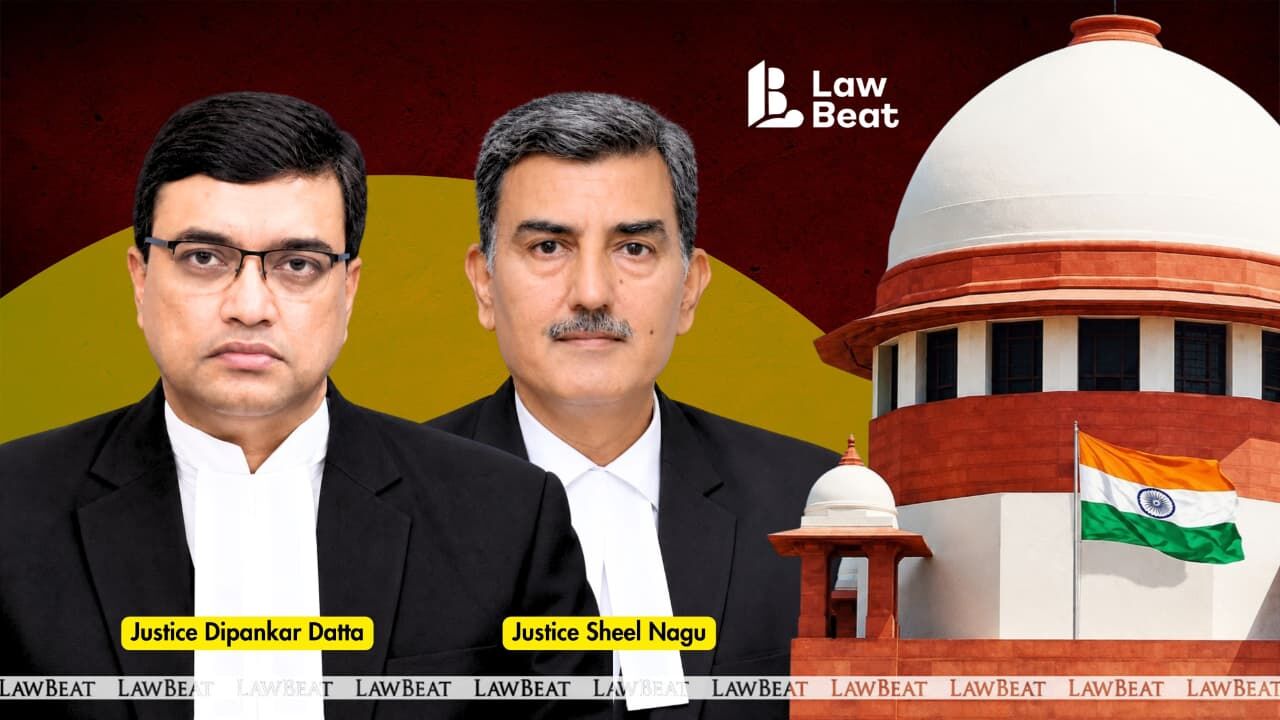
This clarification came as a two-judge Bench, comprising Justices Dipankar Datta and Sheel Nagu, dismissed civil appeals filed by G P Sangeetha and others. The appellants had challenged a March 22, 2011, judgment from a division bench of the Kerala High Court. The Supreme Court's decision upheld a pay difference between direct recruits and promotees within the same cadre of teachers, specifically citing prior service experience as a valid basis for this distinction. The Court found that the experience of transferee or promotee Higher Secondary School Teachers (HSST), Junior, provided a valid and intelligible differentia when compared to directly recruited HSST, Junior teachers, justifying a higher pay scale for the former.
Evolving Standards for Pay Parity Claims
The India Supreme Court's stance on Article 14 pay differentiation marks a notable evolution in the interpretation of equal pay for equal work. Historically, following its 1982 decision in Randhir Singh v Union of India, the principle was viewed as an expansive anti-exploitation measure under Articles 14 and 39(d), where merely having the same designation, such as 'teacher' or 'accountant,' could suffice to claim pay parity. This approach, prevalent in the last century, allowed for a more straightforward application of the doctrine.
However, the Court highlighted that this position has fundamentally changed in the current century. The doctrine has been recast as a strict test, heavily reliant on service rules. Citing precedents like State Bank of India v M.R. Ganesh Babu (2012) and State of Bihar v Bihar Secondary Teachers Struggle Committee (2019), the Court emphasized that claiming equal pay merely by demonstrating identical work is no longer sufficient. Instead, a claimant-employee must now establish complete parity across several critical aspects, including the source of recruitment, educational qualifications, experience, the mode of appointment through a constitutional process, and the nature of responsibilities and accountability. This means that functional similarity equal pay India claims face a much higher bar.
The G.P. Sangeetha Precedent and Experience Qualification
The G P Sangeetha Supreme Court judgment specifically addressed the question of whether a pay scale difference could exist within the same cadre of HSST, Junior teachers, despite identical qualifications, duties, and responsibilities. The appellants, who were HSST, Junior teachers in government-aided schools in Kerala appointed via direct recruitment under a May 13, 1998 Government Order, sought the full-time pay scale extended to teachers appointed through transfer or promotion.
The Kerala High Court's division bench had previously allowed an intra-court appeal by the State of Kerala and the Director of Higher Secondary Education, reversing a December 22, 2009 common judgment from a single judge that had favored the appellants. The Supreme Court affirmed this reversal, concluding that the experience of the transferee or promotee teachers constituted a valid and intelligible differentia with a clear nexus to the objective of the classification. The Bench explicitly stated that since the two groups of teachers could not claim equivalence regarding experience in rendering service, this difference served as a legitimate criterion for differentiation in pay scales, thereby validating the equal pay for equal work experience qualification as a permissible ground for distinction.
Implications for Pay Differentiation
This ruling significantly clarifies the permissible grounds for pay differentiation in India, moving beyond a simplistic interpretation of 'equal work.' The India SC equal pay mechanical application is now definitively rejected, requiring a nuanced assessment of various factors. Employers now have clearer guidance on establishing valid distinctions in pay structures, while employees seeking pay parity must demonstrate a comprehensive equivalence across recruitment, qualifications, experience, and responsibilities, not just job functions.
The Court's emphasis on a 'strict test' based on service rules means that the burden of proof for establishing 'equal work' has substantially increased. Mere functional similarity is no longer deemed sufficient to demand equal pay, reinforcing that Article 14 allows for reasonable classification when such differentiation is rationally linked to legitimate objectives. This judgment provides a crucial framework for understanding the boundaries of equal pay claims in the Indian legal landscape.
Practical Implications
This ruling clarifies the permissible grounds for pay differentiation in India, moving beyond mere functional similarity. Lawyers advising employers should review existing pay structures for valid differentiators like experience and recruitment mode, while those advising employees must recognize the higher burden of proof required to establish 'equal work' for equal pay claims.
Source
Source: Original reporting via Live Law
How does this affect you?
Get an AI analysis of this article grounded in your jurisdictions, practice areas, and any policy documents you've uploaded to Wansom.
Finish Reading the Full Story and the Expert Analysis.
Get the latest legal & regulatory intelligence in India
Wansom is AI and can make mistakes.