
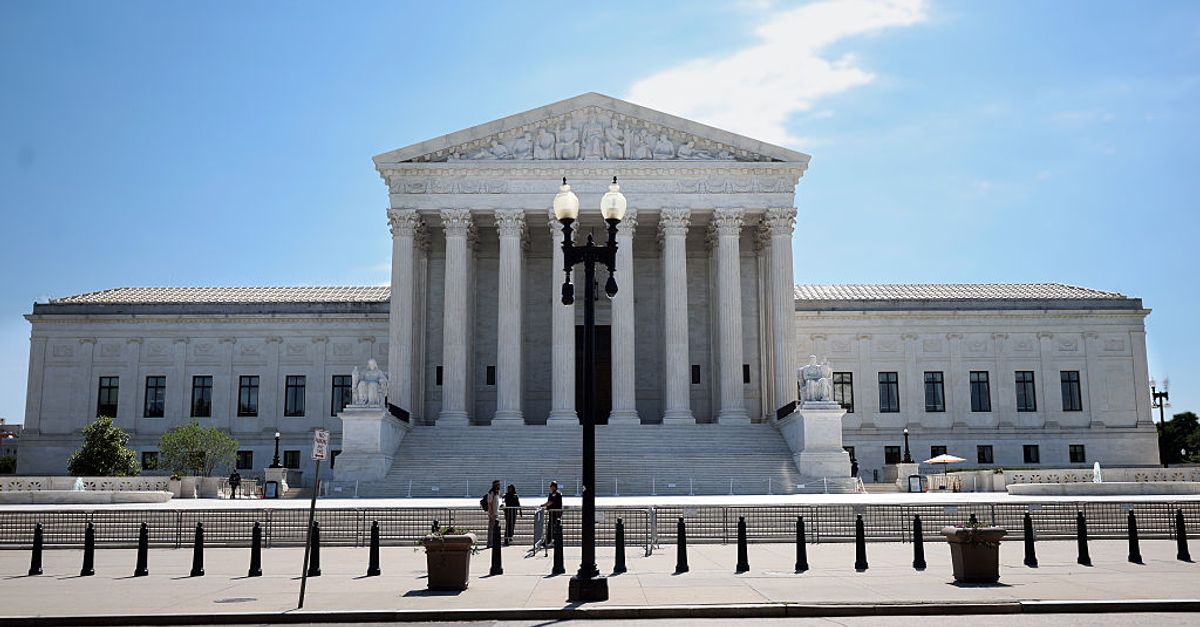
Supreme Court: Dismisses Genalo v. Black, Mooting Detention Due Process Case
Summary
- The Supreme Court dismissed *Genalo v. Black*, an immigration case scheduled for October arguments.
- U.S. Solicitor General D. John Sauer informed the court the case was moot, a position the challenger agreed with.
- The case concerned the right to a noncitizen bond hearing for individuals in lengthy immigration detention under Section 1226(c) INA.
- Sauer had argued against a 2nd Circuit ruling granting bond hearings, citing *Jennings v. Rodriguez*.
- The Justice Department plans to re-litigate the issue of bond hearings for noncitizens in future petitions.
Supreme Court Ends Scheduled Argument in Immigration Case
The Supreme Court's non-resolution of the *Genalo v. Black* case means that the precise contours of the right to a bond hearing for noncitizens in mandatory detention continue to be a subject of significant legal debate and potential future litigation.
The U.S. Supreme Court recently removed *Genalo v. Black* from its upcoming oral argument calendar, dismissing the case that had been slated for review in October. This action followed a notification from U.S. Solicitor General D. John Sauer, who informed the court that the matter had become moot. The challenger in the case concurred with the Solicitor General's assessment, agreeing that the dispute no longer warranted a hearing before the justices.
The core issue the Supreme Court had intended to address in *Genalo v. Black* revolved around the constitutional rights of certain noncitizens facing prolonged detention. Specifically, the justices were poised to examine when, if ever, these individuals are entitled to a noncitizen bond hearing during an extended period of custody. Furthermore, the case sought to clarify the evidentiary burden on the government to justify continued immigration detention once such a hearing is deemed necessary.
Legal Battle Over Mandatory Detention
At the time Solicitor General Sauer initially petitioned the Supreme Court to hear *Genalo v. Black*, the case centered on two individuals held under Section 1226(c) of the Immigration and Nationality Act (INA). This particular provision mandates the detention of noncitizens, including lawful permanent residents (green card holders), who have been convicted of specific crimes and are awaiting removal proceedings. Sauer emphasized that Section 1226(c) expressly restricts release, permitting it only under "narrow, witness-protection" circumstances.
The Solicitor General had urged the Supreme Court to review a decision by the U.S. Court of Appeals for the 2nd Circuit. The appellate court had ruled that the extended detention of the men in question had become so protracted that they were constitutionally entitled to a bond hearing under the Fifth Amendment's due process clause. In his arguments, Sauer cited the Supreme Court's 2018 ruling in *Jennings v. Rodriguez*, which established that Section 1226(c) itself does not inherently require periodic bond hearings for detainees.
Ongoing Uncertainty for Immigration Detention Due Process
Despite the Supreme Court's dismissal of *Genalo v. Black*, the fundamental legal questions surrounding noncitizen bond hearings and immigration detention due process remain unresolved. In his official communication to Scott Harris, the clerk of the court, Solicitor General Sauer explicitly stated the Justice Department's firm intention to reintroduce this contentious issue to the judiciary in a new petition for review in the near future. This proactive stance by the government underscores its commitment to pursuing a definitive ruling on the scope of mandatory detention.
This declaration signals that the federal government remains committed to challenging lower court precedents that have granted bond hearings to certain long-term detainees, particularly those held under Section 1226(c) INA. The Supreme Court's non-resolution of the *Genalo v. Black* case means that the precise contours of the right to a bond hearing for noncitizens in mandatory detention continue to be a subject of significant legal debate and potential future litigation. This ongoing legal uncertainty maintains an environment of flux for both individuals facing prolonged immigration detention and the legal practitioners advocating on their behalf.
Practical Implications
Lawyers representing noncitizens detained under Section 1226(c) INA should note that the Supreme Court has not yet resolved the right to a bond hearing, and the Solicitor General plans to re-litigate this issue. This signals continued legal uncertainty and potential future challenges to lower court precedents granting bond hearings for certain long-term detainees.
Source
How does this affect you?
Get an AI analysis of this article grounded in your jurisdictions, practice areas, and any policy documents you've uploaded to Wansom.
Finish Reading the Full Story and the Expert Analysis.
Wansom is AI and can make mistakes.