
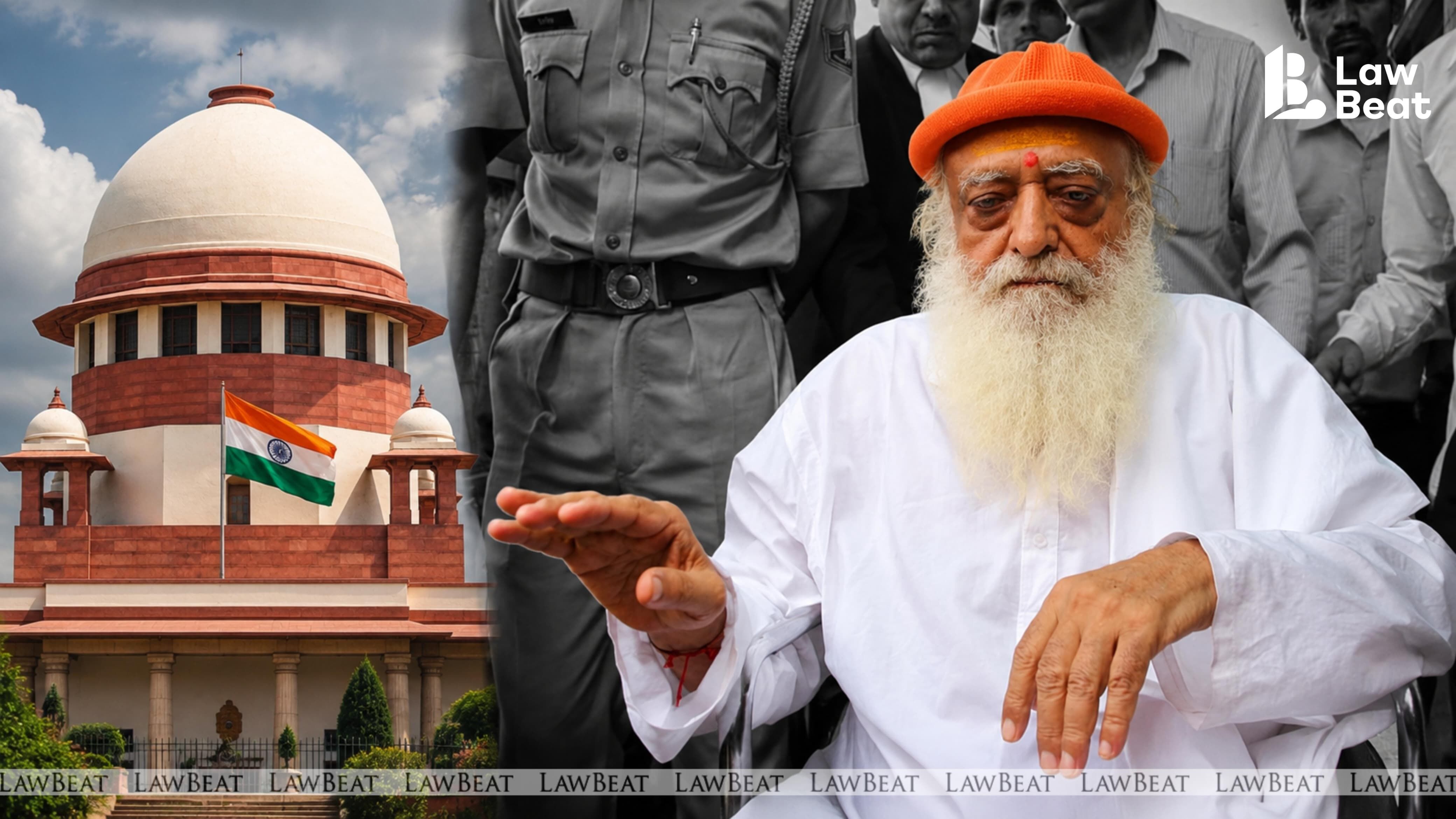
Supreme Court Directs Full Implementation Of AIIMS Advice For Asaram; Allows 24x7 Trained Caretaker
Home / Top Stories Supreme Court Directs Full Implementation Of AIIMS Advice For Asaram; Allows 24x7 Trained Caretaker X The Supreme Court directed authorities to implement AIIMS Jodhpur's medical recommendations for Asaram and permitted him to have a trained 24x7 caretaker while adjourning his medical bail plea The Supreme Court directed the Rajasthan authorities to fully implement AIIMS Jodhpur's recommendations, permitted Asaram to have a trained round-the-clock caretaker of his choice, and adjourned his medical bail plea with liberty to seek urgent listing if his health deteriorated The Supreme Court on Thursday directed the Rajasthan authorities to implement in "letter and spirit" the medical recommendations made by AIIMS Jodhpur for jailed self-styled godman Asaram Bapu, while permitting him to have a trained caretaker of his choice round the clock. The Court, however, adjourned his plea seeking interim bail on medical grounds. The Bench of Justices M.M. Sundresh and Prasanna B. Varale observed that it would be guided by the AIIMS Jodhpur medical report and expected the State to fully comply with the hospital's recommendations regarding Asaram's treatment and care. The matter came up shortly after Asaram, who had recently suffered acute internal bleeding, was admitted to AIIMS Jodhpur and sought interim bail citing deteriorating health. During the hearing, Solicitor General Tushar Mehta , appearing for the State, submitted that the authorities had no objection if Asaram appointed a caretaker of his own choice. Counsel appearing for Asaram, however, emphasised that the caretaker must be a trained professional, pointing out that the 86-year-old was suffering from multiple medical conditions and required specialised assistance. Taking note of the submissions, the Bench recorded the Solicitor General's statement that the recommendations made by AIIMS Jodhpur would be implemented "in letter and spirit." The Court also permitted Asaram to have a trained caretaker of his choice on a 24x7 basis while he remains in custody. Addressing concerns raised by Asaram's counsel regarding the quality of treatment available in jail, the Bench declined to immediately decide the medical bail plea but granted liberty to seek urgent listing if his condition worsened. "The application is adjourned. Mention the matter only if the petitioner's health deteriorates, " the Bench observed. Accordingly, the Supreme Court adjourned the medical bail plea while directing continued compliance with the AIIMS Jodhpur medical recommendations. Last month, the Court had directed the Director of the All India Institute of Medical Sciences (AIIMS) to constitute a medical board to examine the health condition of Asaram. During the hearing, Solicitor General Tushar Mehta opposed the plea, questioning the genuineness of Asaram's medical claims. "He got the bail on the ground that he was in a vegetative state. But now he is roaming around, " Mehta submitted, referring to Asaram's alleged recent visits to Kashi Vishwanath and Ayodhya. In June, Asaram had approached the Supreme Court against the Rajasthan High Court's May 2026 decision whereby partly allowed the appeals filed by the self-styled spiritual leader and his co-accused in the 2013 sexual assault case involving a minor girl, setting aside the conviction under Section 376D of the Indian Penal Code (gang rape) and certain provisions of the Protection of Children from Sexual Offences Act, 2012 (POCSO Act) but upheld Asaram’s conviction for rape under Section 376 IPC. A bench of Justices MM Sundresh and Sheel Nagu had issued notice in Asaram's SLP saying that it will consider it. Senior Advocate DS Naidu had appeared for Asaram. "He is 90 now..many medical issues..he was taken to an ayurvedic hospital..This court is our only hope...there is social media conviction now..," Naidu had told the bench. "Let the treatment being given to him continue...list after re-opening..," the bench went on to order. What happened
How does this affect your business?
Get an AI analysis of this article grounded in your jurisdictions, practice areas, and any policy documents you've uploaded to Wansom.
Wansom is AI and can make mistakes.