
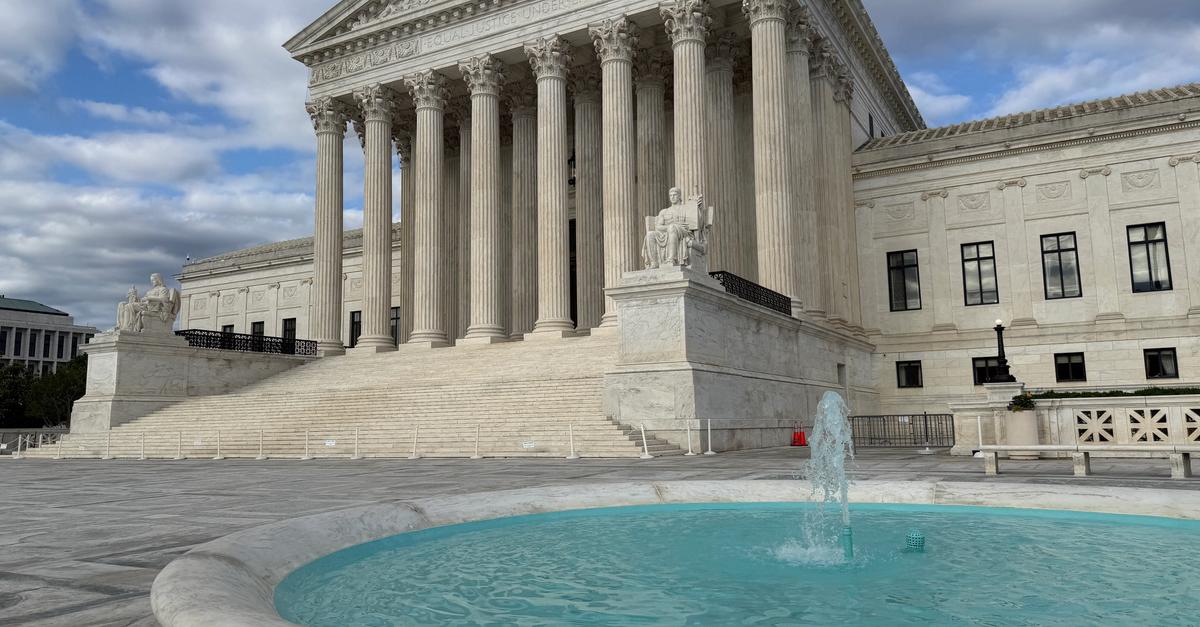
US Supreme Court: Deep-6 Rule Proposal Empowers Supermajority
Summary
- A new proposal, the Supreme Court Deep-6 rule, suggests empowering a supermajority of six justices to achieve substantive aims.
- This is the seventh piece in a series exploring potential improvements to the Supreme Court's internal procedures.
- Earlier proposals, known as the Join-3 and Pre-3 rules, aimed to give the court's minority more control over the docket by automatically adding cases for review.
- The Deep-6 proposal seeks to grant a supermajority greater power, contrasting with previous ideas focused on minority protection.
- The author stresses that any supermajority rules must prevent two-thirds of the court from arbitrarily overriding the minority.
New Proposals for Supreme Court Procedural Reform
The author's objective is to establish concrete rules that would enable this two-thirds majority to pursue substantive aims effectively.
A recent analysis, part of an ongoing series exploring potential enhancements to the Supreme Court's internal operations, introduces a novel concept: the Supreme Court Deep-6 rule proposal. This latest installment shifts focus from protecting the court's minority to empowering a supermajority, outlining specific mechanisms by which six justices could achieve substantive objectives. The author's broader project aims to identify areas where the nation's highest court could improve its functioning, building on previous discussions about procedural safeguards.
While a simple majority of five votes is generally sufficient for the Supreme Court to render decisions, as Justice William Brennan is often attributed with remarking, the current proposal delves into what a larger consensus—specifically, six votes—might accomplish. The author acknowledges that any significant procedural reform, particularly those that might cede authority, would necessitate the agreement of a majority of justices. However, this particular discussion explores scenarios where a supermajority's actions could be justified in ways a bare majority's might not.
Prior Docket Control Initiatives
This new Deep-6 concept builds upon earlier suggestions for US Supreme Court procedural reform, which primarily focused on enhancing the influence of the court's minority in shaping the docket. Previous proposals, collectively referred to as the Supreme Court Join-3 Pre-3 rules, aimed to provide justices with greater control over which cases the Court hears. The Join-3 rule, for instance, stipulated that if three justices voted to grant certiorari, the Chief Justice would automatically contribute a fourth vote, thus securing the minimum required for review.
Complementing this, the Pre-3 rule allowed three justices to vote to grant a case prior to the formal conference. When these two mechanisms, the Join-3 and the Pre-3, were combined, they were designed to place cases directly onto the Supreme Court's docket without requiring further deliberation among the justices. These Supreme Court docket control proposals were specifically intended to grant the minority faction of the court increased agency in setting the judicial agenda, ensuring a broader range of issues could potentially reach the Court for consideration.
Empowering a SCOTUS Supermajority
In contrast to the earlier proposals designed to bolster minority influence, the Supreme Court Deep-6 rule proposal is specifically crafted to grant a supermajority—meaning six justices—a more significant degree of power. The author's objective is to establish concrete rules that would enable this two-thirds majority to pursue substantive aims effectively. This initiative represents a distinct facet of the ongoing discussion around SCOTUS supermajority rules, exploring how a larger consensus could operate within the Court's procedural framework.
Crucially, the author emphasizes that while empowering a supermajority, it is vital to prevent two-thirds of the court from arbitrarily overriding the minority through the creation of ad hoc rules. The intent behind the Deep-6 is to provide a structured mechanism for a supermajority's actions, ensuring that any enhanced authority operates within defined parameters rather than allowing for unchecked power. This distinction is central to the proposed framework for how a supermajority could legitimately exercise greater influence on the Court's substantive outcomes.
Practical Implications
This article proposes hypothetical internal procedural changes for the US Supreme Court. As these are speculative proposals and not actual legal developments, there is no immediate practical implication or actionable advice for lawyers or compliance officers.
Source
How does this affect you?
Get an AI analysis of this article grounded in your jurisdictions, practice areas, and any policy documents you've uploaded to Wansom.
Finish Reading the Full Story and the Expert Analysis.
Wansom is AI and can make mistakes.