
Supreme Court: Uncommunicated Remarks Don't Bar Compulsory Retirement
Summary
- The Supreme Court ruled that uncommunicated adverse remarks alone do not invalidate a compulsory retirement order.
- Authorities must consider an employee's entire service record, with greater weight given to performance in the immediate preceding years.
- Compulsory retirement is intended to remove inefficient personnel from public service and is not punitive in nature.
- Principles of natural justice, such as the right to be heard, do not apply to compulsory retirement decisions.
- Such orders are subject to limited judicial review, allowing interference only if they are mala fide, arbitrary, or based on no evidence.
Supreme Court Upholds CISF Officer's Compulsory Retirement
The Court emphasized that while adverse remarks not formally communicated to an employee do not automatically invalidate a compulsory retirement order, the decision-making authority must undertake a comprehensive review of the individual's entire service history.
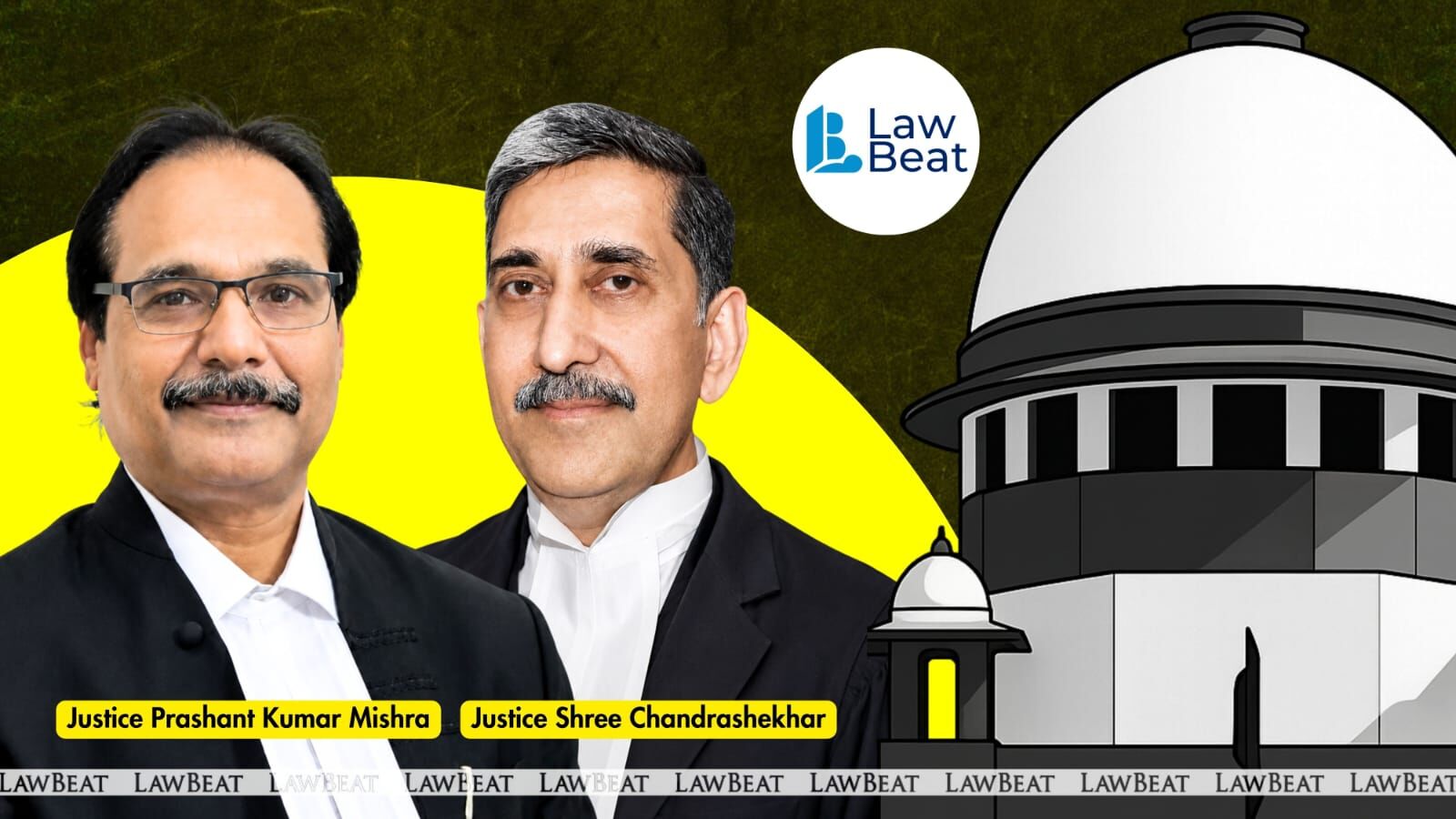
India's Supreme Court has affirmed the compulsory retirement of a Central Industrial Security Force (CISF) officer, Sushil Sharma, clarifying the legal framework surrounding such decisions. The ruling, delivered by a Bench comprising Justices Prashant Kumar Mishra and Shree Chandrashekhar, dismissed an appeal challenging a Delhi High Court judgment that had previously upheld Sharma's retirement. This decision underscores the judiciary's approach to reviewing administrative actions concerning public service employment.
Sharma's career began on June 28, 1982, when he joined the CISF as an Assistant Sub-Inspector. He achieved promotion to Sub-Inspector in 1990 and subsequently to Inspector in 2003. Following his attainment of 50 years of age, his case was brought before an Internal Screening Committee for evaluation under Rule 56(j) of the Fundamental Rules. This committee concluded that he was unsuitable for continued service, a finding that was subsequently confirmed by a Review Committee on June 6, 2010, leading to his compulsory retirement. His subsequent representation against this decision was also rejected.
Purpose and Nature of Compulsory Retirement
The Supreme Court articulated that the fundamental purpose of compulsory retirement is to "weed out the dead wood" from public service, thereby upholding high standards of efficiency and integrity. The Court emphasized that such an order is not punitive in nature, nor does it carry any stigma, prejudice, or implication of misbehavior. Instead, it is considered to be in the public interest, based on the subjective satisfaction of the government or the competent authority.
Crucially, the Court clarified that an order of compulsory retirement cannot be invalidated simply because adverse remarks, which were not formally communicated to the employee, were part of the material considered by the competent authority. This, by itself, does not provide a sufficient basis for judicial interference. The Court stressed that the government or the review committee must assess the employee's entire service record, giving particular weight to performance and records from the years immediately preceding the retirement decision. Both favorable and adverse remarks must be carefully weighed when determining an employee's suitability for continued service.
Judicial Scrutiny and Natural Justice Principles
The ruling further delineated the scope of judicial review in compulsory retirement cases, stating that the principles of natural justice, including the right to be heard (audi alteram partem), do not apply in this context. However, this does not render such orders immune from judicial scrutiny. While a high court or the Supreme Court will not re-examine the matter as an appellate body, intervention is permissible if the order is found to be mala fide, based on no evidence, or is arbitrary and perverse.
In Sharma's specific case, the Delhi High Court had observed a decline in his efficiency during the final two years of the review period, concluding that his compulsory retirement was neither arbitrary nor unreasonable. The Supreme Court's own examination of Sharma's service record revealed fluctuating gradings between 1983 and 1999, ranging from "Average" to "Very Good." His promotions in 1990 and 2003 followed periods of improved performance, including "Very Good" gradings from 2000 to 2003. However, the Court underscored that greater importance must be attached to the service record of the years immediately preceding a compulsory retirement order.
Emphasis on Recent Performance Decline
The Supreme Court's analysis of Sushil Sharma's service record highlighted the period between 2004 and 2009 as particularly significant. During this time, his performance showed a discernible decline. He received an "Average" grading in 2004, followed by "Very Good" in 2005, and "Good" in both 2006 and 2007. While he maintained a "Good" grading in the first quarter of 2008, his performance subsequently dropped to "Average" for the remainder of 2008 and continued at that level through 2009.
This pattern, demonstrating a clear decline in his performance during the two years immediately preceding his compulsory retirement, was a critical factor in the Court's decision. The Court emphasized that while adverse remarks not formally communicated to an employee do not automatically invalidate a compulsory retirement order, the decision-making authority must undertake a comprehensive review of the individual's entire service history, with particular attention to recent performance, to ensure the decision is not arbitrary or perverse.
Practical Implications
This ruling clarifies the limited grounds for challenging compulsory retirement orders in India, particularly regarding uncommunicated adverse remarks and natural justice principles. Lawyers advising public sector employers or employees must note that while uncommunicated remarks alone won't invalidate an order, the decision must still be based on a comprehensive review of the entire service record and not be arbitrary or mala fide to withstand judicial scrutiny.
Source
Source: Original reporting via Live Law
How does this affect you?
Get an AI analysis of this article grounded in your jurisdictions, practice areas, and any policy documents you've uploaded to Wansom.
Wansom is AI and can make mistakes.