
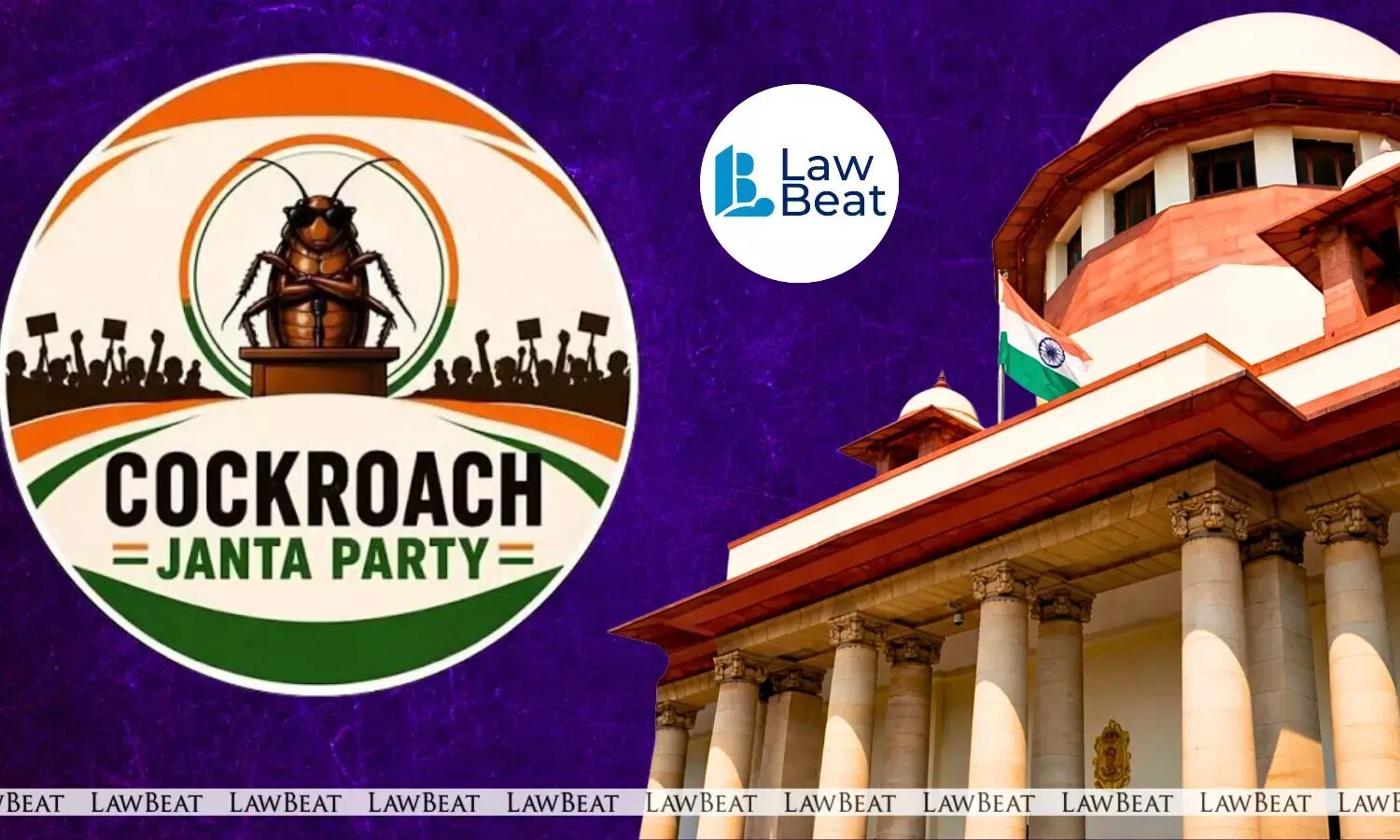
Supreme Court Issues Contempt Notice to CJP Campaign Over Satirical Content
Summary
- The Supreme Court has issued a notice targeting the 'Cockroach Janta Party' campaign over concerns of commercial exploitation of court footage.
- The campaign's use of satire and humor to critique judicial statements has raised questions about the limits of free speech in India.
- The Supreme Court's notice highlights the need for careful consideration when navigating the intersection of free speech and judicial dignity in India.
The Supreme Court's Notice: A Test for the Boundaries of Free Speech
Constitutional morality in the digital era requires preservation of institutional dignity, contextual interpretation, responsible public discourse, and ethical dissemination of judicial proceedings.
A recent notice issued by the Supreme Court has sparked a critical debate over the intersection of free speech and judicial dignity in India. The notice, which targets the 'Cockroach Janta Party' (CJP) campaign, raises important questions about the limits of satire and criticism in the digital age. On August 11, 2026, the Supreme Court issued a formal notice in response to a PIL filed by Raja Choudhary v. Union of India & Ors., which raised concerns over the commercial exploitation of court footage and the prevalence of fake advocates. The petition specifically highlighted the 'Cockroach Janta Party' campaign's use of stripped courtroom observations for monetization and called for a CBI probe into fake legal credentials. This development has triggered a critical constitutional debate over the boundaries of public accountability and judicial sanctity.
The CJP Campaign: A Satirical Response to Judicial Remarks
The 'Cockroach Janta Party' campaign, which originated as a satirical response to courtroom remarks, has become a subject of controversy. The campaign's use of humor and memes to critique judicial statements has raised questions about the limits of satire in the digital age. On May 15, 2026, during the proceedings held in Sanjay Dubey vs Registrar General, High Court of Delhi & Anr., certain metaphorical expressions were allegedly used by judges, including the word 'cockroach'. These exchanges have been converted into 'digitally marketable content, political symbolism and viral commodities' through the CJP campaign. The creation of the CJP as a satirical response highlights how courtroom remarks can enter the wider public sphere and become subjects of social commentary.
The Intersection of Free Speech and Judicial Dignity
Constitutional morality in the digital era requires preservation of institutional dignity, contextual interpretation, responsible public discourse, and ethical dissemination of judicial proceedings. The Supreme Court's notice has raised important questions about the boundaries between satire, criticism, and contempt of court. Freedom of speech in India is a fundamental right guaranteed under Article 19(1)(a) of the Constitution, which includes the right to use humor, memes, and satire to critique or highlight institutional statements. However, this right must be balanced against the need to protect judicial dignity and integrity from algorithmic distortion.
Practical Implications
Lawyers and compliance officers should be aware that the Supreme Court's notice on the CJP campaign raises important questions about the boundaries between satire, criticism, and contempt of court. This development highlights the need for careful consideration when navigating the intersection of free speech and judicial dignity in India.
Source
Source: Original reporting via Briefly
How does this affect you?
Get an AI analysis of this article grounded in your jurisdictions, practice areas, and any policy documents you've uploaded to Wansom.
Wansom is AI and can make mistakes.