
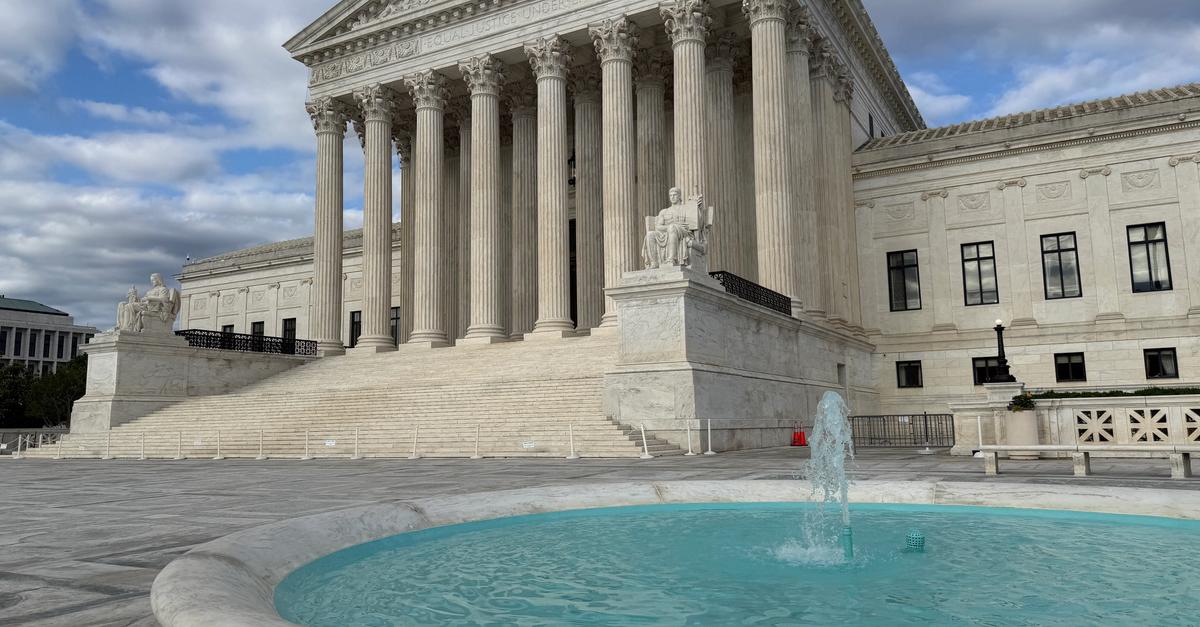
US Supreme Court: Chief Justice Announces Circuit Justice Assignments
Summary
- The Chief Justice annually assigns a Supreme Court justice to each of the thirteen federal judicial circuits, as authorized by 28 U.S.C. § 42.
- These `Supreme Court circuit justice assignments` often consider a justice's prior judicial experience or personal connections to a circuit.
- By custom, the Chief Justice serves as the circuit justice for the D.C., 4th, and Federal Circuits.
- Some assignments, like those of Justices Scalia and Alito to the 5th Circuit or Justice Kagan to the 9th Circuit, are sometimes perceived to have ideological underpinnings.
- These assignments are generally stable, changing primarily with shifts in the Supreme Court's composition.
Understanding the Role of Circuit Justices
For lawyers, understanding which justice is assigned to a particular circuit is crucial, especially when dealing with urgent legal matters.
Each term, the Chief Justice of the United States undertakes the responsibility of designating a specific Supreme Court justice to serve as the circuit justice for each of the nation's thirteen federal judicial circuits. This practice, which assigns `SCOTUS justices lower court roles`, is explicitly sanctioned by federal law, specifically `28 U.S.C. § 42 circuit justice`. These `Supreme Court circuit justice assignments` are a fundamental aspect of the high court's connection to the broader federal judiciary, ensuring a direct link between the Supreme Court and the appellate circuits.
The `Chief Justice circuit appointments` are not merely ceremonial; they vest the assigned justice with specific responsibilities, primarily concerning emergency applications and certain procedural matters arising from their designated circuit. This structural arrangement underscores the Supreme Court's oversight capacity and its role in addressing urgent legal issues that may arise at the appellate level before they reach the full Court.
Assignment Principles and Notable Examples
The criteria guiding these `federal circuit justice duties` assignments often reflect a blend of practical considerations and historical precedent. Typically, justices with greater seniority are appointed to circuits where they possess strong personal or professional ties. For instance, Justice Samuel Alito, who previously served on the U.S. Court of Appeals for the 3rd Circuit, is currently assigned to the 3rd and 5th Circuits. Similarly, Justice Sonia Sotomayor, a former judge on the U.S. Court of Appeals for the 2nd Circuit, holds the circuit justice role for that same appellate jurisdiction. Furthermore, by established custom, the Chief Justice himself assumes the circuit justice responsibilities for the U.S. Courts of Appeals for the D.C., 4th, and Federal Circuits, given their proximity and frequent interaction with the nation's capital.
Beyond personal connections, some observers suggest that ideological considerations may also play a part in certain `US Courts of Appeals circuit justices` assignments. The source notes that Justices Antonin Scalia and Alito, neither of whom hailed from the Deep South, were assigned to the U.S. Court of Appeals for the 5th Circuit, a jurisdiction known for its conservative leanings, particularly in matters concerning death penalty emergency motions. Justice Alito humorously recounted Chief Justice John Roberts's remark upon his assignment, quipping, "I think what the Fifth Circuit needs is another Italian American born in Trenton, New Jersey." In a similar vein, Justice Elena Kagan, despite having spent only a brief period residing west of the Potomac River, was appointed to oversee the historically liberal U.S. Court of Appeals for the 9th Circuit, further illustrating the nuanced nature of these appointments.
Stability and Strategic Considerations
While the specific rationale behind each `Supreme Court circuit justice assignment` can vary, the appointments generally remain quite stable over time. Changes to these designations primarily occur when there is a shift in the composition of the Supreme Court itself, such as retirements or new appointments. This consistency provides a degree of predictability for legal practitioners.
For lawyers, understanding which justice is assigned to a particular circuit is crucial, especially when dealing with urgent legal matters. These `SCOTUS justices lower court roles` mean they are the initial point of contact for emergency applications, requests for stays, or other time-sensitive filings originating from their assigned circuit. Knowledge of the specific judicial channels for such applications within each federal circuit can significantly influence strategic considerations for urgent filings and appeals, offering a direct path to the Supreme Court for immediate relief.
Practical Implications
Understanding the assignment of Supreme Court justices as circuit justices can inform lawyers on the specific judicial channels for emergency applications and stays within each federal circuit, potentially influencing strategic considerations for urgent filings and appeals.
Source
How does this affect you?
Get an AI analysis of this article grounded in your jurisdictions, practice areas, and any policy documents you've uploaded to Wansom.
Wansom is AI and can make mistakes.