
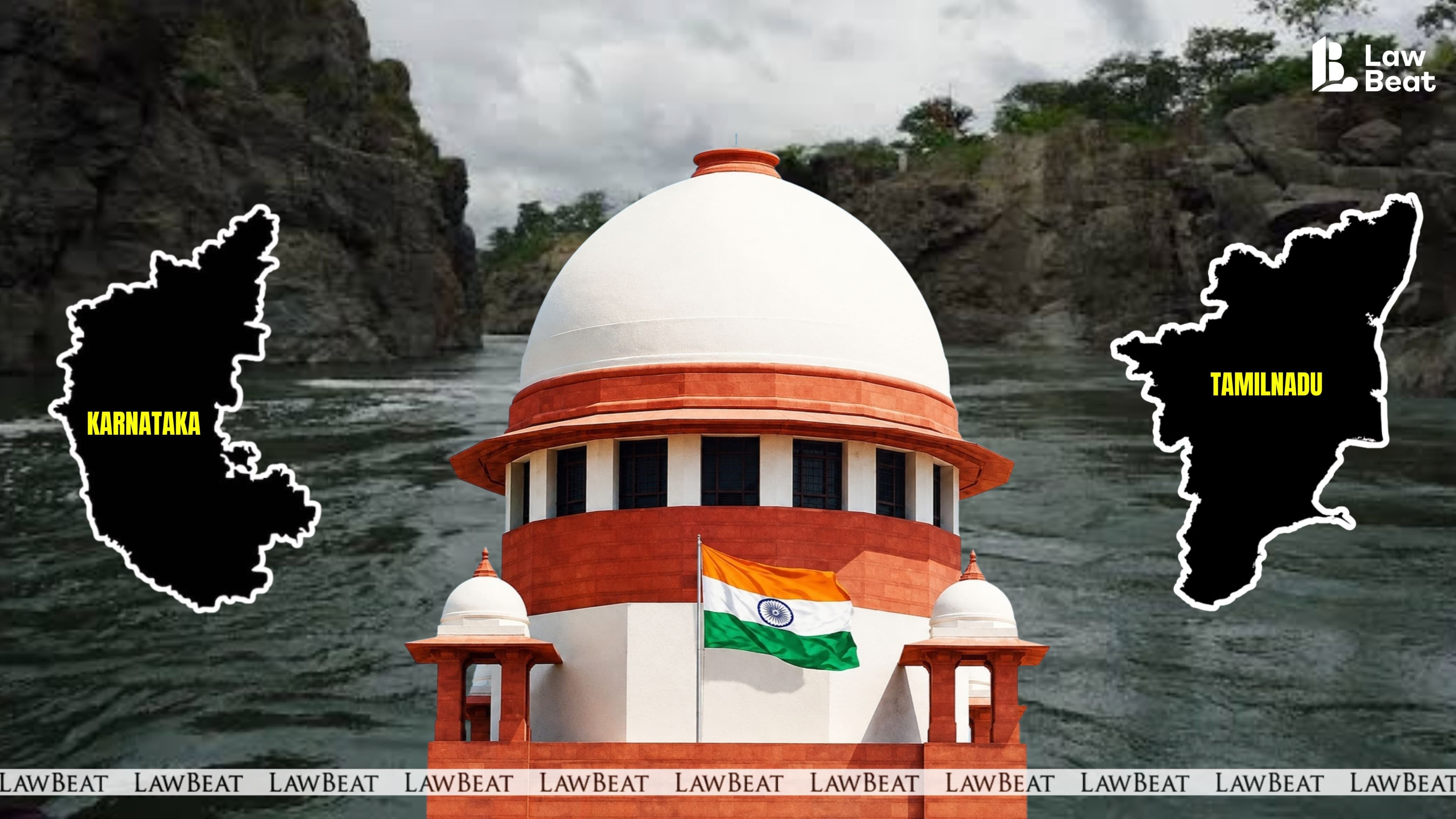
Supreme Court: Karnataka, Tamil Nadu to Submit Cauvery Status Report by August 31
Summary
- The Supreme Court has mandated Karnataka and Tamil Nadu to submit an updated status report on the Cauvery water dispute by August 31.
- This directive follows a plea from Tamil Nadu seeking enforcement of Cauvery Water Management Authority (CWMA) orders for water release.
- Tamil Nadu alleges Karnataka holds 78 TMC of water and has failed to release its proportionate share, despite a rain-deficient year.
- Karnataka maintains there is "no issue as such" and that the CWMA is addressing the matter.
- The Dravida Munnetra Kazhagam (DMK) had approached the Supreme Court, highlighting a significant deficit in stipulated flows at Biligundlu and a backlog of 9.46 TMC for Tamil Nadu.
Supreme Court Mandates New Report
The Supreme Court's directive for an updated status report by August 31 signifies the judiciary's ongoing commitment to resolving the complex Cauvery water dispute.
The Supreme Court of India has ordered both Karnataka and Tamil Nadu to submit an updated status report regarding the ongoing Cauvery water dispute by August 31. This directive came during a recent hearing where the apex court addressed a plea from Tamil Nadu seeking the enforcement of orders issued by the Cauvery Water Management Authority (CWMA). The bench, comprising Justices Vikram Nath and Sandeep Mehta, heard arguments from both states concerning the release of Cauvery water, particularly in light of a reported rain-deficient year.
The court's decision to adjourn the matter until August 31 underscores its continued judicial oversight of the long-standing inter-state water allocation issue. This development requires legal counsel and stakeholders in both Karnataka and Tamil Nadu to closely monitor compliance with the CWMA's directives and any potential shifts in water distribution or enforcement actions that may arise from the updated reports. The deadline highlights the judiciary's role in ensuring adherence to established water-sharing mechanisms.
States Present Divergent Views
During the proceedings, Senior Advocate CS Vaidyanathan, representing Tamil Nadu, articulated his state's grievance, asserting that Karnataka had failed to release its mandated share of Cauvery water, leading to a significant shortfall. He highlighted that Karnataka's reservoirs currently hold approximately 78 TMC of water. Vaidyanathan emphasized Tamil Nadu's entitlement to its proportionate share and urged the Court to scrutinize the powers, functions, and duties of the Cauvery Water Management Authority in assessing various aspects of water management, including inflows, utilization, releases, storage, and authorized withdrawals.
Justice Vikram Nath noted that Senior Advocate Shyam Divan, appearing for Karnataka, had previously provided a chart detailing water releases. While Tamil Nadu confirmed receiving the water directed by the CWMA as of Sunday morning, Vaidyanathan clarified that a deficit persisted from the previous day. The core concern, he explained, was the CWMA's perceived failure to direct Karnataka to compensate for the proportionate quantity to which Tamil Nadu is entitled.
In response, Senior Advocate Divan informed the Court that the CWMA was scheduled to meet shortly and that Karnataka was actively addressing the matter. He conveyed Karnataka's position that, from its perspective, "no issue as such" existed regarding the water release. This stance was immediately challenged by Vaidyanathan, who reiterated the substantial nature of the dispute given the considerable volume of water held by Karnataka.
The Broader Context of the Cauvery Dispute
The current legal battle is part of the protracted Karnataka Tamil Nadu water dispute, a contentious issue that originated in 1974 when Karnataka, as the upper riparian state, began diverting water without Tamil Nadu's consent. The Dravida Munnetra Kazhagam (DMK) party specifically approached the Supreme Court, seeking the urgent release of Cauvery River water by Karnataka to Tamil Nadu, in line with recent directives from the Cauvery Water Management Authority.
The CWMA had recently affirmed a direction from the Cauvery Water Regulation Committee (CWRC) to release 3500 cusecs of water per day to Tamil Nadu for a period of 15 days. The DMK's application underscored that the South-West Monsoon in the Cauvery basin has been deficient in the current water year. It further alleged that the flows realized at Biligundlu were drastically low, reportedly only about 10% of the stipulated amount for the period.
According to the final order of the Tribunal, the monthly stipulated flows to be ensured by Karnataka at Biligundlu from June to January annually are 123.14 TMC for June to September, 44.11 TMC for October to January, totaling 167.25 TMC for June to January. The DMK's estimate, based on distress-sharing principles, indicated a backlog of 9.46 TMC for Tamil Nadu at Biligundlu as of July 26, requiring a release of approximately 7000 cusecs per day for 15 days to fulfill this requirement. Despite these statutory decisions, the DMK contended that Karnataka has not released the water, with state representatives reportedly indicating a refusal to comply.
Implications of Judicial Oversight
The Supreme Court's directive for an updated status report by August 31 signifies the judiciary's ongoing commitment to resolving the complex Cauvery water dispute. This continued oversight is crucial for ensuring that the Cauvery Water Management Authority orders are not only issued but also effectively implemented, particularly in years marked by deficient rainfall and heightened water stress. The August 31 deadline serves as a critical juncture for both states to present their current positions and compliance efforts.
For legal professionals advising either Karnataka or Tamil Nadu, or any stakeholders affected by the allocation of Cauvery water, this development necessitates a thorough understanding of the current water release figures, reservoir levels, and the states' respective arguments. The Court's active involvement ensures that the mechanisms established for water sharing are continually reviewed and enforced, potentially leading to further adjustments or enforcement actions based on the information provided in the upcoming status reports. The persistent judicial engagement aims to uphold the principles of equitable water distribution amidst competing demands.
Practical Implications
Lawyers advising the states of Karnataka or Tamil Nadu, or stakeholders impacted by Cauvery water allocation, must be aware of the August 31 deadline for filing the updated status report with the Supreme Court. This development signifies continued judicial oversight over the Cauvery Water Management Authority's directives and compliance, requiring ongoing monitoring for potential shifts in water allocation or enforcement actions.
Source
How does this affect you?
Get an AI analysis of this article grounded in your jurisdictions, practice areas, and any policy documents you've uploaded to Wansom.
Wansom is AI and can make mistakes.