
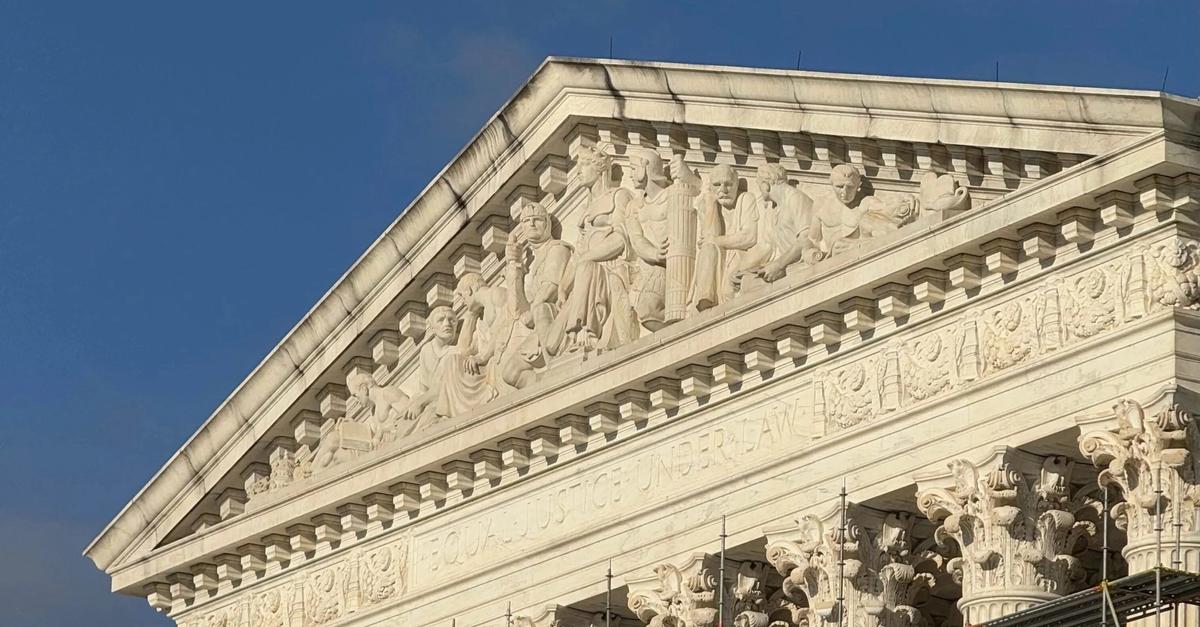
Supreme Court: Blocks USPS Mail-In Ballot Rule for Midterms
Summary
- The Supreme Court blocked a controversial U.S. Postal Service rule regarding mail-in ballots from being used in the upcoming midterm elections.
- President Donald Trump publicly criticized the decision on Truth Social, calling it a loss for Republicans and accusing his three Supreme Court appointees of siding with liberal justices.
- Attorney General Todd Blanche stated that efforts to tighten mail-in voting rules will continue beyond November, despite the Supreme Court's refusal to revive the Trump administration's plan.
- Blanche confirmed that the Supreme Court's decision does not affect ongoing criminal investigations into illegal voting.
- The Attorney General defended President Trump's right to express frustration with the Supreme Court, noting it was not an isolated incident.
Supreme Court Blocks Mail-In Ballot Rule
The Supreme Court has effectively blocked a contentious U.S. Postal Service rule concerning mail-in ballots from being implemented for the upcoming midterm elections.
The Supreme Court has effectively blocked a contentious U.S. Postal Service rule concerning mail-in ballots from being implemented for the upcoming midterm elections. This decision prompted a swift and strong rebuke from President Donald Trump, who took to Truth Social to express his dismay, according to CNBC.
President Trump characterized the ruling as a significant setback for Republicans and the nation, asserting that it would make it considerably easier for the "Radical Left ‘Dumocrats’" to engage in what he termed "cheating" via mail-in ballots. His online post underscored the deep political divisions surrounding election procedures, particularly the use of mail-in voting.
In an unusual move, the President also directed sharp criticism at his three Supreme Court appointees—Justices Neil Gorsuch, Brett Kavanaugh, and Amy Coney Barrett. He indicated that these justices had seemingly sided with all three liberal justices and Chief Justice John Roberts in Monday's decision. Trump stated that these individuals were "not the people I interviewed to serve on the United States Supreme Court," and described them as "merely a shell of their original selves."
Administration Pledges Continued Efforts
Despite the Supreme Court's refusal to intervene and revive the Trump administration's plan to oversee mail-in ballots for the midterm elections, Attorney General Todd Blanche affirmed that efforts to tighten rules around mail-in voting would persist beyond November. Speaking at a Tuesday press briefing, Blanche emphasized that while the administration would adhere to court orders, their work in this area would not cease, as reported by The Washington Times.
Blanche clarified that the Supreme Court's decision would not impact ongoing criminal investigations related to illegal voting. He reiterated the administration's commitment to its objectives, stating, "We’re not going to stop the work that we’re doing, but we are of course going to follow the orders of the court."
The Attorney General also addressed President Trump's public complaints regarding the Supreme Court's ruling. Blanche informed reporters that the President was "very frustrated" and asserted that Trump possessed "every right, and indeed he should, communicate his concerns with the Supreme Court whenever he has them," adding that this was neither the first nor likely the last instance of such communication.
Political Fallout and Future of Voting Rules
The Supreme Court's action, which prevented the Trump administration's proposed mail-in ballot policing plan from moving forward, highlights the intense political and legal battles surrounding election integrity. The decision effectively means the controversial U.S. Postal Service rule will not be in effect for the upcoming midterm elections, a development that has clearly ignited strong reactions from President Trump and his allies.
This judicial outcome underscores the ongoing national debate over the security and administration of mail-in voting, a method that saw widespread use in recent election cycles. The President's pointed criticism of his own judicial appointments, alongside his broader claims about potential electoral fraud, signals the enduring significance of these issues in the political landscape.
The commitment from Attorney General Todd Blanche to continue pursuing stricter mail-in voting regulations, even in the face of this judicial setback, indicates that the legal and political contest over how Americans cast their ballots is far from over. The Supreme Court blocks USPS mail-in ballot rule, but the underlying policy disagreements and legal challenges are expected to continue shaping electoral processes.
Source
How does this affect you?
Get an AI analysis of this article grounded in your jurisdictions, practice areas, and any policy documents you've uploaded to Wansom.
Finish Reading the Full Story and the Expert Analysis.
Get the latest legal & regulatory intelligence in United States
Wansom is AI and can make mistakes.