
Supreme Court Clears Big Bend Border Wall Construction
Summary
- The Supreme Court recently allowed the Trump administration to resume border wall construction in Texas's Big Bend region.
- This decision overturned a Texas judge's injunction that had paused work due to the Department of Homeland Security bypassing environmental reviews.
- DHS used a 1996 statute to issue waivers, despite Big Bend having the lowest illegal crossing rates on the southern border.
- Environmentalists and local groups opposed the project, citing concerns about the unique wilderness, cultural resources, and existing surveillance technology.
- The government argued the wall was essential to prevent the remote 300-mile gap from becoming a magnet for illegal activity.
Judicial Intervention and Border Construction
The Supreme Court recently cleared the path for the Trump administration to proceed with border wall construction in the Big Bend region of Texas, overturning a previous judicial block.
The Supreme Court recently cleared the path for the Trump administration to proceed with border wall construction in the Big Bend region of Texas, overturning a previous judicial block. This decision marks a significant victory for the administration, which has been pushing to erect barriers in this remote area. Construction had been halted by a Texas judge after the Department of Homeland Security (DHS) bypassed standard environmental reviews, a move that sparked legal challenges.
DHS asserted that the proposed border wall segment was crucial for national security, prompting its request for the justices to intervene. The Big Bend area, characterized by its harsh desert and rugged mountain ranges, has historically served as a natural barrier, contributing to its status as having the lowest apprehension rates along the entire southern border. Despite this, the Trump administration initiated a project to build over 300 miles of barriers and roads within the approximately 500-mile Big Bend section, impacting pristine habitats.
Regulatory Waivers and Legal Scrutiny
The Department of Homeland Security utilized a 1996 statute to issue three separate waivers, thereby circumventing environmental review processes for the Big Bend project. These waivers were issued under both former Secretary Kristi Noem and current Secretary Markwayne Mullin. The statute permits DHS to disregard certain legal requirements to expedite the construction of border barriers, specifically in areas experiencing high rates of illegal crossings.
However, the Big Bend sector's notably low illegal crossing rates led a Texas judge to conclude that DHS likely overstepped its authority by applying these waivers. DHS, in its defense, contended that the challenging landscape of Big Bend makes traditional policing difficult, necessitating the wall even if other law enforcement tools might suffice elsewhere. The government argued before the Supreme Court that leaving a gap of over 300 miles in border defenses would create a dangerous magnet for cartels and other illicit actors, especially as alternative routes become less accessible.
Environmental Concerns and Community Opposition
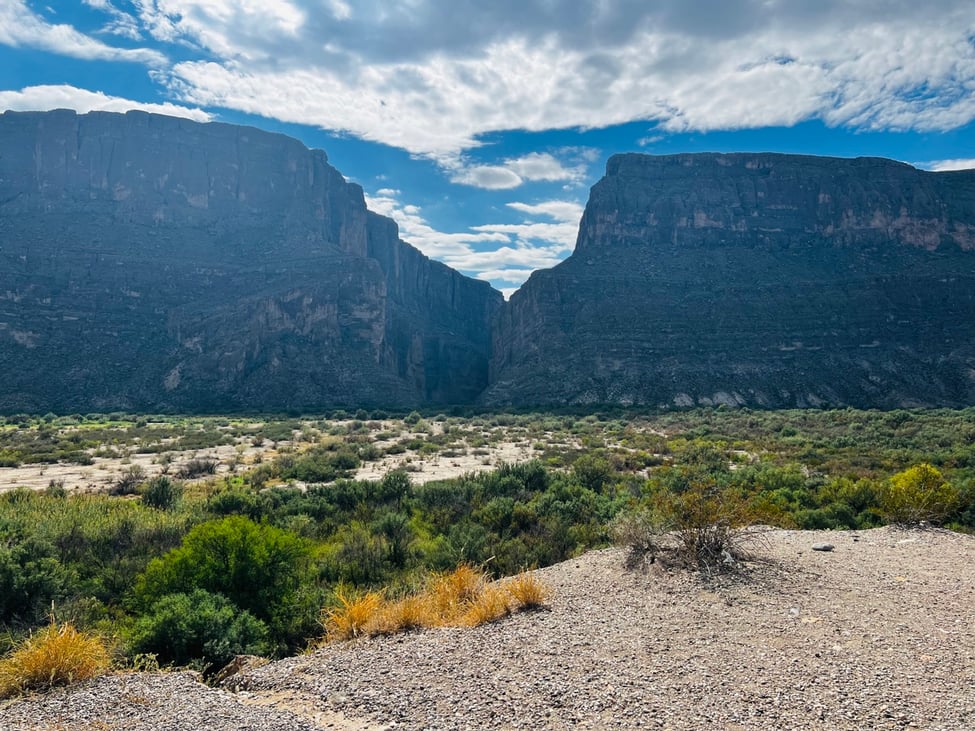
The proposed border wall construction has drawn strong opposition from local ranchers, residents, and environmental advocates, who fear irreversible damage to the remote terrain. The Big Bend region is a unique wilderness, encompassing national and state parks, ranchlands, and invaluable historic and cultural resources. Environmental groups highlighted that the area represents one of the largest remaining undeveloped regions along the southern border, including Big Bend National Park, Big Bend Ranch State Park, and the Rio Grande Wild and Scenic River corridor.
Concerns intensified following public outrage over videos depicting bulldozers clearing land, which led the Trump administration to temporarily pause construction in Big Bend National Park earlier this summer. Despite this, the government recently indicated its intention to resume work. Environmental advocates countered the government's dismissal of their concerns as merely "aesthetic and recreational," asserting that the construction would significantly restrict individuals' livelihoods, negatively impact the natural ecosystem, and endanger vital historic and cultural assets. They also pointed out the existing, effective surveillance technology, patrols, sensors, drones, and infrastructure already supporting border security operations in the sector.
Practical Implications
This Supreme Court ruling reinforces the broad authority of the Department of Homeland Security to waive environmental reviews for border infrastructure projects under a 1996 statute, even in areas with low illegal crossing rates. Lawyers advising on environmental law or land use near border regions should note this precedent regarding executive power to bypass regulatory requirements for national security.
Source
How does this affect you?
Get an AI analysis of this article grounded in your jurisdictions, practice areas, and any policy documents you've uploaded to Wansom.
Finish Reading the Full Story and the Expert Analysis.
Get the latest legal & regulatory intelligence in United States
Wansom is AI and can make mistakes.