
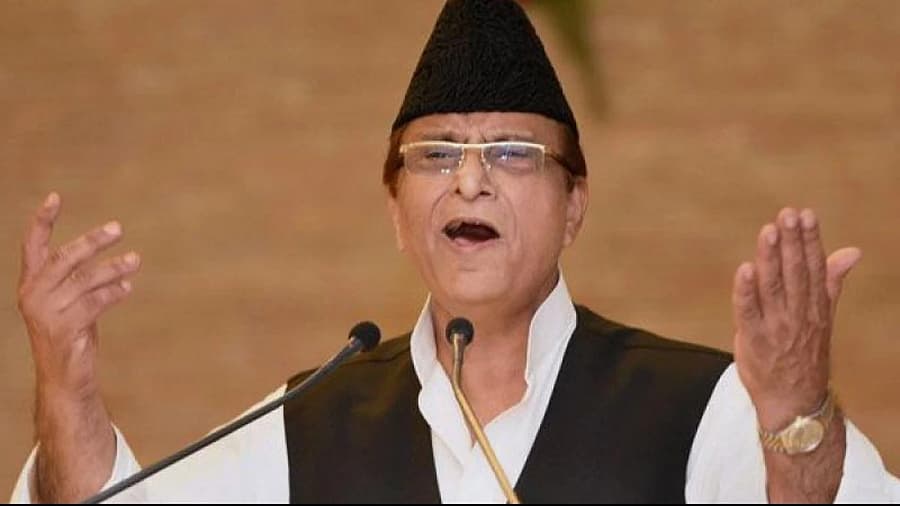
Supreme Court: Refuses to Stay Azam Khan's ED Interim Bail
Summary
- The Supreme Court declined to immediately stay the interim bail granted to Samajwadi Party leader Azam Khan in a money laundering case.
- Justice Joymalya Bagchi stated that allowing Khan to remain on interim bail would not lead to catastrophic consequences.
- The Allahabad High Court had granted interim bail, citing the 'motivated and mala fide nature' of the ED's proceedings.
- The High Court also noted that the ED failed to provide Azam Khan with written grounds for his arrest.
- The Enforcement Directorate argued that Khan had refused to accept the grounds of arrest, a claim recorded in a panchnama.
Supreme Court Declines Immediate Stay on Azam Khan's Interim Bail
The Supreme Court, through Justice Bagchi, underscored that the immediate release of the political leader on interim bail would not lead to catastrophic consequences, effectively dismissing the urgency of the ED's plea for a stay.
The Supreme Court recently addressed a challenge from the Enforcement Directorate (ED) regarding the interim bail granted to Samajwadi Party (SP) leader Mohd Azam Khan in a money laundering investigation. On Wednesday, the ED brought its plea before a bench comprising Chief Justice of India Surya Kant, Justice Joymalya Bagchi, and Justice V Mohana, seeking an urgent hearing on the matter.
While the apex court agreed to schedule the hearing for the following day, Thursday, it notably refused to impose an immediate stay on Khan's release. When the ED pressed for a status quo order to prevent the political leader from being freed, Justice Bagchi remarked that such an outcome would not be catastrophic, stating, "Heavens will not fall. Let him remain on interim bail." This decision allowed Azam Khan to continue benefiting from the interim relief granted by the Allahabad High Court.
Allahabad High Court's Grounds for Interim Bail
The interim bail for Azam Khan had been issued by the Allahabad High Court on Tuesday, a day prior to the ED's Supreme Court appeal. A division bench, consisting of Justices Rajiv Gupta and Devendra Singh, had made significant observations regarding the ED's conduct in the case.
The High Court specifically highlighted that Khan's arrest occurred at the jail gate immediately after his release in a separate case. This timing, according to the High Court, strongly suggested a "motivated and mala fide nature" behind the ED's proceedings. Furthermore, the High Court found that the Enforcement Directorate failed to provide Khan with written grounds for his arrest or the reasons for believing his involvement in the alleged offenses, either before or at the time he was presented for remand, marking a critical procedural lapse.
ED's Arguments Against the Bail Order
During the Supreme Court proceedings, Additional Solicitor General (ASG) SV Raju, representing the Enforcement Directorate, presented arguments challenging the Allahabad High Court's decision. The ASG contended that the interim bail order, despite its designation, effectively functioned as a final order, thereby exceeding the scope of interim relief.
ASG Raju also addressed the High Court's finding regarding the non-furnishing of arrest grounds. He asserted that the ED had indeed attempted to serve the grounds of arrest to Azam Khan, but the SP leader allegedly refused to accept them. This refusal, according to the ASG, was officially documented in a panchnama, a record of proceedings witnessed by independent persons.
Judicial Scrutiny of ED Procedures
The Supreme Court's refusal to immediately halt Azam Khan's interim bail, despite the Enforcement Directorate's urgent plea, underscores a significant aspect of judicial oversight concerning investigative agencies. This development reinforces the judiciary's role in scrutinizing the procedural integrity of actions taken by bodies like the ED, particularly when allegations of 'mala fide' intent or procedural irregularities, such as the failure to provide grounds of arrest, are raised.
This instance highlights the courts' willingness to uphold interim relief when procedural lapses are identified by lower courts, even in high-profile money laundering cases. The observation by Justice Joymalya Bagchi, allowing the interim bail to continue, signals a cautious approach to intervention, emphasizing that not all challenges to bail orders warrant immediate judicial interference, especially when the underlying grant of bail is based on substantial procedural concerns.
Practical Implications
This Supreme Court decision reinforces judicial scrutiny over the Enforcement Directorate's procedures, particularly regarding the furnishing of grounds for arrest and the potential for 'mala fide' proceedings. Lawyers should note this precedent when challenging ED actions or seeking bail for clients, emphasizing procedural lapses or the 'motivated' nature of investigations, as courts may be more inclined to grant interim relief.
Source
How does this affect you?
Get an AI analysis of this article grounded in your jurisdictions, practice areas, and any policy documents you've uploaded to Wansom.
Finish Reading the Full Story and the Expert Analysis.
Get the latest legal & regulatory intelligence in India
Wansom is AI and can make mistakes.