
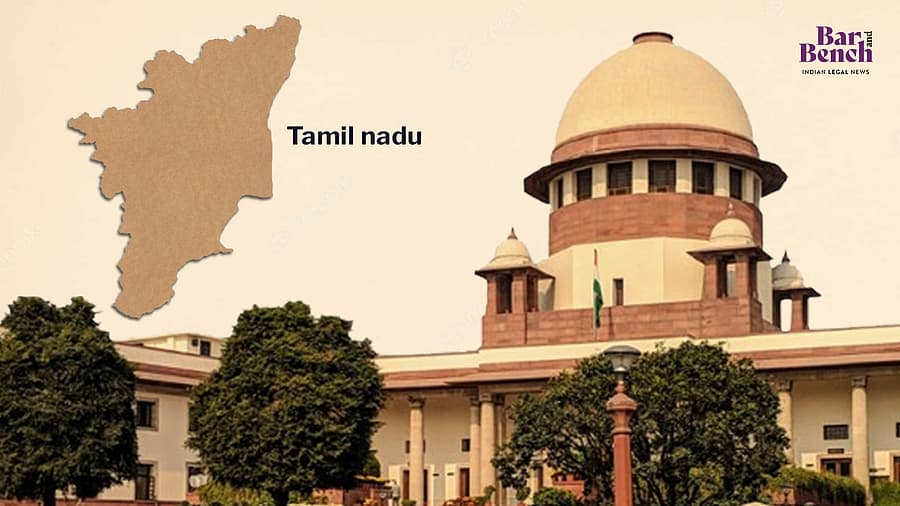
Supreme Court: TN Urged to Consider Alternative Land for SASTRA University
Summary
- The Supreme Court has asked the Tamil Nadu government to consider alternative land for an open-air jail instead of evicting SASTRA University.
- SASTRA University currently occupies approximately 31 acres of government land designated for a state prison facility in its Thanjavur campus.
- The Madras High Court had previously ordered the university's eviction, which the Supreme Court had stayed in January.
- The Chief Justice of India noted the Court's decision was influenced by the land's use for academic purposes, not condoning the encroachment itself.
- The Tamil Nadu government strongly opposes the suggestion, citing the university's progressive encroachment and concerns about setting a precedent.
Supreme Court's Directive
The Chief Justice underscored that the provision of quality education and the academic function of the university were the sole considerations weighing heavily on the Court's decision-making process, highlighting a pragmatic view towards public good.
The Supreme Court recently intervened in a significant land dispute, urging the Tamil Nadu government to consider an alternative land parcel for its planned open-air jail. This directive, issued on a Monday, aims to resolve a long-standing issue without resorting to the eviction of SASTRA University from approximately 31 acres of government land currently integrated into its Thanjavur campus. A bench comprising Chief Justice of India Surya Kant, alongside Justices Joymalya Bagchi and V Mohana, was presiding over SASTRA University's appeal against a Madras High Court ruling that had mandated its removal from the disputed territory. This latest development follows a previous order from the Supreme Court in January, which had temporarily halted the university's eviction.
Genesis of the Encroachment
The core of the dispute revolves around a substantial tract of land, roughly 31 acres, which was originally designated for a specific public purpose: the establishment of an open-air correctional facility by the State Prison Department. Over time, SASTRA University expanded its footprint onto this government-owned property, leading to the current situation of land encroachment. The Madras High Court, after reviewing the matter, had previously issued a clear directive for the university to vacate the occupied land. This judicial order set the stage for the university's subsequent appeal to the nation's highest court, seeking a reversal or modification of the eviction mandate.
Judicial Discretion and Public Interest
During the recent Supreme Court proceedings, the Chief Justice of India articulated the bench's nuanced approach to the case. While explicitly stating that the Court did not intend to condone the university's actions in occupying government land, Justice Kant emphasized the unique factor influencing their deliberation: the land's current utilization for educational purposes. He drew a sharp distinction, noting that if the land were being used for commercial ventures such as a resort, a shopping mall, or any illegal or immoral activity, the Court's response would have been unequivocal and immediate eviction. The Chief Justice underscored that the provision of quality education and the academic function of the university were the sole considerations weighing heavily on the Court's decision-making process, highlighting a pragmatic view towards public good.
State's Firm Opposition
The Tamil Nadu government, however, presented a resolute stance against any form of compromise or accommodation in the matter. State representatives strongly opposed the Supreme Court's suggestion of a land exchange, arguing that SASTRA University had systematically and progressively expanded its occupation of government land over an extended period, despite ongoing legal challenges. The state further cautioned against the potential ramifications of allowing such an exchange, expressing concerns that it could inadvertently establish an undesirable precedent, thereby encouraging other entities to encroach upon public lands. To bolster its argument, the government submitted detailed figures to the Court, illustrating a clear pattern of increasing land occupation by the university, which reportedly escalated significantly between 1985 and the present day. This historical data underscored the state's position that the encroachment was not an isolated incident but a sustained pattern.
Practical Implications
This Supreme Court directive highlights a pragmatic judicial approach to land encroachment cases where the land is used for public good (education). Lawyers representing institutions facing similar eviction orders might argue for alternative resolutions or leniency, while government lawyers should note the Court's willingness to consider public interest over strict enforcement in certain circumstances.
Source
How does this affect you?
Get an AI analysis of this article grounded in your jurisdictions, practice areas, and any policy documents you've uploaded to Wansom.
Finish Reading the Full Story and the Expert Analysis.
Get the latest legal & regulatory intelligence in India
Wansom is AI and can make mistakes.