
Supreme Court Ardee Group: Uttara Babbar Commissioner Proposed for Settlement
Summary
- The Supreme Court has proposed senior advocate Uttara Babbar as an Advocate Commissioner to help implement a family settlement in the Ardee Group dispute.
- The dispute involves the family of late real estate developer Ashok Varma, specifically his daughters Shefali Varma and Shibani Varma Kapur, concerning business interests and real estate assets.
- A Memorandum of Settlement was executed on February 5, 2026, following court-monitored mediation facilitated by former Supreme Court judge Justice Kurian Joseph.
- Ms. Babbar's appointment is contingent on her willingness and aims to facilitate the execution of Clause 8 of the settlement, with the matter scheduled for October 6, 2026.
- The settlement reportedly divides significant assets, including Ardee Mall and other properties, between Shefali Varma and Shibani Varma Kapur.
Supreme Court Proposes Commissioner for Ardee Group Settlement
This proactive approach by the Supreme Court, particularly in proposing an Advocate Commissioner like Uttara Babbar, aims to give full effect to the voluntarily arrived settlement and to resolve any outstanding practical issues.
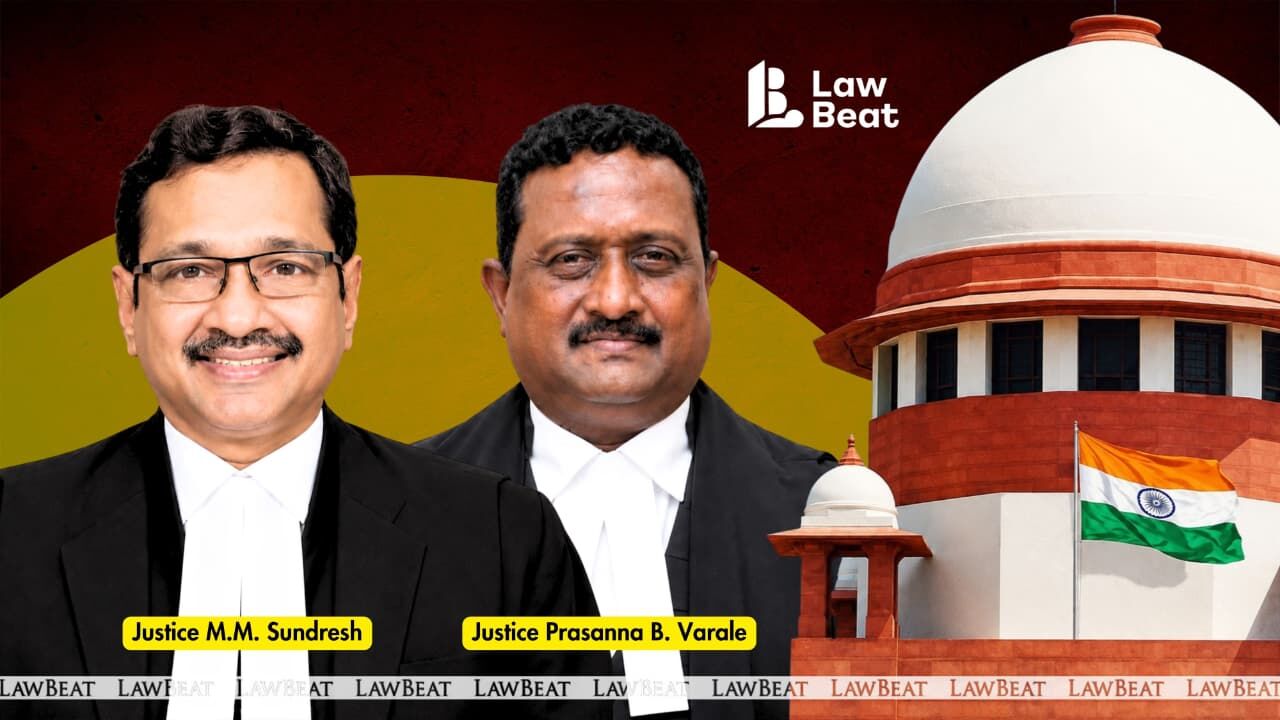
The Supreme Court of India has taken a significant step towards finalizing a long-standing family dispute involving the Ardee Group and the heirs of late real estate developer Ashok Varma. On September 23, 2026, a bench comprising Justices MM Sundresh and Prasanna B. Varale proposed the appointment of senior advocate Uttara Babbar as an Advocate Commissioner. This appointment aims to facilitate the implementation of the terms outlined in a Memorandum of Settlement, specifically focusing on Clause 8, which was executed on February 5, 2026.
The Court's directive requires the involved parties to ascertain Ms. Babbar's willingness to undertake this assignment. Her potential role as an Uttara Babbar Advocate Commissioner India underscores the judiciary's commitment to ensuring the full execution of complex, court-monitored agreements. The matter is slated for further consideration on October 6, when it will be heard alongside the main proceedings of the case.
This latest intervention by the Supreme Court is not a fresh adjudication of the competing claims over the family assets but rather a focused effort on implementing the settlement that has already been reached. The Ardee Group family dispute settlement involves substantial business interests, real estate holdings, and other family assets, making the smooth execution of the agreed terms crucial for all parties.
Background of the Complex Family Dispute
The dispute primarily involves Shefali Varma and Shibani Varma Kapur, the daughters of the late Ashok Varma. Their disagreements centered on the extensive business interests, real estate properties, and various other assets associated with the Ardee Group. After years of protracted litigation across different forums, the Supreme Court facilitated a resolution process through court-monitored mediation.
Former Supreme Court judge Justice Kurian Joseph was appointed to assist the parties in reaching an amicable solution. Earlier in 2026, Justice Joseph informed the Court that the parties had successfully resolved their major disputes, culminating in the execution of a final and binding Memorandum of Settlement on February 5, 2026. However, the mediator also indicated that additional time would be necessary to work out the detailed modalities for implementing the comprehensive settlement.
In June 2026, a bench of Justices J.K. Maheshwari and Atul S. Chandurkar acknowledged the progress made and directed the parties to proceed with the implementation of the mediated settlement. The ongoing proceedings, therefore, are a continuation of the Supreme Court mediation implementation efforts, aiming to overcome any remaining practical hurdles.
Settlement Details and Implementation Challenges
The Ardee Group family dispute settlement reportedly includes a detailed division of various properties and assets between the two sisters, Shefali Varma and Shibani Varma Kapur. Under the agreed arrangement, Shefali Varma is designated to receive significant assets, including Ardee Mall, along with the Gopal Das and Vijaya buildings and their associated lands. Conversely, Shibani Varma Kapur is to receive specified parcels of land as part of the resolution.
It is important to note that while these allocations have been reported, the precise terms of the settlement have not been comprehensively disclosed in the public domain. The property division represents an arrangement mutually agreed upon by the parties, rather than a finding independently determined by the Supreme Court. Despite the settlement being reached, certain aspects of its implementation are still pending, necessitating the Court's continued oversight. The Court has also acknowledged that another Advocate Commissioner has already commenced part of the implementation exercise.
This proactive approach by the Supreme Court, particularly in proposing an Advocate Commissioner like Uttara Babbar, aims to give full effect to the voluntarily arrived settlement and to resolve any outstanding practical issues. This intervention is designed to bring the prolonged Ashok Varma family real estate dispute, which has seen litigation across various forums, including proceedings related to an FIR against Yadur Kapur following a September 22, 2025 judgment by the Punjab and Haryana High Court, to a definitive close.
Practical Implications
This development demonstrates the Supreme Court's proactive approach in ensuring the full implementation of complex, court-monitored mediation settlements, particularly in high-value family and business disputes. Lawyers advising clients in similar multi-asset, multi-party disputes should note the potential for the Court to appoint external commissioners to facilitate post-settlement execution, offering a mechanism to overcome implementation hurdles.
Source
Source: Original reporting via Live Law
How does this affect you?
Get an AI analysis of this article grounded in your jurisdictions, practice areas, and any policy documents you've uploaded to Wansom.
Finish Reading the Full Story and the Expert Analysis.
Get the latest legal & regulatory intelligence in India
Wansom is AI and can make mistakes.