
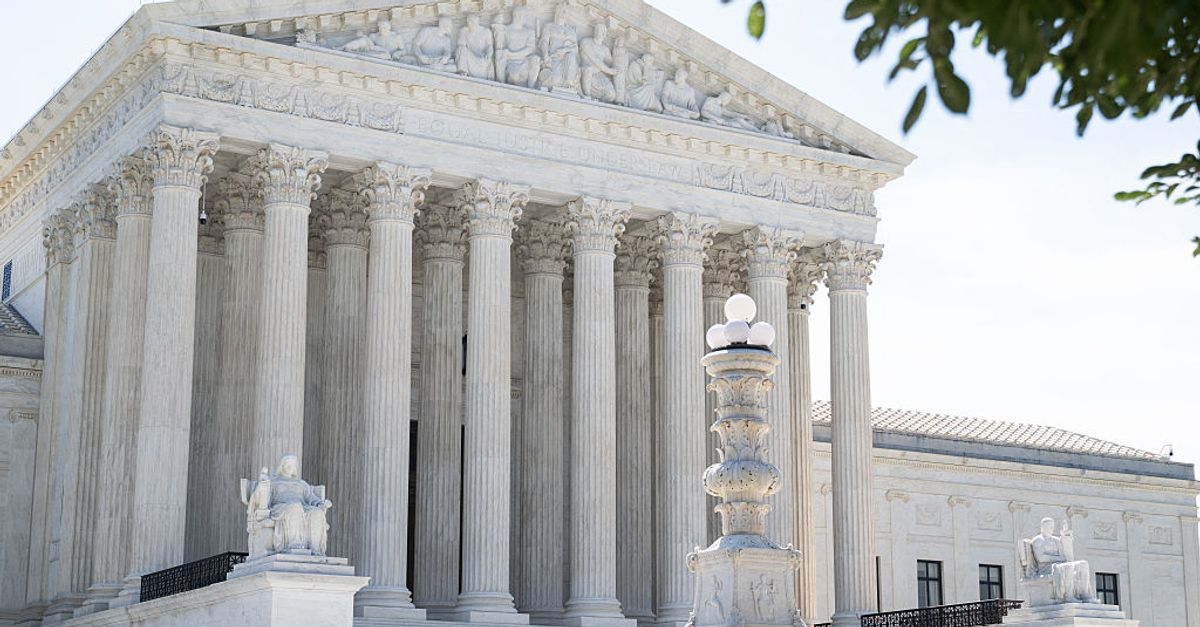
US Supreme Court: 2026 Midterm Elections to Shape Future Nominations
Summary
- The 2026 midterm elections, less than three weeks away, feature the Supreme Court as a central campaign topic for both major parties.
- Senator Steve Daines of Montana emphasized the importance of the Supreme Court to unenergized Republicans, stating it is "on the ballot."
- Daines clarified that the Court is not literally subject to election but predicted the possibility of one or two Supreme Court nominations in the next two years.
- The political discourse highlights the significant impact that future judicial appointments could have on the nation's legal framework.
- The composition of the Supreme Court is a key factor influencing voter engagement and political strategy during the upcoming midterm elections.
Political Focus on the High Court
Each new justice has the capacity to shape legal precedents and regulatory interpretations across a vast array of areas, from constitutional law to administrative regulations.
The political landscape is increasingly focused on the Supreme Court as the 2026 midterm elections draw near, now less than three weeks away. Both Republican and Democratic parties have prominently featured the nation's highest judicial body in their campaign rhetoric, underscoring its perceived importance to their respective voter bases. This strategic emphasis highlights the significant role the Court plays in the national political discourse, particularly during election cycles.
Senator Steve Daines, a Republican representing Montana, who announced in March 2026 that he would not seek re-election in the upcoming 2026 midterms, recently articulated this sentiment, stating earlier this month that it is crucial to remind Republicans who may lack enthusiasm that "the Supreme Court's on the ballot." While this declaration might suggest a direct electoral contest for judicial seats, Senator Daines clarified in a separate interview that the Supreme Court is not, in fact, literally subject to popular vote. However, his subsequent remark that "there could be a Supreme Court nomination or two in the next two years" reveals the underlying reason for the Court's prominence in the upcoming Supreme Court 2026 midterm elections.
The Enduring Impact of Judicial Nominations
The prospect of future Supreme Court appointments, as alluded to by Senator Daines, carries substantial weight for both political parties and the legal system. The potential for one or two judicial nominations within the next two years means that the outcome of the 2026 midterms could indirectly influence the ideological balance and interpretive direction of the Court for decades. This dynamic underscores the significant SCOTUS midterms impact, as the composition of the bench dictates how foundational legal principles are applied to contemporary issues.
Judicial nominations political influence is a critical factor in American governance, as Supreme Court justices hold lifetime appointments. Each new justice has the capacity to shape legal precedents and regulatory interpretations across a vast array of areas, from constitutional law to administrative regulations. Therefore, the strategic positioning of the Supreme Court as an election issue is a direct reflection of the long-term consequences associated with future Supreme Court appointments.
Strategic Campaigning and Voter Mobilization
The decision by political figures to highlight the US Supreme Court election issues serves as a powerful tool for voter mobilization. By framing the Court as being "on the ballot," even metaphorically, politicians aim to galvanize their supporters around the potential for significant shifts in judicial philosophy and policy outcomes. This strategy is designed to energize segments of the electorate who might otherwise remain disengaged, particularly those for whom judicial appointments are a primary concern.
Senator Daines's specific appeal to "unenergized" Republicans illustrates this tactic, emphasizing that the stakes of the upcoming elections extend beyond legislative control to the very composition of the judiciary. The implicit message is that voting in the midterms is a means to influence the trajectory of the Supreme Court, thereby impacting the future legal landscape. This approach underscores the deep intertwining of electoral politics and the judicial branch, making the Court a central theme in the lead-up to the 2026 midterms.
Practical Implications
Lawyers and compliance officers should monitor the political discourse surrounding potential Supreme Court vacancies and judicial nominations, as the composition of the Court can significantly alter legal precedents and regulatory interpretations, impacting long-term legal strategy and risk assessments for clients.
Source
How does this affect you?
Get an AI analysis of this article grounded in your jurisdictions, practice areas, and any policy documents you've uploaded to Wansom.
Finish Reading the Full Story and the Expert Analysis.
Get the latest legal & regulatory intelligence in United States
Wansom is AI and can make mistakes.