
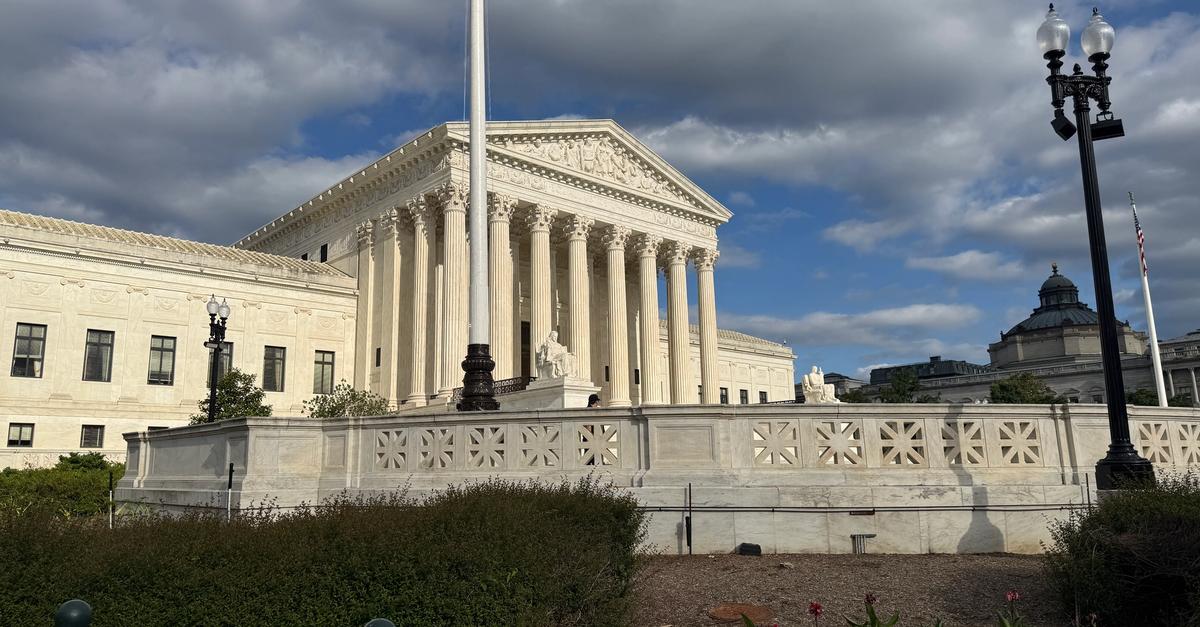
Suncor Energy: SCOTUS Hears Climate Change Preemption Arguments
Summary
- The Supreme Court heard oral arguments in *Suncor Energy (U.S.A.) Inc. v. County Commissioners of Boulder County* on October 5.
- The case questions whether federal law preempts Colorado state-law claims seeking billions for climate change costs attributed to fossil fuel corporations.
- Justice Samuel Alito unexpectedly recused himself a week before the oral argument.
- The legal debate centers on federal preemption, rooted in the Supremacy Clause of Article VI of the Constitution.
- The Court's decision will significantly impact the scope of state-level climate claims and corporate liability for greenhouse gas emissions.
What Happened
Lawyers advising energy sector clients or involved in environmental litigation must closely monitor the Supreme Court's decision in Suncor, as it will directly impact future litigation strategies and the ability of states to pursue climate-related claims against energy companies.
The Supreme Court recently heard oral arguments in a significant case, *Suncor Energy (U.S.A.) Inc. v. County Commissioners of Boulder County*, on October 5, the first Monday of the new term. This proceeding garnered considerable attention, partly due to the unexpected and last-minute recusal of Justice Samuel Alito, which occurred just one week before the scheduled arguments.
At the heart of the dispute is the question of whether federal law should preclude state-level claims brought under Colorado law. These claims seek billions of dollars in damages, which the plaintiffs attribute to global climate change. The plaintiffs contend that these costs are a direct result of interstate and international greenhouse gas emissions, which they allege were caused by fossil-fuel corporations, including Suncor Energy.
Legal Context
The central legal issue in the *Suncor Energy v Boulder County* case revolves around the doctrine of federal preemption, a fundamental principle derived from the Constitution's structure. Article VI of the U.S. Constitution, known as the Supremacy Clause, establishes that the Constitution itself, along with federal statutes and treaties, constitutes the "supreme Law of the Land," thereby superseding conflicting state laws.
While various forms of preemption exist, such as express, conflict, obstacle, and field preemption, these categories are not exhaustive. The Supreme Court has previously recognized other forms, including structural or foreign-affairs preemption, which do not necessarily depend on the existence of a conflicting federal statute. A notable precedent is the 1968 case of *Zschernig v. Miller*, where the Court invalidated an Oregon inheritance law because it intruded upon the federal government's foreign affairs authority, even in the absence of a specific conflicting treaty or federal statute.
Why It Matters
The Supreme Court's decision in *Suncor Energy v Boulder County* will have profound implications for the future of climate litigation and the scope of federal preemption over state climate claims. The ruling will clarify whether state-level common law claims seeking to hold fossil fuel corporations liable for climate change-related costs can proceed, or if such matters fall exclusively under federal jurisdiction due to the Supremacy Clause.
This case is critical for defining the boundaries of fossil fuel corporate climate liability, particularly concerning alleged damages stemming from interstate and international greenhouse gas emissions. Lawyers advising energy sector clients or involved in environmental litigation must closely monitor the Supreme Court's decision in Suncor, as it will directly impact future litigation strategies and the ability of states to pursue climate-related claims against energy companies.
Practical Implications
Lawyers advising energy sector clients or involved in environmental litigation must closely monitor the Supreme Court's decision in Suncor, as it will define the scope of federal preemption over state-level climate change claims, directly impacting corporate liability and future litigation strategies.
Source
How does this affect you?
Get an AI analysis of this article grounded in your jurisdictions, practice areas, and any policy documents you've uploaded to Wansom.
Finish Reading the Full Story and the Expert Analysis.
Get the latest legal & regulatory intelligence in United States
Wansom is AI and can make mistakes.