
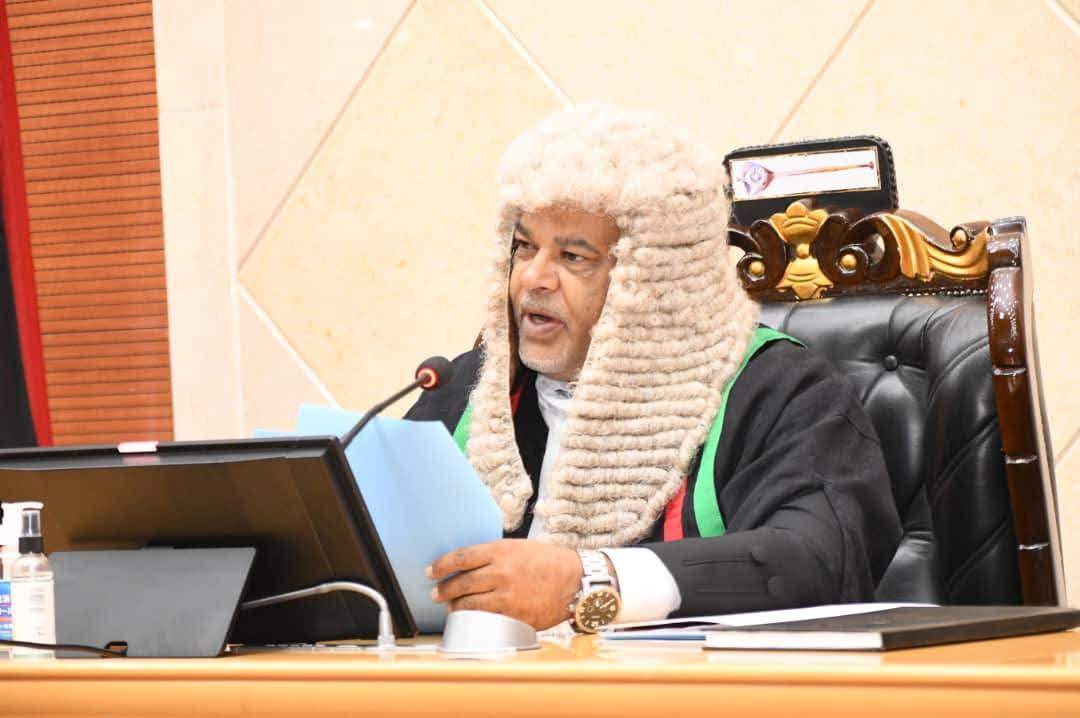
Malawi: Speaker Suleman Revives Mwanayu Ngwanga Alarm Amid Executive Clash
Summary
- Speaker of Malawi's National Assembly, Sameer Suleman, is clashing with senior members of his ruling party's Executive branch.
- This conflict is characterized as a political turf war playing out within the nation's governance structures.
- The dispute has led to the revival of the 'Mwanayu Ngwanga' alarm in Malawi.
- The separation of powers in Malawi is described as chaotic and not a strong constitutional pillar.
What Happened
The Suleman Mwanayu Ngwanga alarm Malawi underscores the ongoing power struggles and disagreements between key figures in the legislative and executive arms of government, especially when these originate from within the same political party, creating complex dynamics for national leadership.
A significant political confrontation has recently emerged in Malawi, involving the Speaker of the National Assembly, Sameer Suleman, and high-ranking officials within his own ruling party's Executive branch. This internal party dispute represents a classic instance of political turf wars, highlighting deep-seated tensions within the nation's governance structures. The clash has garnered considerable attention, signaling a period of heightened legislative-executive friction in Malawi, particularly given the prominent roles of the individuals involved.
Central to these Malawi political developments is the re-emergence of a notable political phenomenon: the 'Mwanayu Ngwanga' alarm. Speaker Suleman's actions have effectively revived this alarm, indicating a critical juncture in the country's political landscape. The Suleman Mwanayu Ngwanga alarm Malawi underscores the ongoing power struggles and disagreements between key figures in the legislative and executive arms of government, especially when these originate from within the same political party, creating complex dynamics for national leadership.
Context of the Conflict
In Malawi, the foundational constitutional principle of separation of powers often struggles to manifest as a robust and clearly defined pillar of governance. Instead, the interaction between the different branches of government frequently devolves into a chaotic and unpredictable spectacle, characterized by public disagreements and power plays. This environment can often make political processes appear more akin to a contentious public sport, rather than a structured system of checks and balances.
The current conflict, pitting Speaker Sameer Suleman against senior members of the Executive, serves as a stark illustration of this prevailing reality. Such political turf wars are a recurring feature of Malawi's political landscape, where the pursuit of influence and power dynamics often overshadow strict adherence to constitutional boundaries. This ongoing struggle contributes to a perception of instability within the nation's political framework, impacting the efficiency and public trust in both legislative and executive functions. The Malawi separation of powers conflict is thus not an isolated incident but a systemic challenge.
Implications for Governance
The re-activation of the 'Mwanayu Ngwanga' alarm by Suleman, amidst his direct clash with the Executive, carries substantial implications for Malawi's overall governance and political stability. High-profile disagreements between the Speaker of the National Assembly and senior ruling party figures can significantly disrupt legislative processes, potentially leading to delays or complications in the passage of crucial legislation and policy initiatives. This Malawi National Assembly political news reflects deeper structural challenges within the country's political system, where internal party dynamics can spill over into governmental functions.
The persistent legislative executive friction, exemplified by these recent Malawi political developments, suggests an environment where the intended checks and balances of a separated powers system are not consistently effective. This situation can foster uncertainty regarding policy implementation, regulatory stability, and the overall predictability of the political environment, which could have broader effects on various sectors and public confidence. The public nature of these disputes further erodes trust in the smooth functioning of government institutions and the clarity of political leadership.
Practical Implications
Lawyers and compliance officers in Malawi should monitor this executive-legislative friction for potential impacts on legislative processes, regulatory stability, and the overall governance environment, which could affect client operations and legal certainty.
Source
How does this affect you?
Get an AI analysis of this article grounded in your jurisdictions, practice areas, and any policy documents you've uploaded to Wansom.
Finish Reading the Full Story and the Expert Analysis.
Wansom is AI and can make mistakes.