
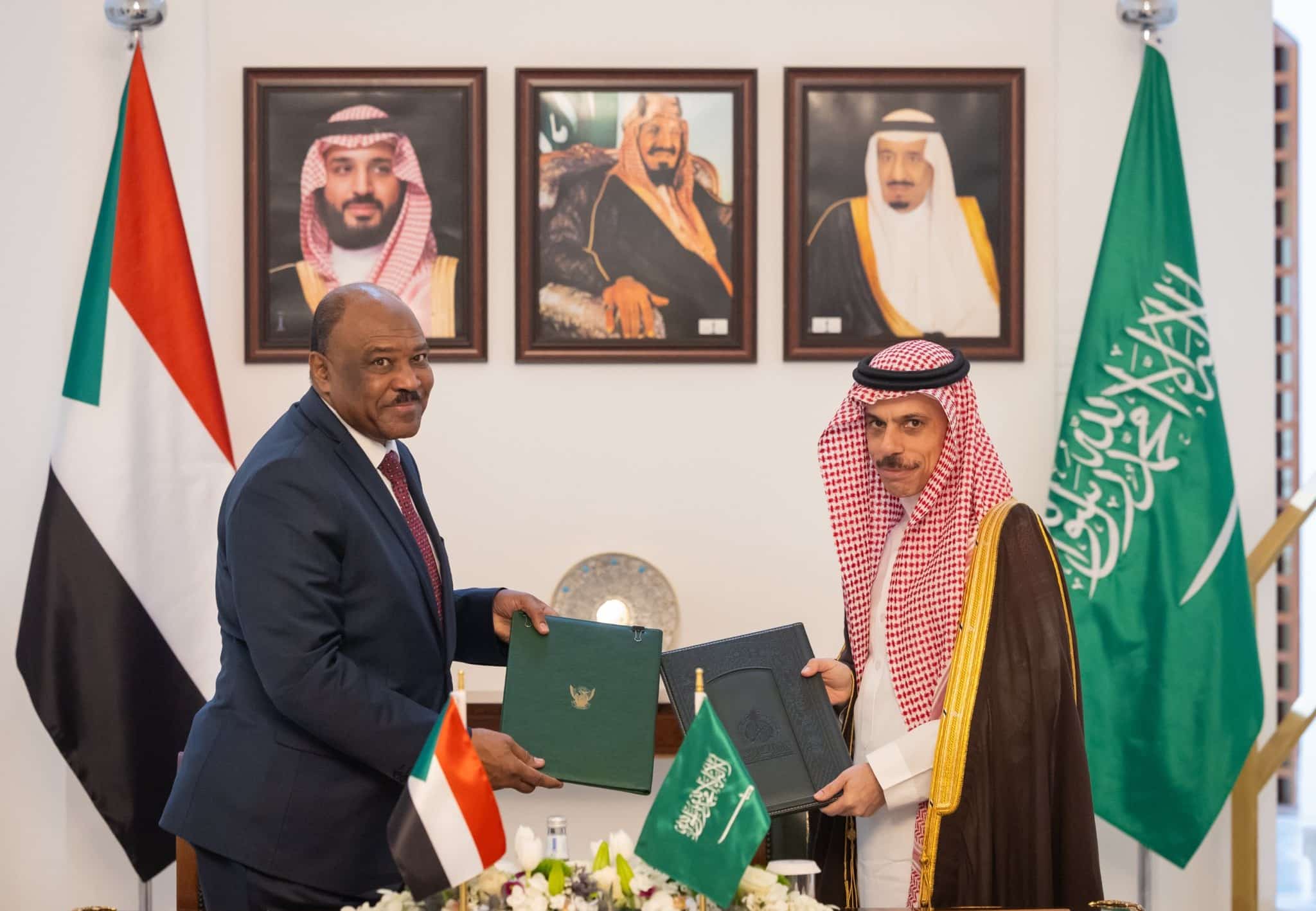
السودان والسعودية: توقيع اتفاقية تأسيس المجلس الأعلى للتعاون
Summary
- Sudan and Saudi Arabia's foreign ministers signed an agreement on August 17, 2026, to establish the Supreme Council for Cooperation and Strategic Coordination in Riyadh.
- The council's formation was initially agreed upon by Sudanese President Abdel Fattah al-Burhan and Saudi Crown Prince Mohammed bin Salman in March 2025.
- Its purpose is to create a comprehensive institutional framework for managing and developing bilateral relations across political, economic, investment, and commercial sectors.
- The Saudi Foreign Ministry stated the council aims to strengthen partnerships, facilitate joint projects, and support economic stability.
- The Sudanese Foreign Ministry indicated the council will cover ten main files, including political, economic, investment, and commercial areas.
Historic Bilateral Agreement Signed
The council's primary objectives include strengthening official partnerships and streamlining the execution of collaborative projects, all aimed at bolstering development and economic stability.
In a significant development for regional diplomacy, the foreign ministers of Sudan and Saudi Arabia formally established the Supreme Council for Cooperation and Strategic Coordination. The agreement was signed on Monday, August 17, 2026, in the Saudi capital, Riyadh. This pivotal moment saw Sudanese Foreign Minister Muhyi al-Din Salem and his Saudi counterpart, Faisal bin Farhan, affix their signatures to the foundational document.
This recent signing follows a crucial preliminary accord reached in March 2025. During that time, Sudanese Sovereignty Council President Abdel Fattah al-Burhan and Saudi Crown Prince Mohammed bin Salman had initially agreed upon the creation of this very council. The overarching goal articulated then, and reaffirmed now, is to significantly enhance the bilateral relationship between the two nations.
Defining the Council's Scope and Purpose
According to a statement from the Saudi Ministry of Foreign Affairs, the newly formed council is designed to provide a more expansive and elevated institutional framework for managing and advancing the two countries' bilateral ties. Its mandate extends across a broad spectrum of areas, including political, economic, investment, and commercial fields, alongside efforts to unify strategic visions. The council's primary objectives include strengthening official partnerships and streamlining the execution of collaborative projects, all aimed at bolstering development and economic stability.
The Saudi Foreign Ministry further elaborated that the establishment of this cooperation council stems from both nations' commitment to elevating their level of coordination and collaboration. It is envisioned as an active institutional platform specifically designed to cultivate and reinforce bilateral relations. The Sudanese Ministry of Foreign Affairs, in its own press release, confirmed that the Supreme Council for Cooperation between Sudan and Saudi Arabia is structured to address ten core areas, encompassing political, economic, investment, commercial, and various other sectors.
Fostering Deeper Integration and Stability
The council is conceived as an institutional mechanism that will bring together relevant stakeholders from both sides. Its operational model emphasizes working towards tangible outcomes, which will be realized through clearly defined initiatives, projects, and targets. This structured approach is expected to significantly enhance mutual cooperation and integration between Sudan and Saudi Arabia.
By creating this robust framework, both nations aim to move beyond ad-hoc collaborations toward a more systematic and sustained partnership. The focus on facilitating joint projects and supporting economic stability underscores a shared commitment to regional prosperity and resilience. This strategic alignment, as outlined by both foreign ministries, is poised to deepen the engagement across critical sectors, fostering a more integrated and stable future for the two countries.
Source
How does this affect you?
Get an AI analysis of this article grounded in your jurisdictions, practice areas, and any policy documents you've uploaded to Wansom.
Wansom is AI and can make mistakes.