
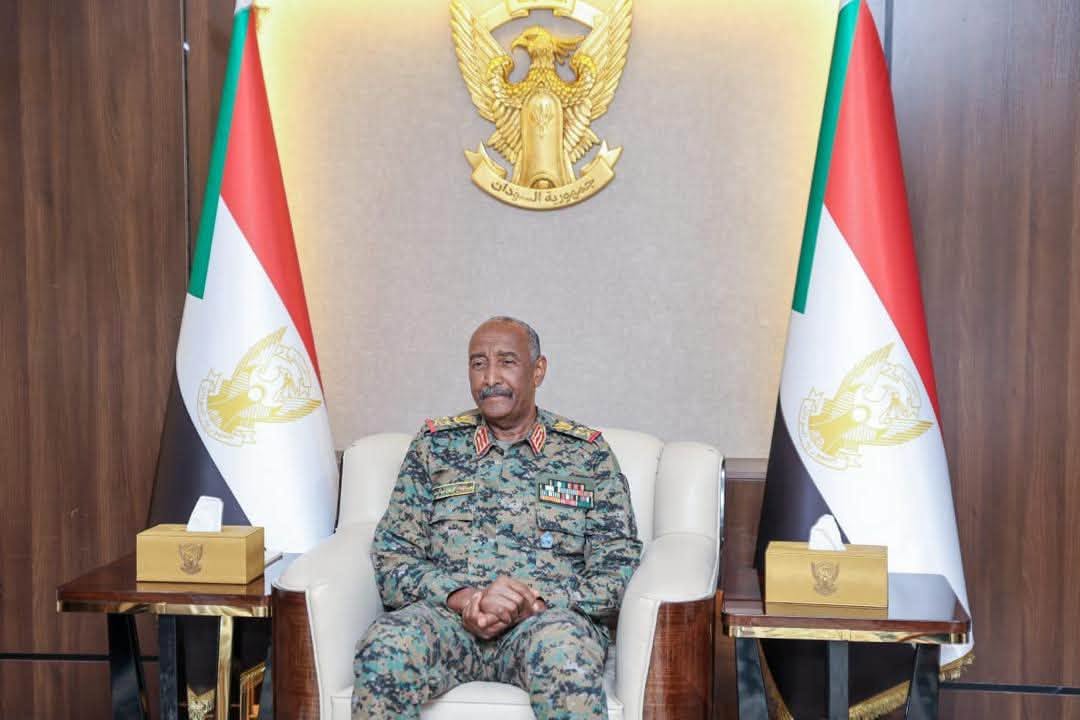
Sudan Sanctions: Abdel Fattah al-Burhan Warns of Imminent Action
Summary
- General Abdel Fattah al-Burhan announced he expects impending international sanctions targeting both Sudan and himself personally.
- The United States previously introduced sanctions on July 20 over chemical weapons allegations, which Sudan's Foreign Ministry strongly denied.
- While the US sanctioned both Al-Burhan and RSF leader Mohamed Hamdan Dagalo in January 2025, the UK and EU have so far stopped short of directly designating both top leaders.
- Al-Burhan stated during a speech in Al-Manaqil that military operations against the Rapid Support Forces will continue until the rebellion ends completely.
Sovereign Leadership Braces for Impending Measures
Addressing worshippers at a mosque in Al-Manaqil on Friday, August 21, 2026, the leader of the Sudanese Armed Forces and head of the Sovereignty Council, General Abdel Fattah al-Burhan, publicly acknowledged that international restrictive measures targeting both his country and him individually are imminent.
Addressing worshippers at a mosque in Al-Manaqil on Friday, August 21, 2026, the leader of the Sudanese Armed Forces and head of the Sovereignty Council, General Abdel Fattah al-Burhan, publicly acknowledged that international restrictive measures targeting both his country and him individually are imminent. Al-Burhan attributed the expected actions to entities he characterized as enemies seeking to force the nation into submission, asserting firmly that the state would not yield despite growing external pressure.
The general's public remarks in central Sudan’s Al-Jazirah State come amid an intensification of military operations and reported shifts on the ground. During his address, Al-Burhan commended local residents in Al-Manaqil for backing government forces against the rival Rapid Support Forces (RSF). He reaffirmed his administration's unyielding stance on the ongoing conflict, declaring that military engagement would persist unabated until the armed rebellion is thoroughly neutralized throughout the entirety of the territory. These statements were delivered against a backdrop of increasing defections from RSF ranks, with fighters reportedly crossing over to join the national army.
Evolving Regulatory Framework and Chemical Weapons Allegations
The potential Sudan sanctions Abdel Fattah al Burhan anticipated would mark a significant escalation in Western economic pressure, which has progressively tightened over recent months. On July 20, the United States initiated additional economic measures against Sudan following grave US sanctions Sudan chemical weapons allegations involving government forces during the active civil hostilities. Sudan's Ministry of Foreign Affairs vehemently rejected these accusations, denying any deployment of prohibited chemical agents and affirming its full readiness to facilitate inspections and collaborate with international verification bodies, including the Organisation for the Prohibition of Chemical Weapons.
While multilateral regulatory regimes have systematically targeted key conflict participants, individual designations have varied. Although the United States sanctioned both General Al-Burhan and RSF commander Mohamed Hamdan Dagalo, known as Hemedti, in January 2025, other Western authorities such as the United Kingdom and European Union have so far stopped short of directly placing both top leaders on their individual asset freeze lists. If further Western authorities proceed with direct designations, legal teams advising global organizations must evaluate OFAC Sudan targeted sanctions risk and prepare for broader EU UK sanctions Sudanese Armed Forces leadership enforcement.
Strategic Pressure and Compliance Risk Exposures
An explicit expansion of restrictive measures to encompass sovereign military authorities would create substantial financial and operational liabilities for international entities maintaining commercial or administrative touchpoints in the region. Should sovereign leadership be designated, corporate compliance officers and cross-border counsel will need to immediately re-evaluate corporate touchpoints involving Abdel Fattah al Burhan asset freeze compliance, ensuring that state-linked commercial entities and military enterprises do not trigger severe secondary sanctions or administrative violations under foreign jurisdictions.
As international enforcement agencies shift focus toward top-tier leadership, multinational corporations and financial institutions operating in North Africa must anticipate mandatory contract termination requirements and heightening reporting obligations. The explicit threat of individual blockades underscores a pivotal transition in Western diplomacy, forcing global enterprises to audit current supply chains and joint ventures to mitigate exposure to sovereign assets and military-affiliated enterprises.
Practical Implications
Compliance officers and cross-border counsel advising entities with Sudan touchpoints should immediately review exposure to Sudanese Armed Forces leadership and state-linked commercial entities in anticipation of direct sanctions on General Al-Burhan. Legal teams must prepare for potential secondary sanctions, asset freeze restrictions, and mandatory contract termination triggers if top sovereign figures are designated by OFAC, the UK, or the EU.
Source
How does this affect you?
Get an AI analysis of this article grounded in your jurisdictions, practice areas, and any policy documents you've uploaded to Wansom.
Wansom is AI and can make mistakes.