
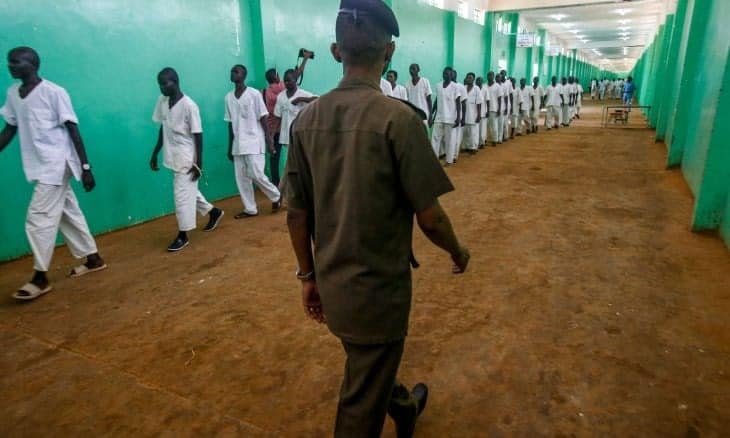
Sudan: Death Row Inmates Allege Torture Confessions for RSF Collaboration
Summary
- Two death row inmates in Sudan's Al-Huda prison allege torture and severe irregularities in their trials for collaborating with the Rapid Support Forces (RSF).
- One inmate claims confessions were extracted under torture, while the other's family states he was arrested on a malicious report, disappeared for over a year, and then reappeared on death row.
- These cases are part of ongoing trials for civilians accused of RSF collaboration since April 2023, raising widespread concerns about fair trial guarantees.
- Most convictions rely on Articles 50 and 51 of the Sudanese Criminal Code, which carry the death penalty for undermining the constitutional system or inciting war.
- One inmate, 'Mohamed Ahmed,' was initially accused of theft by a military officer, then held in secret detention for weeks before receiving a death sentence.
Death Row Allegations Emerge from Omdurman Prison
The allegations of torture to extract confessions and the initial, seemingly fabricated, charge of theft before being moved to a secret detention facility paint a grim picture of the judicial environment.
Two individuals currently on death row within Al-Huda prison in Omdurman, Sudan, have brought to light alarming details regarding their detention and trials. Both were convicted on charges related to alleged collaboration with the Rapid Support Forces (RSF), with their accounts and those of their families indicating significant irregularities in the arrest and investigation processes. One inmate explicitly states that his confessions were extracted under severe torture, while the family of the second individual reports that his arrest stemmed from a malicious complaint linked to his humanitarian work. He subsequently disappeared for over a year before reappearing, having been sentenced to death.
These testimonies surface amidst a broader context of ongoing trials for civilians accused of cooperating with the RSF, a trend that has persisted since the conflict began in April 2023. Human rights organizations and legal professionals have consistently voiced concerns about the absence of fundamental fair trial guarantees in these proceedings. The cases highlight a pattern where individuals face severe penalties, including death, based on what appear to be deeply flawed judicial processes, raising serious questions about due process in Sudan.
Secret Detention and Fabricated Charges
One of the death row inmates, identified by the pseudonym Mohamed Ahmed, recounted his ordeal to a local news outlet, detailing a journey that began with his arrest on Al-Wadi Street in Omdurman. He explained that he was en route to a company office to meet a relative when a military officer apprehended him, initially accusing him of stealing household furniture. This initial accusation quickly escalated, leading to his transfer to a secret security facility where he was held for weeks without contact.
Following this period of secret detention, Mohamed Ahmed was eventually brought before a court, where he was ultimately sentenced to death. His account underscores the severe challenges faced by individuals caught in the current conflict, particularly those accused of national security offenses or ties to the RSF. The allegations of torture to extract confessions and the initial, seemingly fabricated, charge of theft before being moved to a secret detention facility paint a grim picture of the judicial environment.
Legal Framework and Human Rights Concerns
The majority of these trials, including those of the two death row inmates, are predicated on Articles 50 and 51 of the Sudanese Criminal Code. These specific articles pertain to undermining the constitutional system and inciting war against the state, respectively. Both charges carry the potential for the death penalty, reflecting the gravity with which the state views alleged threats to its stability and security. However, the application of these laws in the current climate has drawn widespread criticism.
Legal experts and human rights advocates have repeatedly warned that the lack of transparency, coupled with allegations of torture and secret detentions, fundamentally compromises the fairness and legitimacy of these trials. The cases of these two individuals on death row serve as stark examples of the systemic due process violations that lawyers representing clients in Sudan, particularly those accused of national security offenses or ties to the RSF, must confront. The reliance on confessions obtained under duress and the absence of robust legal safeguards necessitate rigorous challenges to evidence and heightened vigilance regarding fair trial guarantees.
Practical Implications
Lawyers representing clients in Sudan, particularly those accused of national security offenses or ties to the RSF, must be acutely aware of the systemic due process violations, including torture and secret detention, highlighted in these cases. This necessitates rigorous challenges to evidence obtained under duress and heightened vigilance regarding fair trial guarantees for their clients.
Source
How does this affect you?
Get an AI analysis of this article grounded in your jurisdictions, practice areas, and any policy documents you've uploaded to Wansom.
Finish Reading the Full Story and the Expert Analysis.
Get the latest legal & regulatory intelligence in Sudan
Wansom is AI and can make mistakes.