
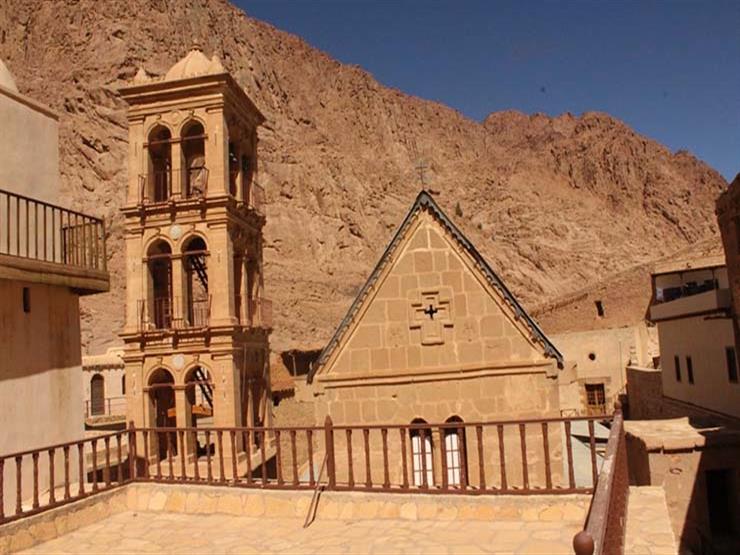
Egypt: St. Catherine's Monastery Legal Status Agreement Approved
Summary
- Egypt has welcomed the consent of Archbishop Symeon of St. Catherine's Monastery to sign a new agreement.
- The agreement aims to regulate the legal status of the monastery and its surrounding lands in the Sinai Peninsula.
- The Egyptian Foreign Ministry announced that Foreign Minister Badr Abdelatty received a letter confirming the Archbishop's consent.
- This accord is expected to resolve a long-standing dispute concerning the monastery's status between Egypt and Greece.
- The agreement provides a definitive legal framework for the historic site's preservation and administration.
What Happened
This agreement represents a pivotal moment in the ongoing efforts for Sinai Peninsula monastery dispute resolution.
The Egyptian government recently expressed its approval regarding the willingness of Archbishop Symeon of St. Catherine's Monastery to formalize an accord. This agreement is specifically designed to clarify and govern the official standing of the ancient monastery and the extensive land holdings surrounding it, situated within the strategic Sinai Peninsula. This development marks a significant step towards resolving long-standing issues concerning the site.
The consent from the spiritual leader of St. Catherine's Monastery was formally communicated to Egyptian authorities. Foreign Minister Badr Abdelatty received a direct correspondence from Archbishop Symeon, explicitly confirming his agreement to proceed with the signing of this crucial document. This official communication underscores the collaborative approach taken by both the monastic community and the Egyptian state.
The announcement of this positive development was made public by the Egyptian Foreign Ministry on a recent Saturday. Their statement highlighted Egypt's welcoming stance towards the Archbishop's decision, emphasizing the importance of the forthcoming agreement in establishing clear regulations for the monastery's legal status and its associated properties. This bilateral understanding is poised to bring clarity to a complex historical and legal situation.
Legal Context
The forthcoming St. Catherine's Monastery legal status agreement is set to provide a definitive framework for the administration and ownership of one of the world's oldest continuously operating Christian monasteries. This comprehensive accord will specifically address the legal status of the monastery itself, alongside the regulatory aspects pertaining to its adjacent lands. Such a formal arrangement is vital for ensuring the long-term preservation and operational stability of this UNESCO World Heritage site.
This agreement represents a pivotal moment in the ongoing efforts for Sinai Peninsula monastery dispute resolution. While the immediate parties to the signing are the monastery, represented by Archbishop Symeon, and the Egyptian state, the resolution of the monastery's legal status is understood to also address a broader dispute that has existed between Egypt and Greece. The involvement of the Egyptian Foreign Ministry underscores the diplomatic significance of this land regulation effort.
The detailed provisions of the agreement are expected to cover various aspects of St. Catherine's Monastery land regulation, ensuring that the monastery's unique heritage and its role as a spiritual center are protected under Egyptian law. This formalization through an Archbishop Symeon St. Catherine's agreement provides a clear legal foundation, which is crucial for any future development, conservation, or land use planning in the sensitive Sinai region. The Egyptian Foreign Ministry monastery legal status announcement signals a commitment to resolving these intricate matters through formal legal channels.
Why It Matters
The successful conclusion of this agreement holds profound implications for both the St. Catherine's Monastery and the broader diplomatic relations between Egypt and Greece. By definitively settling the legal status of the monastery and its surrounding lands, the accord removes ambiguities that could potentially hinder its operations or future conservation initiatives. This clarity is essential for safeguarding a site that holds immense religious, historical, and cultural significance for the global community.
Furthermore, this bilateral agreement between Egypt and Greece, facilitated by the monastery's consent, serves as a testament to effective international cooperation in preserving shared cultural heritage. The resolution of this specific dispute through a formal agreement strengthens the ties between the two nations and demonstrates a shared commitment to stability and legal certainty in the region. It sets a positive precedent for addressing similar complex property and heritage issues.
The St. Catherine's Monastery, nestled at the foot of Mount Sinai, is not merely a religious institution but a living testament to centuries of history. The formalization of its legal status through this agreement ensures its continued existence and protection, allowing it to maintain its role as a pilgrimage site and a center of scholarship. This outcome is a significant achievement for all stakeholders involved, promising a secure future for this invaluable landmark in the Sinai Peninsula.
Practical Implications
Lawyers involved in property law, international agreements, or cultural heritage in Egypt should note this agreement as it clarifies the legal status of a significant historical site and sets a precedent for resolving complex, multi-jurisdictional property disputes, potentially impacting future land use, development, or ownership claims in the Sinai region.
Source
How does this affect you?
Get an AI analysis of this article grounded in your jurisdictions, practice areas, and any policy documents you've uploaded to Wansom.
Finish Reading the Full Story and the Expert Analysis.
Get the latest legal & regulatory intelligence in Egypt
Wansom is AI and can make mistakes.